CRNA Interview Prep Guide: Expert Strategies for 2026 Success
Prepare for your 2026 CRNA interview with expert crna interview prep strategies covering question types, mindset, and actionable tips for interview success.
Competition for 2026 CRNA program spots has never been fiercer, and every interview is a high-stakes opportunity. Programs are looking for more than textbook knowledge—they seek candidates who can think on their feet, communicate under pressure, and reflect on their growth.
Strategic crna interview prep is now essential for standing out in this evolving admissions landscape. Success requires more than memorization; it demands expert-backed strategies tailored to the latest interview trends.
This guide will walk you through every step of the crna interview process. You will learn how to master question types, develop the right mindset, prepare confidently, and excel before, during, and after your interview.
Understanding the CRNA Interview Landscape in 2026
The CRNA interview landscape in 2026 is more competitive and dynamic than ever before. Applicants face rigorous evaluation processes that go far beyond technical knowledge. Understanding what programs expect and how interviews have evolved is crucial for effective crna interview prep.
The Evolving CRNA Admissions Process
CRNA admissions for 2026 are reaching new heights of competitiveness. Programs report receiving hundreds of applications for each available seat, making the interview the primary way to stand out. According to recent CRNA workforce statistics 2026, demand for nurse anesthetists continues to surge, further intensifying the selection process.
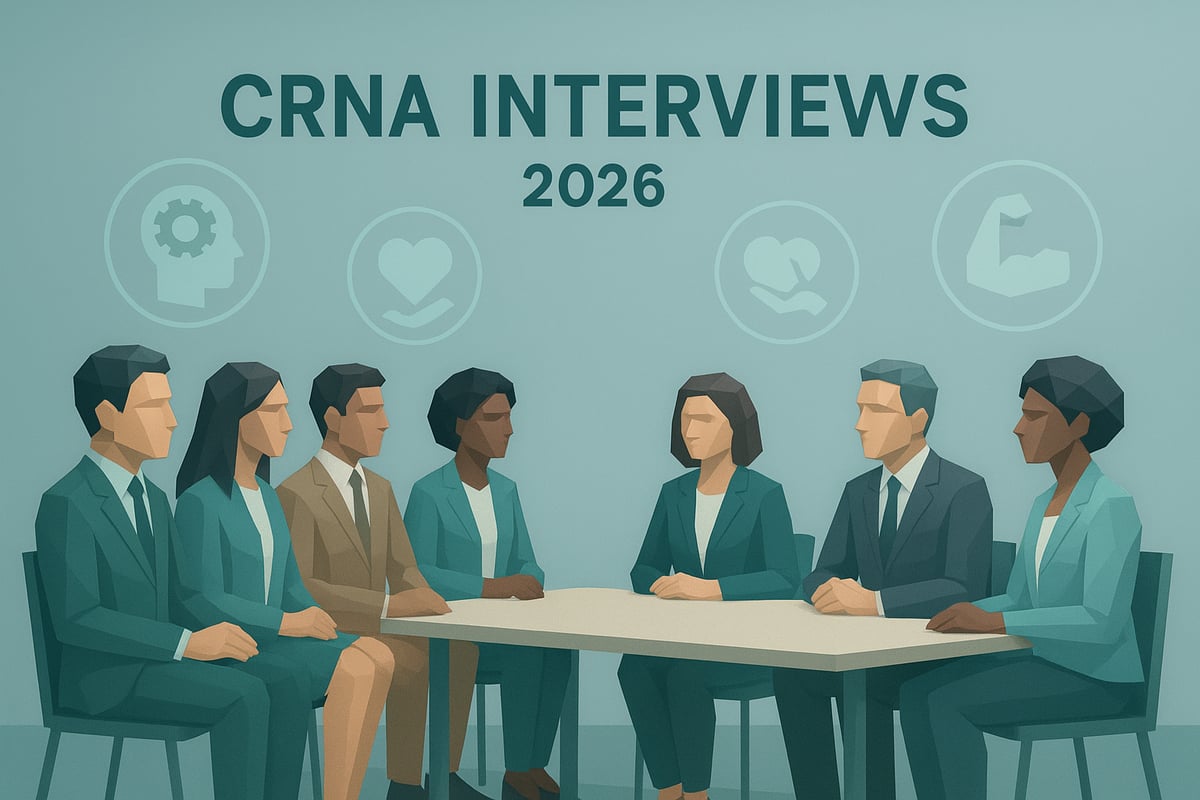
Schools are moving toward holistic applicant reviews. Committees now weigh more than just GPA and ICU hours. Multi-panel interviews and scenario-based assessments are increasingly common. These formats are designed to evaluate how candidates perform under stress, adapt to new situations, and communicate clearly—key areas to address in your crna interview prep.
What CRNA Programs Are Really Looking For
CRNA programs in 2026 prioritize critical thinking under pressure rather than rote memorization. Interviewers look for honesty, humility, and the ability to reason through clinical uncertainty. Professional presence and emotional intelligence are just as important as clinical skills.
Panels often push candidates to their limits, testing not for perfection but for growth potential. Successful applicants demonstrate self-awareness, openness to feedback, and a willingness to learn. Incorporating these qualities into your crna interview prep can make a significant difference.
Common Interview Formats and What to Expect
Applicants should prepare for a range of interview formats. Panel interviews, multiple mini-interviews (MMIs), and virtual interviews are all prevalent in 2026. Each format features a mix of clinical scenario questions, motivation-based prompts, and emotional intelligence assessments.
For example, you might be asked to describe handling a conflict in the ICU or talk through your approach to a crashing patient. Some programs combine question types in a single scenario. The rise of virtual interviews post-pandemic means your crna interview prep should also include practice with technology and remote communication.
Key 2026 Trends and Updates
Scenario-based and behavioral questions are now central to the CRNA interview process. Programs expect applicants to reflect on their experiences and articulate their personal “why CRNA” story clearly and concisely. Familiarity with current anesthesia guidelines and evidence-based practice is a must.
It is common for candidates to be waitlisted or need to reapply. Programs value resilience and the ability to learn from setbacks. Staying informed about the latest trends and focusing your crna interview prep on self-awareness and adaptability will help you navigate this evolving landscape.
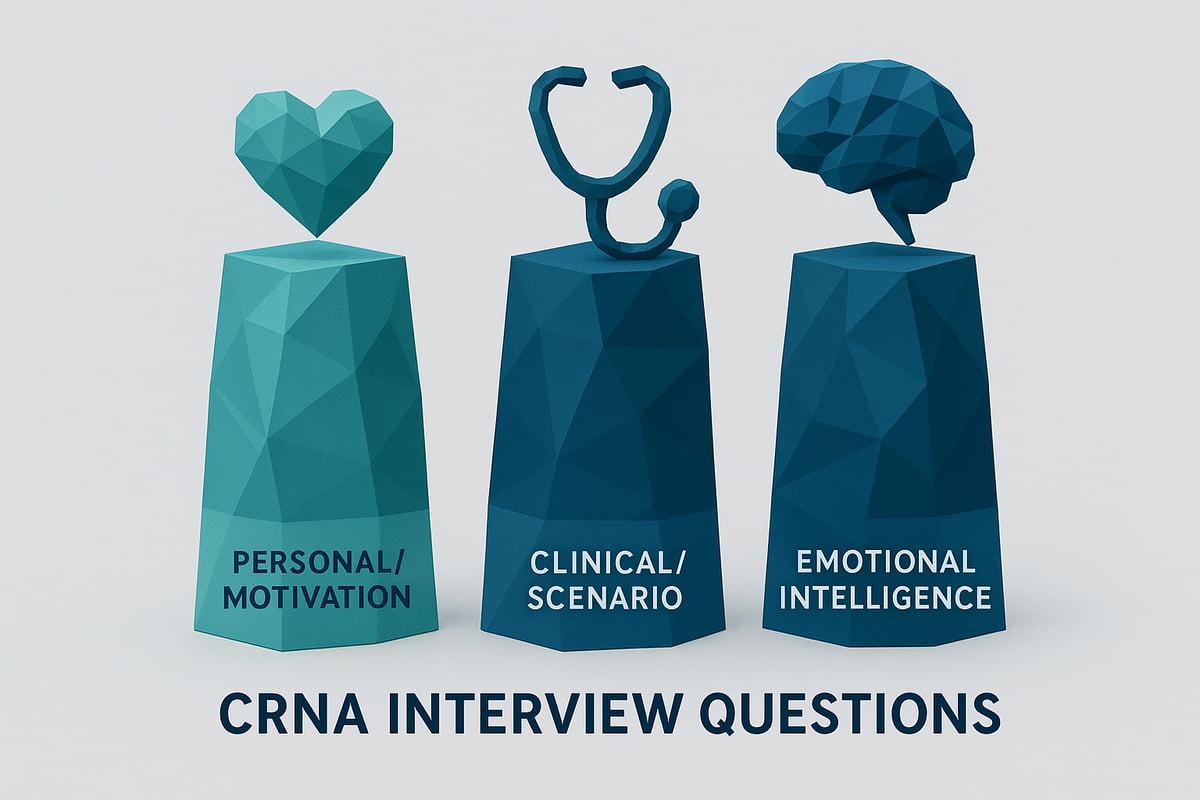
Mastering the Three Core CRNA Interview Question Types
Preparing for a successful CRNA interview in 2026 requires a deep understanding of the types of questions you will face. Strategic crna interview prep means knowing not just what to expect, but how to deliver compelling, authentic responses. Let us break down the three core question categories and how to master each one.
Personal and Motivation Questions
Personal and motivation questions probe your reasons for pursuing nurse anesthesia and your fit for a specific program. During crna interview prep, expect to answer:
- “Why do you want to be a CRNA?”
- “Why did you choose our program?”
- “Describe your journey to this point.”
Programs want to see self-awareness and a clear, genuine purpose. Strong answers connect your ICU experiences, values, and long-term goals. Avoid cliches or generic statements; instead, share a concise story that illustrates your commitment.
A practical tip for crna interview prep is to rehearse your “why CRNA” narrative until you can deliver it naturally in under two minutes. Authenticity and clarity set you apart in this question category.
Clinical Knowledge and Scenario Questions
Clinical knowledge questions test your ability to reason through complex patient scenarios using your ICU background. These are a core focus of crna interview prep, as they reveal both your current expertise and your approach to uncertainty.
Common questions include:
- “How would you manage a patient desaturating on a ventilator?”
- “Explain the mechanism of action of milrinone.”
- “Describe your approach to a hypotensive trauma patient.”
Panels intentionally push your limits to observe problem-solving, logical thinking, and the ability to admit when you do not know something. If unsure, articulate your thought process and outline how you would seek the right answer.
Most successful candidates do not answer every clinical question perfectly. Instead, they show composure and humility. For a broader set of sample questions and expert response strategies, the CRNA interview questions and answers resource can enhance your crna interview prep.
Emotional Intelligence and Behavioral Questions
Behavioral and emotional intelligence questions assess how you function in high-pressure environments and within teams. These are increasingly important in crna interview prep for 2026.
Expect questions such as:
- “Describe a conflict with a physician and how you resolved it.”
- “How do you handle stress in the ICU?”
- “Tell me about a time you disagreed with a team decision.”
Programs want to hear about real experiences, your reaction to feedback, and your ability to reflect and grow. Authenticity is crucial. Use the STAR method (Situation, Task, Action, Result) to structure your answers and demonstrate resilience and adaptability.
Remember, panels sometimes combine clinical, personal, and EI questions into one scenario. Practicing composure and self-reflection is a vital part of crna interview prep for this category.
How to Practice for Each Question Type
Effective crna interview prep means targeted practice for all question types. Start by writing and refining your personal story, then rehearse it with mentors or peers. Review high-yield ICU and anesthesia concepts, but focus on understanding and reasoning instead of rote memorization.
For behavioral questions, practice with the STAR method. Simulate pressure by recording your responses and critiquing your delivery. Mock interviews, especially those that mimic real interview conditions, help build confidence and reveal areas for improvement.
Finally, use feedback to polish your approach and reduce nervous habits. Consistent, realistic practice across all categories is the foundation of strong crna interview prep.
Step-by-Step CRNA Interview Preparation Strategies for 2026
Preparing for CRNA interviews in 2026 requires a strategic, multi-layered approach. Success comes from more than just clinical knowledge; it demands self-awareness, communication skills, and adaptability. This step-by-step CRNA interview prep strategy guides you through the essential actions you need for a standout performance.

Step 1: Focused Clinical Review (Not Just Memorization)
Begin your CRNA interview prep by reviewing high-yield clinical topics relevant to anesthesia and ICU care. Prioritize understanding shock states, vasoactive medications, ventilator management, ABGs, hemodynamics, and core anesthesia pharmacology. Rather than memorizing endless facts, focus on reasoning through scenarios.
Consider creating a table to organize your review:
| Topic | Key Concepts |
|---|---|
| Shock States | Types, pathophysiology |
| Vasoactive Meds | Indications, titration |
| Ventilator Mgmt | Modes, troubleshooting |
| ABGs | Interpretation, interventions |
| Anesthesia Pharm | MOA, dosing, side effects |
Use CCRN review materials as a foundation, but supplement with current anesthesia guidelines. Practice with flashcards and scenario-based questions. Programs want to see how you apply knowledge, not just recall numbers. This step builds the clinical reasoning skills central to effective crna interview prep.
Step 2: Personal Reflection and Emotional Intelligence Development
A strong crna interview prep plan includes deeply understanding your motivations and growth areas. Start by crafting your “why CRNA” story—keep it under two minutes and connect it to your ICU experience and patient care philosophy. Reflect on your strengths, weaknesses, and pivotal moments in your clinical journey.
Journaling can clarify your narrative and help you identify lessons learned from challenging cases or feedback. Talk through your story with mentors or peers for honest input. Programs appreciate applicants who are self-aware, humble, and open about their development. Remember, authenticity outweighs perfection in every crna interview prep process.
Step 3: Mock Interviews and Realistic Practice
Simulating the real interview environment is essential for effective crna interview prep. Arrange mock interviews with colleagues, mentors, or professional services. Replicate the actual formats you may face, such as multi-panel or scenario-based interviews.
Tips for mock interview success:
- Use video recording to review your tone, body language, and response structure.
- Practice with unpredictable and high-pressure questions.
- Request honest feedback and refine your answers accordingly.
By rehearsing under realistic conditions, you build confidence and adaptability. This targeted practice is a cornerstone of any comprehensive crna interview prep strategy.
Step 4: Mastering Interview Day Logistics and Mindset
The logistics of interview day can greatly impact your performance. Prepare your professional attire, organize all required documents, and test your technology for virtual interviews. Arrive early or log in ahead of time to settle your nerves.
Polish your nonverbal communication—posture, handshake, eye contact, and attentive listening. Use deep breathing and visualization to stay calm. Prepare thoughtful questions for the panel, such as, “What qualities make students most successful here?”
To streamline your crna interview prep, refer to an interview preparation checklist that ensures you cover every detail, from attire to backup plans for technology issues. A calm, organized approach enhances your confidence and professionalism.
Step 5: Handling Difficult Questions and Unexpected Scenarios
Even with the best crna interview prep, you will face tough questions or unfamiliar scenarios. If you do not know an answer, pause and walk the panel through your reasoning. Admit knowledge gaps honestly and avoid bluffing. For instance, “I’m not certain, but I would approach it by gathering more information and consulting current guidelines.”
Practice staying composed if you are pushed to your limits. Panels are assessing your adaptability, humility, and problem-solving approach. Use mock interviews to get comfortable with regrouping and thinking aloud under pressure. Remember, programs value critical thinking and the ability to learn from mistakes as much as clinical expertise.
Expert Tips for CRNA Interview Day Success
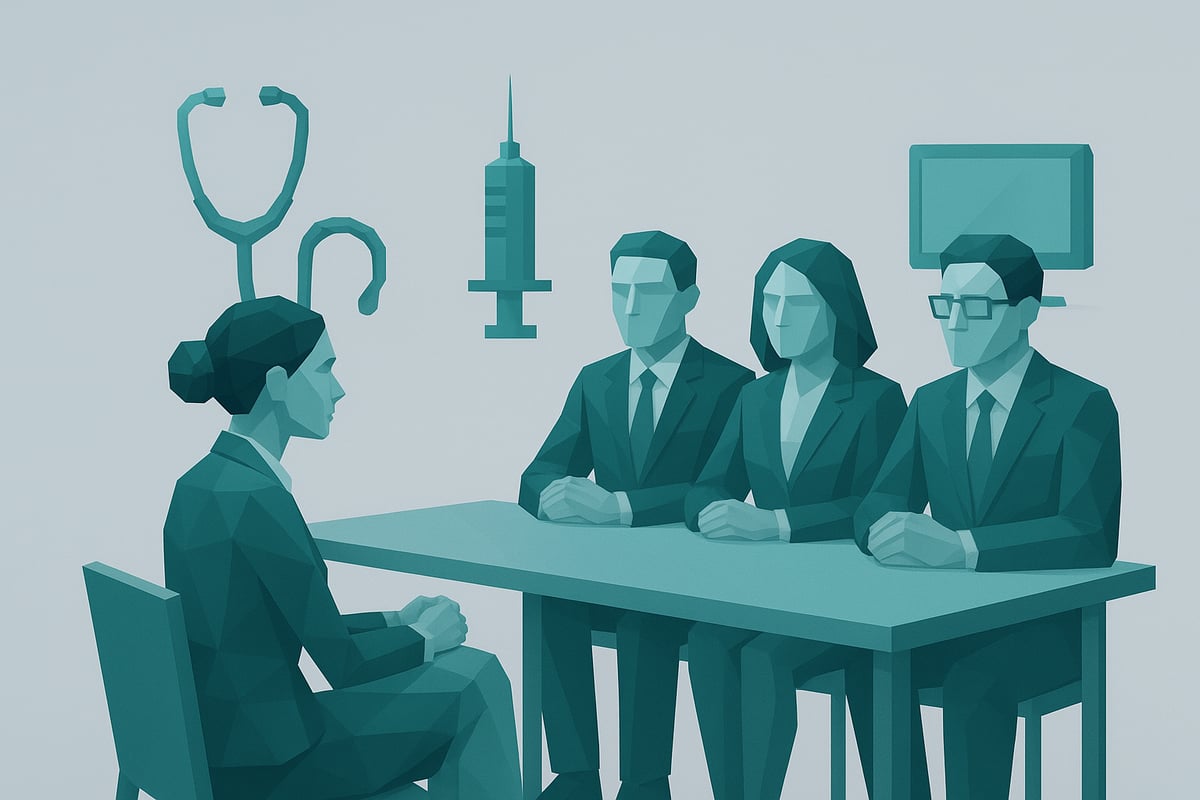
Stepping into your CRNA interview is a culmination of months of crna interview prep. Success is shaped by more than clinical acumen—it is about presence, adaptability, and clear communication. Use these expert-backed strategies to showcase your best self and turn nerves into confidence.
Building Professional Presence and Confidence
First impressions are everything in crna interview prep. Dress in professional attire and ensure your grooming is meticulous. Sit up straight, maintain good posture, and use open body language to project confidence.
When you enter the room or log in virtually, greet the panel with a firm handshake or a polite smile and direct eye contact. Speak clearly and avoid filler words like “um” or “like.” Practicing your introduction and small talk can help you ease into the conversation and set a positive tone.
Remember, your appearance and demeanor can influence how interviewers perceive your readiness for the rigors of CRNA training. Present yourself as someone who is prepared, engaged, and respectful from the very first moment.
Managing Nerves and Staying Composed Under Pressure
Feeling anxious before a CRNA interview is normal, even after thorough crna interview prep. The key is to channel that nervous energy into focus. Use slow, deep breathing to steady your mind before entering the interview space.
Mental rehearsal is a proven way to reduce anxiety. Imagine yourself answering questions with clarity and poise. Interviews are designed to challenge you, but the panel genuinely wants you to succeed. If you stumble, pause, take a breath, and continue. Many successful candidates report feeling nervous but turning that energy into sharper responses.
For more strategies, explore Interview warm-up techniques, which offer actionable exercises to calm your nerves before high-stakes interviews.
Listening and Responding Thoughtfully
Active listening is a cornerstone of effective crna interview prep. When a panelist asks a question, avoid rushing to respond. Take a moment to process what is being asked. If something is unclear, politely ask for clarification.
Structure your answers using the STAR method—Situation, Task, Action, Result. This keeps your responses organized and concise. If you need a moment to think, it is perfectly acceptable to say, "Let me take a moment to consider that."
Concise, well-structured answers are always more impactful than rambling. Practice this skill during your mock interviews and notice how it boosts your confidence on the big day.
Demonstrating Adaptability and Growth Mindset
CRNA programs value candidates who show adaptability and a willingness to learn. During your crna interview prep, reflect on moments when you learned from feedback or adjusted your approach in the ICU.
Share specific examples, such as, "A preceptor once gave me tough feedback, and here is how I grew from it." This demonstrates resilience and a growth mindset. If you are asked about a mistake, focus on what you learned and how you have improved since then.
Remember, many accepted students did not get in on their first attempt. Your ability to adapt and persevere is just as important as your clinical knowledge.
Making a Strong Impression with Questions for the Panel
Thoughtful questions can set you apart during crna interview prep. Prepare two or three questions that show genuine curiosity about the program’s culture, support systems, or student success factors.
For example, ask, "How do you support students during challenging clinical rotations?" Avoid questions that are easily answered on the program website. This shows that you have done your research and are invested in finding the right fit.
Memorable questions not only demonstrate your engagement but also help you gather valuable information for your own decision-making process.
Avoiding Common Interview Mistakes
Even with extensive crna interview prep, common pitfalls can trip up candidates. Do not over-rehearse or sound scripted—authenticity is crucial. Avoid making negative remarks about previous employers or colleagues.
If you do not know the answer to a question, admit it honestly and explain how you would find the information. For instance, "I am not certain, but I would consult a senior colleague or trusted resource." Panels respect humility and the ability to recognize your limits.
Remember, the goal is to present yourself as a thoughtful, self-aware candidate who is ready to learn and grow within a demanding CRNA program.
Post-Interview Steps: Reflection, Thank You Emails, and Next Moves
After months of crna interview prep, the moment you finish your interview can feel like a whirlwind. What you do in the hours and days that follow is just as crucial as your performance in the interview itself. Thoughtful post-interview actions can set you apart and position you for future success.
Reflecting on Your Performance
Immediately after your CRNA interview, take time to reflect. Jot down which questions challenged you, where you felt confident, and any moments of uncertainty. This self-assessment is a vital part of crna interview prep, ensuring you learn from each experience.
Break your reflection into categories:
- Clinical knowledge: Which topics were you strong or weak in?
- Emotional intelligence: How did you handle stress or unexpected questions?
- Communication: Did you speak clearly and stay on message?
Capture specific examples. For instance, if you stumbled on a scenario question, note it for future review. Reflection is not just for those reapplying—it makes you a stronger, more self-aware candidate.
Crafting a Professional Thank You Email
Within 24 to 48 hours, send a personalized thank you email to each interviewer. Express genuine gratitude for their time and reiterate your enthusiasm for the program. Referencing a specific part of your conversation shows attentiveness and professionalism—qualities highly valued in crna interview prep.
Tips for a strong thank you email:
- Use a clear, concise subject line.
- Mention a memorable topic or moment from the interview.
- Restate your interest in the program and its mission.
- Proofread for errors and keep the tone formal yet warm.
A thoughtful thank you note can leave a lasting impression. For more sample templates and advice, review the CRNA interview preparation guide.
Navigating Waitlists, Rejections, and Feedback
Not every outcome is an immediate acceptance. Many candidates find themselves on waitlists or facing rejection. Resilience is a cornerstone of effective crna interview prep. If you do not receive an offer, reach out to the program for feedback. Be specific in your request and open to constructive criticism.
Remember:
- Waitlists are common—stay positive and keep your contact information current.
- Use feedback to identify areas for growth, whether clinical knowledge, communication, or emotional intelligence.
- Many successful CRNAs have stories of multiple attempts before acceptance.
Consider additional mock interviews, coaching, or skills workshops. Persistence, adaptability, and a willingness to learn from each cycle are essential.
Leveraging Community and Ongoing Resources
Engage with the CRNA applicant community for ongoing support. Join online forums, mentorship groups, or professional organizations dedicated to anesthesia. These communities can provide peer support, share current crna interview prep trends, and offer accountability.
Resourceful candidates often attend webinars, participate in study groups, and access interview replays. For a broader set of actionable tips, explore interview prep strategies that apply across healthcare specialties.
Remember, the journey does not end with one interview cycle. Continuing to build your network and refine your approach increases your confidence and competitiveness for future applications. Make community and lifelong learning central to your CRNA path.
Real Stories and Lessons from CRNA Interview Experiences
Facing the CRNA interview is a defining moment for every applicant. Real-world stories from past candidates offer lessons, encouragement, and practical strategies for your own crna interview prep journey. Learning from others’ experiences can help you anticipate challenges and develop resilience for 2026 admissions.
Common Fears and How to Overcome Them
Many candidates worry, “What if I am not smart enough?” or “What if I freeze under pressure?” These fears are normal, especially with the competitive nature of crna interview prep. The reality is, if you have been invited to interview, programs already see your potential.
Accepted students often report that communication skills and composure mattered more than having a perfect background. For example, some had average GPAs but excelled in self-awareness and adaptability. To conquer these fears, focus on preparation, reflection, and embracing feedback. Reviewing common question types in resources like the Nursing interview questions guide can boost confidence and readiness for the unique demands of CRNA interviews.
Turning Rejection into Success: Case Examples
Rejection is not the end of your crna interview prep story. Many successful CRNAs faced multiple setbacks before achieving acceptance. Take Bailey, who experienced seven rejections before receiving offers from several programs. What made the difference? Persistence, a willingness to seek feedback, and targeted improvement in weak areas.
Candidates who revisit their interview performance, adjust their preparation, and stay updated with trends—such as those highlighted in Anesthesia trends for 2026—often find success in future cycles. Remember, each interview is an opportunity to grow, and resilience is a key trait valued by admissions committees.
The Importance of Mindset and Support
Mindset shapes every aspect of crna interview prep. Treating each interview as a chance to learn, rather than a final judgment, helps maintain motivation and perspective. Mentorship and peer support are equally vital. Candidates who engage with coaching programs or applicant communities often report higher confidence and better outcomes.
For example, discussing interview scenarios with peers or mentors can clarify your strengths and highlight areas for growth. Embrace your unique journey, lean on your support network, and remember that persistence and a growth mindset are as important as clinical knowledge in achieving your CRNA goals.
You’ve just explored actionable strategies and real stories to help you excel in your 2026 CRNA interview journey—from understanding evolving interview formats to building resilience after setbacks. If you’re ready to put these expert tips into practice and want a smarter way to prepare your resume, cover letter, and interview responses, you don’t have to do it alone. With CareerConcierge io’s free AI tools, you can tailor your application and prep smarter, not harder. You’ve taken the first step by reading this guide—now let’s turn preparation into results together.
Start for free