9 Essential Interview Best Practices for Hiring Managers 2026
Discover 9 interview best practices for hiring managers in 2026 to optimize candidate experience, leverage technology, and make data driven hiring decisions.
In 2026, the pressure to secure top talent has reached unprecedented levels as competition grows fierce and candidate expectations continue to evolve. For organizations to succeed, adopting interview best practices for hiring managers is no longer optional, but essential. Mastering these approaches will enable you to attract, assess, and hire the high performers your business needs.
This article delivers nine critical interview best practices for hiring managers that will redefine your hiring success in 2026. Explore actionable strategies, discover data-driven insights, and gain expert guidance to transform your interview process and build a stronger team.
The Evolving Landscape of Interviewing in 2026
Since 2020, the landscape of hiring has undergone a dramatic transformation. Interview best practices for hiring managers have evolved in response to technological advances, changing work models, and shifting candidate expectations. As we enter 2026, staying ahead requires a keen understanding of these trends.
Remote and hybrid work are now standard across many industries. This shift has changed how interview best practices for hiring managers are applied. Virtual interviews have become the norm, requiring new approaches to candidate assessment, communication, and logistics. In fact, 68% of organizations now use virtual interviews, according to SHRM's 2026 data.
The candidate experience is now a top priority. Organizations recognize that every touchpoint influences employer brand and offer acceptance rates. Personalized communication, timely updates, and thoughtful interview processes are essential. For deeper insights into how AI and candidate experience intertwine, the 2025 State of Candidate Experience Report provides valuable benchmarks and trends.
Technology is reshaping interview best practices for hiring managers. AI-driven assessments streamline initial screening, while automation tools enhance scheduling and communication. Virtual interview platforms integrate seamlessly with applicant tracking systems, ensuring a smooth process for both candidates and interviewers. At the same time, data privacy and compliance remain critical considerations.
Diversity, equity, and inclusion have become central to interview best practices for hiring managers in 2026. More than half of organizations, 52% according to LinkedIn, now prioritize DEI in their hiring processes. This focus includes structured interviews, diverse panels, and the use of unbiased evaluation rubrics to foster fairness and representation.
Data-driven decision-making is increasingly important. Hiring managers now use analytics to evaluate candidate performance and track outcomes. Real-time dashboards and metrics, such as time-to-hire and candidate satisfaction scores, help identify areas for improvement and optimize the hiring process.
Top companies have retooled their interview strategies to reflect these changes. For example, leading tech firms have adopted AI-powered assessments, remote-friendly interview formats, and DEI-focused evaluation frameworks. These adaptations have led to higher offer acceptance rates and improved employer branding.
In summary, the landscape of interviewing in 2026 demands that interview best practices for hiring managers are both agile and data-informed. Embracing technology, prioritizing candidate experience, and centering DEI are no longer optional—they are essential for attracting and securing top talent in a competitive market.

Preparing for the Interview: Foundations for Success
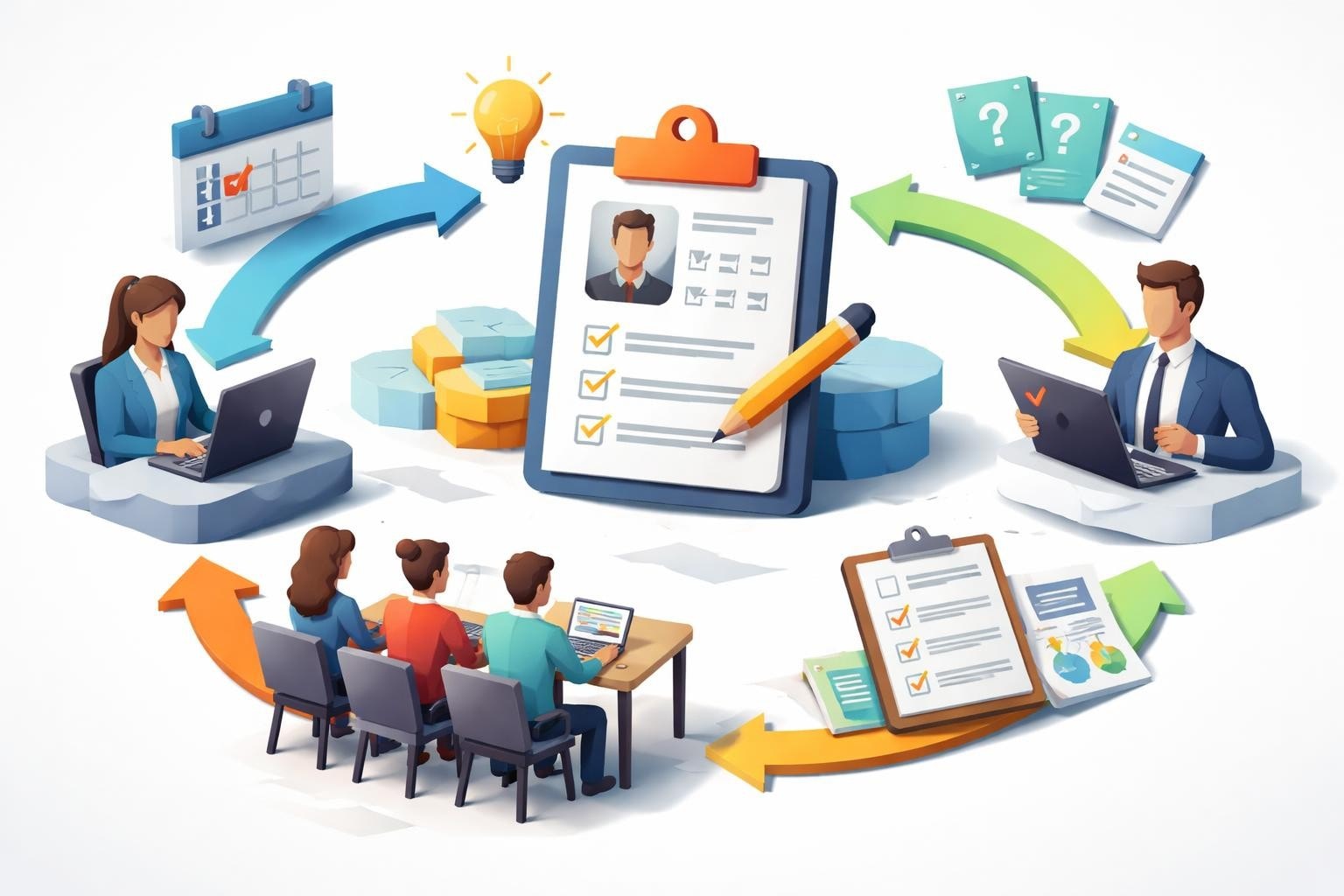
Before any interview, setting the right foundation is crucial. In 2026, interview best practices for hiring managers start with preparation. Each step, from defining the candidate profile to leveraging technology, impacts your hiring outcomes. Let’s explore the essential building blocks to ensure every interview is structured, fair, and effective.
Defining the Ideal Candidate Profile
Success with interview best practices for hiring managers begins with a clear, data-informed candidate profile. Collaborate closely with stakeholders to list required skills, experience, and attributes for the role. Use past performance data and analytics to set measurable benchmarks, avoiding assumptions or vague expectations.
A helpful approach is building a competency matrix. This tool outlines both technical and soft skills needed, assigning each a weight based on importance. For example:
| Skill | Importance | Measurable Criteria |
|---|---|---|
| Technical Expertise | High | Certifications, projects |
| Communication | Medium | Presentation samples |
| Adaptability | Medium | Scenario responses |
Focusing on skills and outcomes, not personal bias, ensures a fairer process for all.
Structuring the Interview Process
A structured process is essential for interview best practices for hiring managers. Design an interview flow that is standardized and repeatable. Balance technical, behavioral, and situational questions to assess candidates holistically.
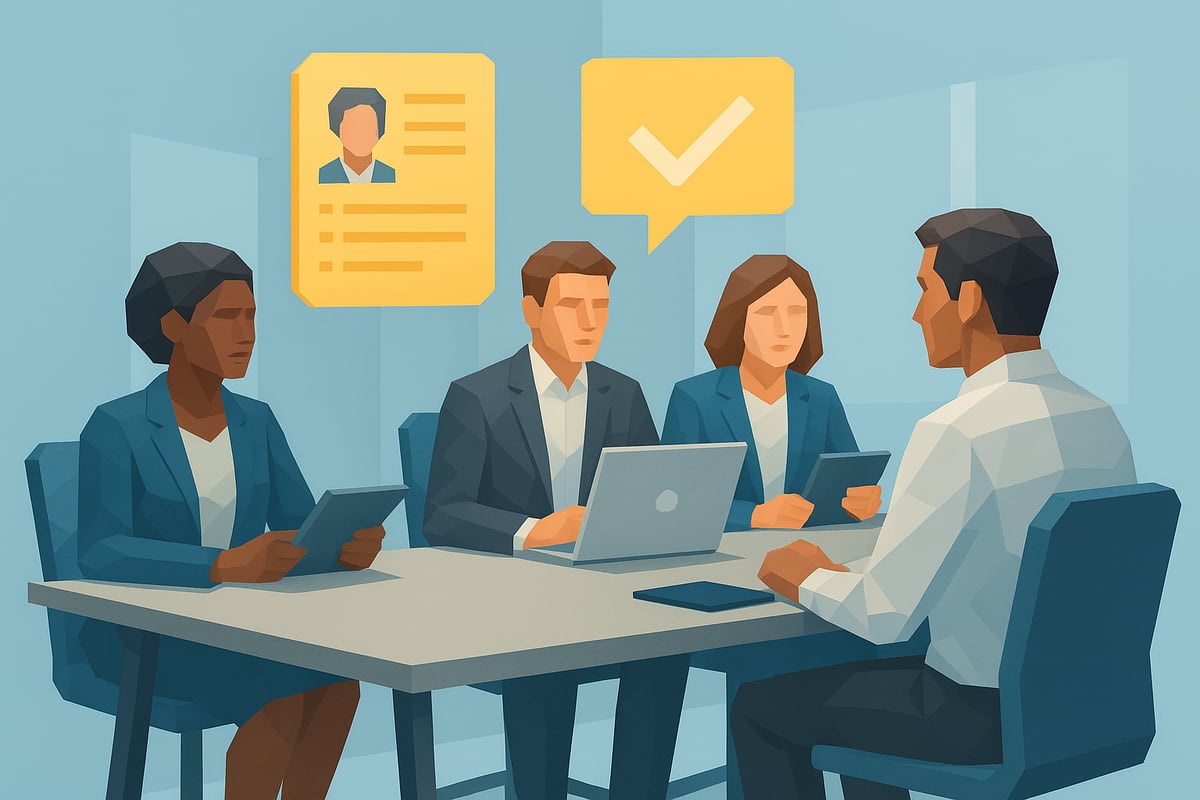
Optimize scheduling and logistics for candidate convenience, offering flexible time slots and clear instructions. Panel interviews can further reduce bias by involving multiple perspectives. For example, a technical panel might include an engineer, HR representative, and team lead, each with specific roles.
Using this structure ensures each candidate receives the same opportunity and helps compare results objectively.
Leveraging Technology for Interview Preparation
Embracing technology is vital for interview best practices for hiring managers in 2026. Modern tools automate scheduling, streamline communication, and assess candidate skills more efficiently. AI-powered platforms can screen resumes, schedule interviews, and even conduct initial video assessments.
It’s important to select tools that integrate with your applicant tracking system and adhere to data privacy laws like GDPR or CCPA. For a comprehensive approach, review this Interview preparation strategies checklist to ensure thorough preparation.
Integrating the right technology not only saves time but also provides a smoother experience for everyone.
Training Interviewers for Consistency
Consistent evaluation is a cornerstone of interview best practices for hiring managers. Start with interviewer calibration sessions where all interviewers discuss role expectations and evaluation criteria. Provide structured interview guides and clear rubrics for scoring responses.
Regularly address unconscious bias through formal training. Many organizations now require certification programs for hiring managers to ensure fair and legal interviewing. This investment leads to a more reliable and equitable process.
When interviewers are well-prepared, candidates are assessed more accurately and consistently.
The Role of Interview Preparation Platforms
AI-driven platforms have changed interview best practices for hiring managers by supporting both interviewers and candidates. Services like Career Concierge help interviewees prepare, boosting their confidence and performance. Well-prepared candidates lead to richer, more informative interviews.
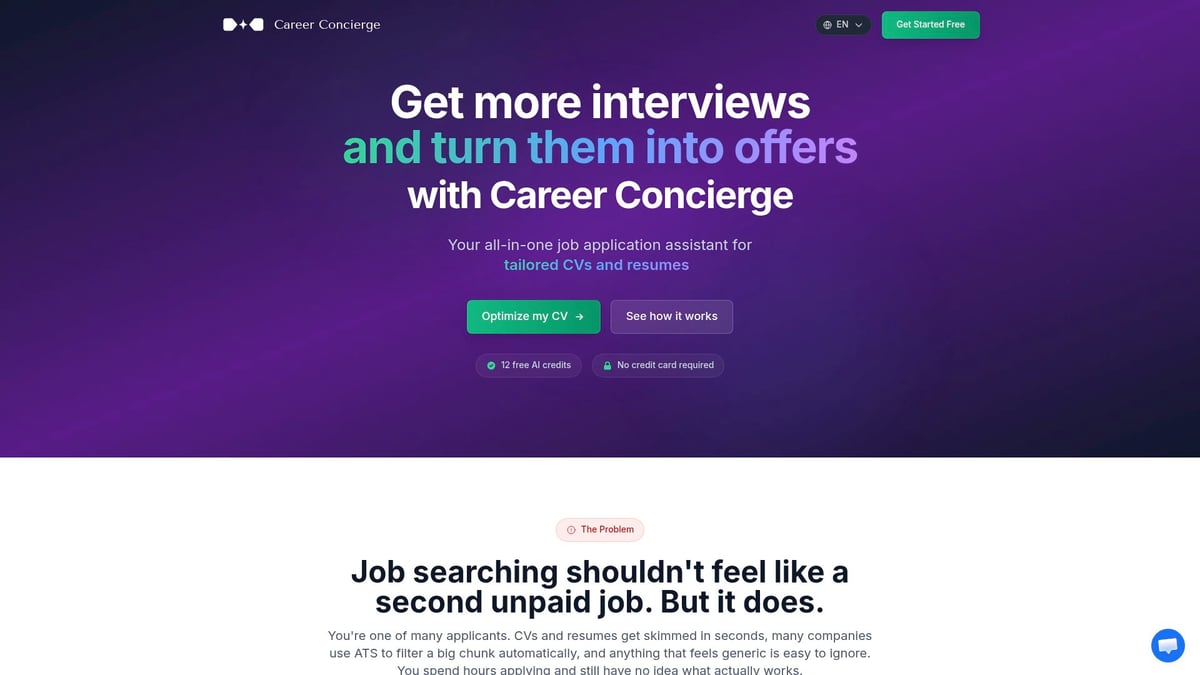
For hiring managers, these platforms ensure candidates understand the process, reducing anxiety and improving the overall experience. This fosters a more equitable interview environment, allowing talent to truly shine.
Embracing these tools not only benefits candidates but also elevates your organization’s hiring outcomes.
9 Essential Interview Best Practices for Hiring Managers 2026
Hiring top talent in 2026 demands a modern approach. To stand out in a competitive market, mastering interview best practices for hiring managers is essential. The following nine strategies blend proven techniques with the latest innovations, ensuring you attract, assess, and secure the best candidates for your organization.
1. [Craft Structured, Competency-Based Interview Questions]
Structured interviews are the gold standard for interview best practices for hiring managers in 2026. They outperform unstructured interviews by providing consistency, fairness, and predictive validity. By focusing on competencies, you ensure every candidate is evaluated against the same standards, reducing bias and improving outcomes.
Use competency-based questions tailored to the role. For example, for a technical position, ask, "Describe a time you solved a complex coding challenge." For leadership roles, inquire, "How have you motivated a struggling team to achieve its goals?" These approaches align with the Crafting effective interview questions resource, which offers actionable ideas for designing insightful questions.
Consider tools that help generate and track structured questions, making it easier to compare candidate responses. Adopting this method is one of the most effective interview best practices for hiring managers, ensuring every interview is objective and data-driven.
2. [Prioritize Candidate Experience Throughout the Process]
In today's market, candidate experience is a key differentiator. Interview best practices for hiring managers require clear, prompt communication at every stage. Set expectations early, provide detailed agendas, and personalize interactions to show respect for the candidate's time.
Collect feedback after each stage to refine your process. According to recent studies, 78% of candidates say the interview experience influences their decision to accept a job offer. Simple gestures, like timely updates and transparent timelines, can dramatically improve perceptions.
Personalizing the journey is vital. Consider tailored welcome messages or interview guides. By embedding candidate experience into your interview best practices for hiring managers, you not only attract top talent but also enhance your employer brand.
3. [Implement Inclusive and Unbiased Interview Practices]
DEI is now a core focus in interview best practices for hiring managers. Recognize and address unconscious bias by using diverse interview panels and structured evaluation rubrics. Standardizing criteria ensures fairness, regardless of background.
Blind resume reviews and structured scoring methods help level the playing field. For example, remove identifying information from applications before evaluation. Diverse panels bring multiple perspectives, reducing individual bias in decision-making.
Training your team on inclusivity and bias mitigation is crucial. Implementing these interview best practices for hiring managers leads to a more equitable, high-performing workforce while reinforcing your organization's commitment to diversity.
4. [Leverage Technology for Efficiency and Insight]
Technology is transforming interview best practices for hiring managers. Video interviews, AI-driven skills assessments, and automated scheduling streamline processes and provide valuable data. For remote or hybrid roles, video interviews allow you to assess communication skills and adaptability.
AI tools can screen applications and evaluate technical skills, freeing up time for deeper human engagement. However, maintain a balance—automation should enhance, not replace, human judgment. According to recent data, 63% of hiring managers use AI for initial screening.
Integrating technology into your interview best practices for hiring managers drives efficiency and offers powerful insights, enabling smarter, faster hiring.
5. [Master Behavioral and Situational Interview Techniques]
Behavioral and situational questions are foundational interview best practices for hiring managers. Frameworks like STAR (Situation, Task, Action, Result) help candidates structure their responses, making it easier to assess competencies.
For example, ask, "Tell me about a time you managed a project under tight deadlines." Look for specific actions and measurable results. Situational questions, such as, "How would you handle a team conflict?" reveal problem-solving and adaptability.
Use a mix of both question types to evaluate past behavior and future potential. Mastering these techniques is vital for interview best practices for hiring managers, ensuring you uncover the best fit for each role.
6. [Evaluate for Cultural Add, Not Just Cultural Fit]
Moving beyond cultural fit is crucial in interview best practices for hiring managers. Focus on cultural add—what unique perspectives or experiences can the candidate contribute? This approach fosters innovation and avoids groupthink.
Ask questions like, "What values are most important to you in a workplace?" or "Describe a time you challenged the status quo." Evaluate not just alignment with your company's mission but also how the candidate might positively influence team dynamics.
Prioritizing cultural add in interview best practices for hiring managers supports diversity and drives long-term organizational success.
7. [Assess Both Technical and Soft Skills Effectively]
Balanced assessments are central to interview best practices for hiring managers. Combine technical evaluations, such as coding challenges or case studies, with soft skill assessments like teamwork exercises and communication tests.
Real-world job simulations provide candidates a chance to demonstrate their abilities in action. For example, pair a coding task with a collaborative problem-solving exercise to assess both skill sets.
Remember, emotional intelligence and adaptability are as important as technical prowess. Incorporating both into interview best practices for hiring managers ensures you select well-rounded candidates.
8. [Provide Timely, Constructive Feedback to Candidates]
Feedback is a critical, often overlooked, component of interview best practices for hiring managers. Constructive feedback, delivered promptly, shows respect and strengthens your employer brand. Structure feedback around specific observations and actionable suggestions.
Consider using a simple template, such as:
Thank you for interviewing with us. We appreciated your insights on [topic]. To improve, we suggest [actionable advice]. We encourage you to apply for future opportunities.
Ensure feedback complies with legal standards and protects candidate privacy. Providing feedback is one of the most impactful interview best practices for hiring managers, increasing goodwill and encouraging future applications.
9. [Continuously Improve the Interview Process]
The best interview best practices for hiring managers are never static. Regularly review processes, gather feedback from both candidates and interviewers, and analyze data such as offer acceptance rates and time-to-hire.
Hold debrief sessions after each hiring round to identify strengths and areas for improvement. Make iterative changes, like refining questions or updating evaluation rubrics, based on measurable outcomes.
By adopting a mindset of continuous improvement, interview best practices for hiring managers evolve alongside business needs, ensuring ongoing hiring success.
Measuring Interview Success and Optimizing for 2026
As the hiring landscape continues to evolve, measuring the effectiveness of your interview process is crucial. In 2026, organizations must rely on data-driven insights and continuous improvement to stay ahead. By focusing on key metrics, feedback loops, and adapting to trends, you can ensure your interview best practices for hiring managers deliver the right results.

Key Performance Indicators for Interview Effectiveness
To optimize interview best practices for hiring managers, monitoring the right performance indicators is essential. The most common KPIs include offer acceptance rates, time-to-hire, and candidate satisfaction scores.
A sample KPI comparison table:
| Metric | Target (2026) | Industry Benchmark |
|---|---|---|
| Offer Acceptance Rate | 80%+ | 75% |
| Time-to-Hire (days) | <30 | 35 |
| Candidate Satisfaction | 4.5/5 | 4.0/5 |
According to Gartner HR Research on Candidate Offer Trends, 44% of candidates received multiple offers in early 2026, making it vital for hiring managers to track and improve these KPIs. Leveraging analytics dashboards helps benchmark your interview best practices for hiring managers against the competition.
Leveraging Feedback Loops for Continuous Improvement
Continuous improvement is at the heart of effective interview best practices for hiring managers. Soliciting feedback from both candidates and interviewers provides valuable insights into what is working and what needs refinement.
Implement quarterly review cycles to assess interview questions, candidate experiences, and panel performance. Use structured surveys and debrief sessions to gather actionable feedback. Incorporate lessons learned into interviewer training and update evaluation rubrics accordingly.
By closing the loop and acting on feedback, organizations can evolve their interview best practices for hiring managers to attract and secure top talent in 2026.
The Impact of Interview Quality on Employer Brand
A positive interview experience can significantly enhance your employer brand, while a negative one can quickly damage it. In today's digital age, candidates are more likely to share their experiences online, influencing future applicants.
Research shows that 60% of candidates share negative interview experiences on platforms like Indeed or Glassdoor. According to 2025 Mid-Year Job Application Statistics, candidate communication and transparency are top factors in employer reputation. Consistently applying interview best practices for hiring managers helps foster trust and increases the likelihood of positive reviews and referrals.
Adapting to Future Trends in Interviewing
Staying ahead in 2026 means being agile and ready to adapt to new interviewing trends. Innovations like VR interviews, skills-based hiring, and AI-driven insights are reshaping how organizations assess talent.
Interview best practices for hiring managers now include preparing for shifts in candidate expectations, such as flexible scheduling and digital-first interactions. Regularly scanning the market for emerging technologies and best practices ensures your processes remain competitive and effective.
By embracing change, hiring teams can future-proof their interview best practices for hiring managers and maintain a strong talent pipeline.
Resources and Tools for Hiring Managers
To support interview best practices for hiring managers, leverage a variety of platforms and educational resources:
- Interview management software: Streamline scheduling, assessments, and feedback.
- Assessment platforms: Use job simulations and skills tests.
- Training programs: Enroll in hiring manager certification courses.
- Further reading: Explore books, podcasts, and industry reports on interviewing trends.
Investing in these resources ensures your team is equipped to implement interview best practices for hiring managers and achieve hiring success in 2026.
As you navigate the evolving landscape of interviewing in 2026, putting these nine best practices into action can truly transform the way you hire and help you attract the right talent. With the competition for top candidates intensifying and expectations rising, refining your approach has never been more important. If you’re ready to streamline your process, enhance candidate experience, and leverage AI-driven interview preparation tools, you don’t have to do it alone. Take the next step toward smarter, more confident hiring—Start for free and see how CareerConcierge.io can help you achieve your hiring goals.