Behavioral Interview Questions and Answers PDF Guide 2026
Master behavioral interviews with our comprehensive guide. Get proven answers, STAR method tips, and downloadable PDF resources for 2026 job searches.

Job seekers preparing for interviews in 2026 increasingly recognize that technical skills alone won't secure their dream positions. Behavioral interview questions have become the cornerstone of modern hiring processes, with employers seeking concrete evidence of how candidates have handled real-world challenges. A well-organized behavioral interview questions and answers pdf serves as an invaluable reference tool, allowing you to prepare structured responses that demonstrate your competencies through specific examples. This comprehensive guide explores how to effectively prepare for behavioral interviews, structure your answers using proven frameworks, and leverage downloadable resources to maximize your interview performance.
Understanding Behavioral Interview Questions
Behavioral interview questions differ fundamentally from traditional interview formats. Rather than asking hypothetical scenarios or theoretical knowledge, these questions probe into your past experiences and actual behaviors in professional situations.
Key characteristics of behavioral questions include:
- Focus on specific past experiences rather than hypothetical scenarios
- Begin with phrases like "Tell me about a time when" or "Describe a situation where"
- Require concrete examples with measurable outcomes
- Assess soft skills such as leadership, communication, and problem-solving
Employers use behavioral questions because past performance serves as the strongest predictor of future success. According to research on behavioral interview strategies, candidates who prepare structured responses using real examples perform significantly better than those who rely on improvisation.

Why Employers Prioritize Behavioral Assessments
The shift toward behavioral interviewing reflects broader changes in hiring practices. Companies recognize that technical skills can be taught, but core competencies like adaptability, collaboration, and conflict resolution are more difficult to develop.
Modern applicant tracking systems and AI-powered platforms like those available through CareerConcierge.io help job seekers align their responses with the competencies employers value most. When you download a behavioral interview questions and answers pdf, you're accessing a curated collection of the most frequently asked questions across industries.
The STAR Method Framework
The STAR method remains the gold standard for structuring behavioral interview responses. This framework ensures your answers are comprehensive, focused, and demonstrate clear value to potential employers.
| STAR Component | Purpose | Key Elements |
|---|---|---|
| Situation | Set the context | Specific event, project, or challenge |
| Task | Define your responsibility | Your role, objectives, or goals |
| Action | Explain your approach | Steps taken, decisions made, skills applied |
| Result | Share the outcome | Quantifiable results, lessons learned, impact |
Crafting Effective STAR Responses
Each component of the STAR framework serves a specific purpose in building a compelling narrative. The Situation establishes context without excessive detail, typically in 2-3 sentences. Your Task clarifies what you were responsible for achieving or resolving.
The Action section represents the most substantial portion of your response. Here you detail the specific steps you took, emphasizing your individual contributions even in team settings. Be explicit about your decision-making process and the skills you leveraged.
Results should always include quantifiable metrics when possible. Instead of saying "the project was successful," specify "increased efficiency by 35% and reduced costs by $50,000 annually." The STAR technique guide from The Career Force provides additional examples of how to quantify your achievements effectively.
Common Behavioral Question Categories
Behavioral interview questions and answers pdf resources typically organize questions into competency categories. Understanding these categories helps you prepare relevant examples from your professional experience.
Leadership and Influence
Sample questions in this category:
- Describe a time when you motivated a team to achieve a challenging goal
- Tell me about a situation where you had to influence others without formal authority
- Share an example of how you developed someone on your team
When preparing for leadership questions, focus on examples that demonstrate emotional intelligence, strategic thinking, and the ability to inspire others. Even if you're not applying for a management role, employers value candidates who show leadership potential.
Problem-Solving and Decision-Making
Problem-solving questions assess your analytical abilities and judgment under pressure. These questions often begin with phrases like "Describe a complex problem you solved" or "Tell me about a difficult decision you made."
- Identify a genuine challenge that had meaningful stakes
- Explain your analytical process and the options you considered
- Detail how you gathered information and consulted stakeholders
- Share the decision you made and why
- Quantify the positive outcome that resulted
The comprehensive guide from Coursera emphasizes that problem-solving responses should highlight both your technical approach and your interpersonal skills.
Conflict Resolution and Teamwork
Workplace conflict is inevitable, and employers want to know you can navigate disagreements professionally. A behavioral interview questions and answers pdf typically includes several variations of conflict-related questions.

Consider preparing examples that demonstrate:
- Active listening and empathy
- Ability to separate personal feelings from professional objectives
- Collaborative problem-solving approaches
- Willingness to compromise when appropriate
- Focus on organizational goals rather than individual preferences
When discussing conflicts, never disparage former colleagues or employers. Frame the situation objectively and emphasize what you learned from the experience.
Industry-Specific Behavioral Questions
While core behavioral competencies remain consistent across industries, certain sectors emphasize particular skills and scenarios. A comprehensive behavioral interview questions and answers pdf should include industry-specific variations.
Technology and Engineering Roles
Technology positions often include behavioral questions about:
- Handling rapidly changing priorities or requirements
- Managing technical debt and competing deadlines
- Explaining complex concepts to non-technical stakeholders
- Learning new technologies or programming languages quickly
For technical roles, consider reviewing resources like interview preparation for engineering managers to understand the specific competencies employers seek.
Customer-Facing Positions
Customer service and sales roles emphasize different behavioral competencies. According to customer service interview strategies, employers prioritize examples demonstrating:
- De-escalation of difficult customer situations
- Going above and beyond to meet customer needs
- Building long-term client relationships
- Handling rejection or negative feedback professionally
Healthcare and Administrative Roles
Healthcare positions require behavioral examples that showcase attention to detail, ethical decision-making, and performance under pressure. Similarly, administrative roles like those discussed in office assistant interview preparation focus on organizational skills and multitasking abilities.
Creating Your Personal Answer Bank
The most effective way to prepare for behavioral interviews is developing a personal answer bank of 10-15 strong examples that can be adapted to various questions. A behavioral interview questions and answers pdf serves as your template, but your unique experiences make the answers compelling.
Selecting Your Best Examples
Choose experiences that:
- Demonstrate multiple competencies simultaneously
- Include quantifiable results and clear outcomes
- Showcase your growth and learning
- Reflect recent professional experiences (within past 3-5 years)
- Highlight skills relevant to your target position
Example Selection Matrix:
| Experience | Competencies Demonstrated | Quantifiable Result | Relevance Level |
|---|---|---|---|
| Project turnaround | Leadership, problem-solving, communication | 40% efficiency gain | High |
| Client recovery | Customer service, negotiation, persistence | $200K revenue saved | High |
| Process improvement | Innovation, analysis, collaboration | 25% time reduction | Medium |
Documenting and Refining Your Stories
Write out each example using the STAR framework, then practice delivering them conversationally. Your written behavioral interview questions and answers pdf becomes your study guide, but responses should sound natural rather than memorized during actual interviews.
Record yourself practicing answers and evaluate:
- Length (aim for 1.5-2 minutes per response)
- Clarity and organization
- Specificity of details
- Energy and enthusiasm
- Relevance to the question asked
The interview preparation tools available through modern platforms can help you practice and refine your delivery through AI-powered feedback.
Advanced Preparation Strategies
Beyond mastering individual questions, successful candidates employ strategic preparation techniques that elevate their interview performance.
Researching Company-Specific Scenarios
Review the company's website, recent press releases, and employee reviews on platforms like Glassdoor. Identify the challenges the organization faces and prepare examples that demonstrate relevant competencies.
If applying to a company undergoing digital transformation, emphasize examples of adaptability and technology adoption. For organizations focused on customer experience, prioritize service-oriented stories.
Anticipating Follow-Up Questions
Strong interviewers will probe deeper into your initial responses. After presenting your STAR answer, be prepared for follow-ups like:
- "What would you do differently if faced with that situation again?"
- "How did other team members contribute to that outcome?"
- "What did you learn from that experience?"
- "How have you applied those lessons since then?"
These follow-up questions assess your self-awareness, ability to learn from experience, and genuine ownership of the results you claim.
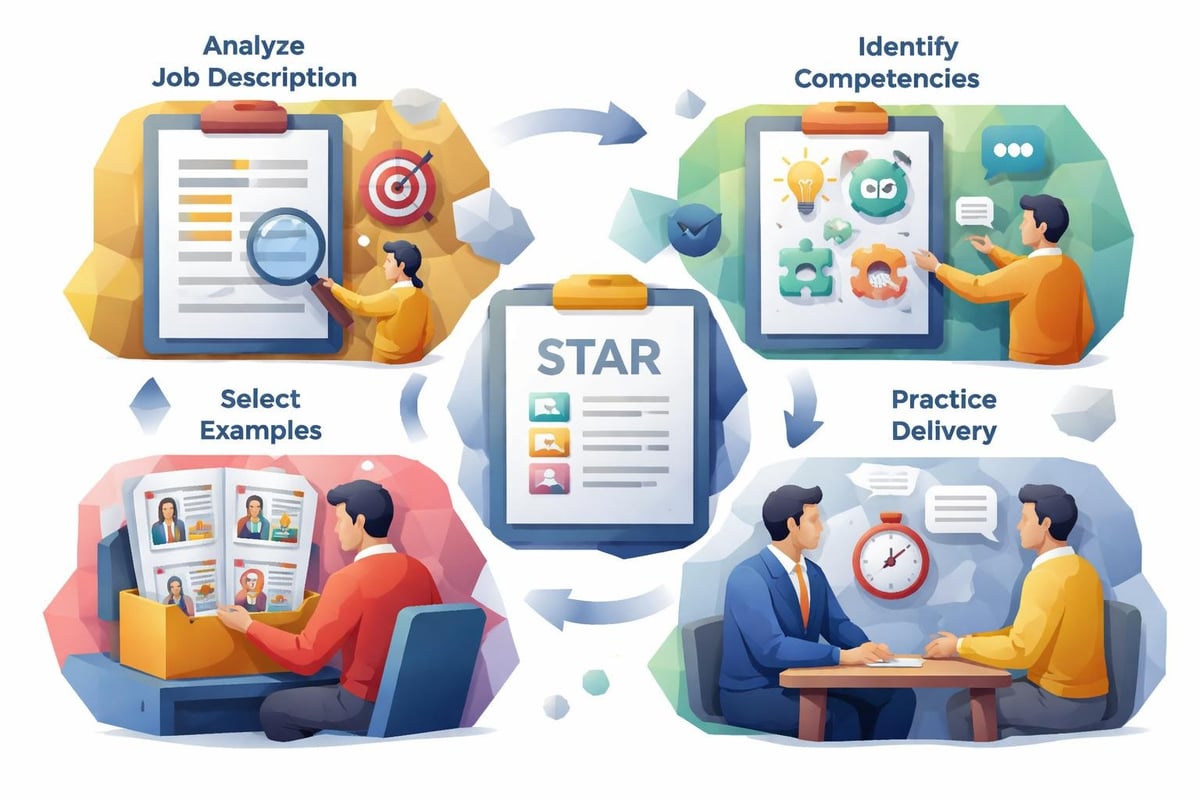
Utilizing Downloadable Resources
A behavioral interview questions and answers pdf provides structure for your preparation, but the most valuable resources offer more than just question lists. Look for PDFs that include:
- Category organization by competency type
- Sample answers with STAR formatting
- Space for documenting your own examples
- Industry-specific question variations
- Interviewer perspective and evaluation criteria
The 100 practice questions from Mac's List offers an extensive collection organized by topic, allowing you to systematically prepare for various scenarios.
Common Mistakes to Avoid
Even well-prepared candidates make preventable errors during behavioral interviews. Awareness of these pitfalls helps you maintain focus and professionalism.
Frequent mistakes include:
- Providing vague or hypothetical responses instead of specific examples
- Taking excessive time to recall appropriate situations
- Focusing too heavily on team accomplishments without clarifying personal contributions
- Neglecting to mention concrete results or outcomes
- Speaking negatively about former employers, colleagues, or clients
- Rambling without clear structure or endpoint
The behavioral interview guide from Yale emphasizes the importance of preparation in avoiding these common errors. Candidates who invest time developing structured responses naturally avoid most pitfalls.
Handling Questions Without Perfect Examples
Occasionally you'll encounter a behavioral question that doesn't align perfectly with your experience. Rather than forcing an irrelevant example or admitting complete unfamiliarity with the scenario, demonstrate your thought process.
Acknowledge the gap honestly, then either:
- Offer a related example that demonstrates transferable skills
- Explain how you would approach such a situation based on your values and experience
- Share a time you quickly learned something new or adapted to unfamiliar circumstances
This approach shows self-awareness, honesty, and problem-solving ability even when you lack the ideal example.
Tailoring Answers to Job Requirements
Generic behavioral interview questions and answers pdf resources provide foundations, but customization dramatically improves your interview success rate. Every position emphasizes different competencies, and your examples should align with those priorities.
Analyzing Job Descriptions for Competencies
Modern job descriptions contain valuable clues about behavioral competencies employers will assess. Look for:
- Action verbs that suggest specific skills (collaborate, innovate, analyze, lead)
- Required qualifications beyond technical skills
- Cultural values and organizational priorities
- Challenges the role is expected to address
Platforms like the ATS checker at CareerConcierge.io can help identify keywords and competencies emphasized in job postings, ensuring your preparation aligns with employer expectations.
Mapping Examples to Job Requirements
Create a matrix connecting your prepared examples to the job's key requirements. This ensures you have relevant stories for the competencies most likely to be assessed.
If the position emphasizes "cross-functional collaboration" and "deadline management," prioritize examples demonstrating those specific skills. Your behavioral interview questions and answers pdf should include annotations identifying which examples best address which job requirements.
Virtual Interview Considerations
The shift toward remote hiring in recent years means many behavioral interviews now occur via video platforms. While the question formats remain consistent, virtual delivery requires additional considerations.
Virtual interview best practices:
- Test technology thoroughly before the interview
- Ensure appropriate lighting and professional background
- Maintain eye contact by looking at the camera, not the screen
- Use notes strategically without reading verbatim
- Minimize distractions in your environment
- Project energy and enthusiasm through the camera
Having your behavioral interview questions and answers pdf available as reference during virtual interviews can be helpful, but avoid obvious reading or lengthy pauses while searching for information. Use it as a prompt for key details, not a script.
Measuring Your Preparation Effectiveness
As your interview approaches, assess your readiness through structured practice and self-evaluation.
Practice Methods That Work
- Solo practice: Review your behavioral interview questions and answers pdf and deliver responses aloud
- Mock interviews: Partner with a colleague or mentor for realistic practice
- Video recording: Record and critique your own performance
- AI-powered platforms: Utilize tools like those available through CareerConcierge.io's interview preparation features for automated feedback
The interview warm-up resources available through specialized platforms help you build confidence and refine delivery before high-stakes conversations.
Self-Assessment Criteria
Evaluate each practice response against these criteria:
| Criterion | Target | Self-Rating (1-5) |
|---|---|---|
| Follows STAR structure | Clear S-T-A-R components | |
| Appropriate length | 1.5-2 minutes | |
| Specific details | Names, numbers, dates included | |
| Demonstrates ownership | Clear personal contribution | |
| Quantified results | Metrics and outcomes stated | |
| Natural delivery | Conversational, not memorized | |
| Relevant to question | Directly addresses competency |
Consistent practice using your behavioral interview questions and answers pdf as a foundation builds the confidence and fluency that distinguish exceptional candidates from average ones.
Continuous Improvement Beyond the Interview
Behavioral interview preparation doesn't end when you receive an offer. The self-reflection and documentation process provides lasting value throughout your career.
Building Your Career Portfolio
The examples you develop for behavioral interviews become part of your professional portfolio. Document achievements in real-time rather than struggling to recall details years later. Maintain an ongoing log of:
- Significant projects and their outcomes
- Challenges you overcame
- Leadership or initiative examples
- Skills you developed
- Recognition or awards received
This ongoing documentation makes future interview preparation exponentially easier and ensures you can speak compellingly about your accomplishments at any time.
Applying Interview Skills to Performance Reviews
The STAR framework that structures behavioral interview responses works equally well for performance reviews, promotion discussions, and professional development conversations. The analytical skills you develop preparing for behavioral interviews enhance your ability to advocate for yourself throughout your career.
Resources like those found in project manager interview preparation demonstrate how behavioral competencies extend across roles and career stages, making your initial investment in creating a comprehensive behavioral interview questions and answers pdf a resource you'll reference repeatedly.
Mastering behavioral interviews requires strategic preparation, structured responses using the STAR method, and practice that builds genuine confidence in your ability to articulate your professional value. A well-organized behavioral interview questions and answers pdf serves as your roadmap, but your unique experiences and authentic delivery make the difference between acceptable and exceptional performance. CareerConcierge.io provides comprehensive interview preparation tools, AI-powered practice platforms, and optimization features that help you present your best self to potential employers, transforming interview preparation from a stressful obligation into a strategic advantage in your job search.