12 Must-Know RPA Interview Questions for 2026 Success
Prepare for 2026 with these 12 must know RPA interview questions covering key skills, real world scenarios, and expert tips to help you excel in your next interview.

The world of RPA is evolving fast, and 2026 is shaping up to be the most competitive year yet for automation professionals. As more companies embrace intelligent automation, standing out means being prepared for the toughest rpa interview questions.
This guide reveals the 12 must-know rpa interview questions for 2026. You’ll explore core technical topics, process selection, and scenario-based challenges, all with practical examples and expert advice.
Ready to boost your confidence and land your ideal role? Dive in, learn what top employers are asking, and prepare to ace your next interview.
The Evolving RPA Job Market in 2026
The landscape for RPA professionals is rapidly transforming as we head into 2026. Organizations across industries are embracing automation to streamline operations, reduce costs, and stay competitive. As a result, the demand for candidates who can confidently answer rpa interview questions is higher than ever.

RPA Adoption Trends and Industry Growth
RPA adoption is experiencing an unprecedented surge in sectors like finance, healthcare, retail, and logistics. According to RPA Market Growth Projections, the global RPA market is on track to exceed $20 billion by 2026. This explosive growth is fueled by rising operational demands and the need for scalable, cost-effective automation solutions.
Employers are increasingly seeking specialists who are proficient in multiple RPA tools such as UiPath, Power Automate, and Blue Prism. As AI and ML capabilities are integrated into automation platforms, job requirements are evolving. Candidates are now expected to address rpa interview questions that cover both traditional automation and intelligent automation concepts.
A prime example of this shift is seen in a global bank that leveraged RPA to scale its operations. By automating repetitive compliance and reporting tasks, the bank not only improved efficiency but also created new roles for automation architects and process analysts. This case highlights how RPA growth is directly translating into diverse and high-impact job opportunities.
Shifting Skillsets and Employer Expectations
Technical proficiency alone is no longer sufficient for RPA roles in 2026. Employers are prioritizing professionals who combine deep technical knowledge with a strong understanding of business processes. Experience in end-to-end automation, cross-platform integration with APIs, scripting, and cloud-based automation has become essential for candidates preparing for rpa interview questions.
Soft skills are equally critical in today’s market. Communication, problem-solving, and adaptability are now core competencies for RPA professionals. Many organizations favor applicants who can demonstrate continuous learning, especially as automation trends evolve. For instance, companies are increasingly hiring candidates who stay current with RPA certifications and industry best practices.
Continuous learning and adaptability are crucial, as employers value individuals who proactively expand their expertise. The ability to articulate complex automation benefits to stakeholders, manage change, and collaborate across teams is now a significant differentiator. As a result, those who prepare for rpa interview questions with a blend of technical and soft skills are best positioned to succeed in the competitive 2026 job market.
12 Must-Know RPA Interview Questions for 2026 Success
Landing a top RPA role in 2026 starts with mastering the right rpa interview questions. Employers now expect candidates to demonstrate technical expertise, business acumen, and adaptability. The following 12 rpa interview questions reflect what leading organizations are asking, covering foundational concepts, real-world scenarios, and advanced problem-solving. Use these questions and answers to benchmark your knowledge and prepare for the evolving demands of RPA roles.

1. What is Robotic Process Automation (RPA) and how does it differ from traditional automation?
Robotic Process Automation (RPA) is a technology that uses software robots to mimic human actions for automating repetitive tasks across business applications. Unlike traditional automation, which relies heavily on backend APIs or scripting, RPA interacts with user interfaces just like a person would.
Key characteristics of RPA include scalability, flexibility, and cost efficiency. For instance, automating invoice processing with RPA involves bots extracting data from PDFs and entering it into ERP systems, while legacy scripting might require custom code and direct database manipulation.
Employers use this question in rpa interview questions to assess your foundational understanding of RPA versus older automation methods. Mastery here signals you can communicate the unique value RPA brings to organizations.
2. Can you describe the main components of an RPA platform?
A robust answer to rpa interview questions about platform architecture covers these core components:
- Bot/Robot: Executes automated tasks.
- Orchestrator/Controller: Manages, schedules, and monitors bots.
- Development Studio: Where automations are designed and tested.
- Analytics Module: Tracks performance and generates reports.
For example, UiPath’s architecture features these components, allowing seamless end-to-end automation. Understanding this ecosystem shows employers you grasp the full automation lifecycle, not just isolated tasks.
3. How do you identify and prioritize processes for RPA automation?
Selecting the right processes is critical for RPA success. The best candidates for automation are rule-based, high volume, repetitive, and have stable inputs. Tools like process mining and Process Definition Documents (PDDs) assist in this assessment.
A real-world example: automating order entry rather than exception handling, which typically requires more human judgment. Data reveals that 70% of failed RPA projects result from poor process selection, making this one of the most important rpa interview questions.
4. What are attended, unattended, and hybrid bots? Give practical use cases.
RPA interview questions often test your understanding of bot types:
- Attended bots work alongside humans, ideal for front-office tasks like customer service.
- Unattended bots operate independently, perfect for back-office batch processing.
- Hybrid bots combine both, adapting to enterprise needs.
For instance, an attended bot can assist agents with real-time data lookup, while an unattended bot handles nightly data uploads. Hybrid bots are increasingly popular in 2026, requiring tool-agnostic knowledge.
5. How do you ensure security and compliance in RPA solutions?
Security is a top concern in rpa interview questions. Best practices include using credential vaults, enforcing role-based access, and encrypting sensitive data. Compliance demands robust audit trails and adherence to regulations like GDPR and SOX.
For example, handling financial data in an RPA workflow requires strict access controls and logging. Statistics show 60% of RPA breaches stem from poor credential management, reinforcing why this question matters.
6. Explain the concept of selectors in UiPath (or similar tools) and how to handle dynamic elements.
Selectors are XML-like tags that identify UI elements for automation. RPA interview questions about selectors probe your ability to tackle real-world challenges.
Dynamic selectors, such as changing IDs in web forms, require wildcards, variables, or anchor-based techniques. For example:
<wnd app='chrome.exe' title='Invoice*'/>
Demonstrating troubleshooting skills with selectors is often part of practical assessments.
7. How do you handle exceptions and errors in RPA workflows?
Exception handling is vital for process reliability. There are three main types:
- System exceptions (e.g., network failures)
- Business exceptions (e.g., invalid data)
- Application exceptions (e.g., software crashes)
Strategies include Try-Catch blocks, retries, logging, and alerts. Well-designed error handling can reduce bot downtime by 40%. RPA interview questions on this topic assess your ability to build resilient automations.
8. What is process mining and how does it enhance RPA implementation?
Process mining analyzes event logs to discover, monitor, and optimize business processes. Integrating process mining with RPA improves process discovery and identifies automation candidates.
For example, using process mining tools to map and optimize invoice handling increases automation ROI. Gartner predicts 80% of RPA projects in 2026 will leverage process mining, making it a top differentiator in rpa interview questions.
9. How do you integrate RPA with APIs and external systems?
API integration is crucial for scalable automation. RPA platforms support REST/SOAP connectors, custom scripts, and native integrations.
A typical scenario: connecting bots to a CRM or ERP system to streamline data exchange. Hybrid automation, combining UI and API steps, is common in 2026. When answering rpa interview questions, mention real integration experiences.
10. Describe a challenging RPA project you handled and how you overcame obstacles.
Use the STAR framework (Situation, Task, Action, Result) to structure your response. Focus on technical hurdles like unstable UIs or legacy system migration.
For example, migrating bots during a platform upgrade required teamwork and rapid learning. Employers use such rpa interview questions to assess problem-solving, adaptability, and resilience.
11. What are the key differences between leading RPA tools (UiPath, Automation Anywhere, Blue Prism, Power Automate)?
A common theme in rpa interview questions is tool comparison. Here’s a summary table:
| Feature | UiPath | Automation Anywhere | Blue Prism | Power Automate |
|---|---|---|---|---|
| Usability | High | Medium | Medium | High |
| Scalability | High | High | High | Medium |
| Integration | Extensive | Extensive | Moderate | Strong (MS) |
| Licensing | Flexible | Subscription | Enterprise | Included (MS) |
Multi-tool familiarity is now a top requirement, with 65% of employers using more than one platform.
12. What are the future trends in RPA and how should professionals prepare?
RPA interview questions increasingly focus on future-readiness. Key trends include intelligent automation, AI/ML integration, hyperautomation, and citizen development.
Upskilling in AI, process mining, and cloud automation is vital. For example, RPA bots using NLP for document processing are becoming standard. Stay ahead through continuous learning and certifications.
For a comprehensive list of technical, process, and scenario-based rpa interview questions relevant for 2026, explore this RPA Interview Questions Compilation.
Technical and Soft Skills Employers Seek in RPA Professionals
In 2026, landing a top RPA role means excelling in both technical and soft skills. Employers are searching for candidates who can not only answer rpa interview questions with confidence, but also demonstrate the versatility to drive automation projects from concept to completion.

Technical Skills for RPA Roles
Technical expertise remains the foundation for success in RPA. Employers expect proficiency with leading platforms like UiPath, Blue Prism, Power Automate, and Automation Anywhere. Hands-on experience with scripting languages such as Python or VB is highly valued.
You should also be comfortable with API integration and process mapping, as cross-platform automation is now a standard requirement. Familiarity with cloud-based automation, version control, and process mining tools gives you a competitive edge. In rpa interview questions, articulating how you have applied these technical skills in real projects will set you apart.
Essential Soft Skills for RPA Success
While technical know-how opens the door, soft skills ensure you thrive within a team and deliver results. Analytical thinking helps you break down complex workflows, while strong communication skills bridge the gap between technical teams and business stakeholders.
Adaptability is crucial in a landscape where automation technologies rapidly evolve. Effective stakeholder management enables you to align automation goals with business priorities. When answering rpa interview questions, highlight times you resolved conflicts, adapted to change, or led cross-functional teams to success.
The Power of Balanced Skills in RPA Interviews
RPA employers increasingly look for candidates who blend technical and interpersonal abilities. According to recent studies, 80% of RPA project delays stem from communication gaps, not technical issues alone.
Behavioral rpa interview questions are designed to reveal how you work under pressure, collaborate, and solve problems creatively. Candidates who showcase both skill sets are twice as likely to receive job offers, reflecting the value placed on well-rounded professionals in 2026.
Tips to Showcase Your Skills in RPA Interviews
To stand out, prepare specific examples that demonstrate both your technical and soft skills. Use the STAR method to structure your answers, focusing on situations where you combined process expertise with teamwork or leadership.
Practice mock interviews and get feedback from peers to refine your delivery. For a comprehensive preparation strategy, review the Interview preparation checklist to ensure you are covering all aspects of readiness. Remember, weaving the rpa interview questions keyword naturally into your responses will reinforce your expertise and attention to detail.
Scenario-Based and Behavioral RPA Interview Questions
Facing scenario-based and behavioral RPA interview questions is now a standard part of the hiring process for automation roles in 2026. These questions dig deeper than technical knowledge, testing your adaptability, analytical thinking, and ability to handle real workplace challenges. To stand out, you need to master both the technical and interpersonal aspects these questions reveal.

Common Scenario-Based Questions
Scenario-based RPA interview questions assess your practical problem-solving skills and your approach to real-world automation challenges. Interviewers often ask, "How would you automate a process with frequent exceptions?" or "Describe your strategy for integrating RPA with legacy systems." These questions require you to demonstrate not just tool proficiency but also business process understanding and adaptability.
To answer effectively, use structured frameworks like STAR (Situation, Task, Action, Result) or SOAR (Situation, Obstacle, Action, Result). For example:
- Situation: Automating compliance checks for a financial institution.
- Obstacle: Frequent changes in regulatory requirements.
- Action: Designed modular bots with dynamic rule sets.
- Result: Reduced compliance processing time by 40 percent.
Employers expect detailed, context-rich responses that show you can anticipate issues and adapt. Practicing with mock scenarios enhances your readiness for rpa interview questions that blend technical and process-oriented thinking. Reviewing guides like the Technical interview questions guide can further sharpen your approach to complex automation scenarios.
Behavioral Interview Questions for RPA Roles
Behavioral RPA interview questions explore your soft skills, such as teamwork, conflict resolution, and continuous improvement. Examples include, "Describe a time you disagreed with a team member on an automation approach," or "Share an experience where you learned from an RPA project failure." These questions help employers assess how well you align with company culture and handle interpersonal challenges.
Use the STAR framework to structure your answers, focusing on the situation, your response, and what you learned. Data shows that 70 percent of employers use behavioral questions to evaluate culture fit and adaptability. Highlighting how you communicate, resolve conflicts, and pursue ongoing learning can set you apart.
To prepare, study common behavioral interview themes and practice articulating your experiences. For more insights into these question types, review this comprehensive guide on behavioral questions for interviews. Aligning your answers with organizational values and RPA best practices demonstrates both technical and professional maturity.
Mastering scenario-based and behavioral rpa interview questions will give you the confidence and edge needed to excel in 2026’s competitive automation job market.
RPA Interview Preparation Strategies for 2026
Preparing for RPA interviews in 2026 requires a focused, multi-step approach. With the job market more competitive than ever, a clear strategy can make all the difference. Mastering rpa interview questions is essential to stand out and succeed.
Start by researching the companies and roles you are targeting. Understand which RPA platforms they use and the types of processes they automate. Review the latest RPA Adoption Statistics 2026 to learn about market trends and sector-specific growth, helping you tailor your preparation to industry needs.
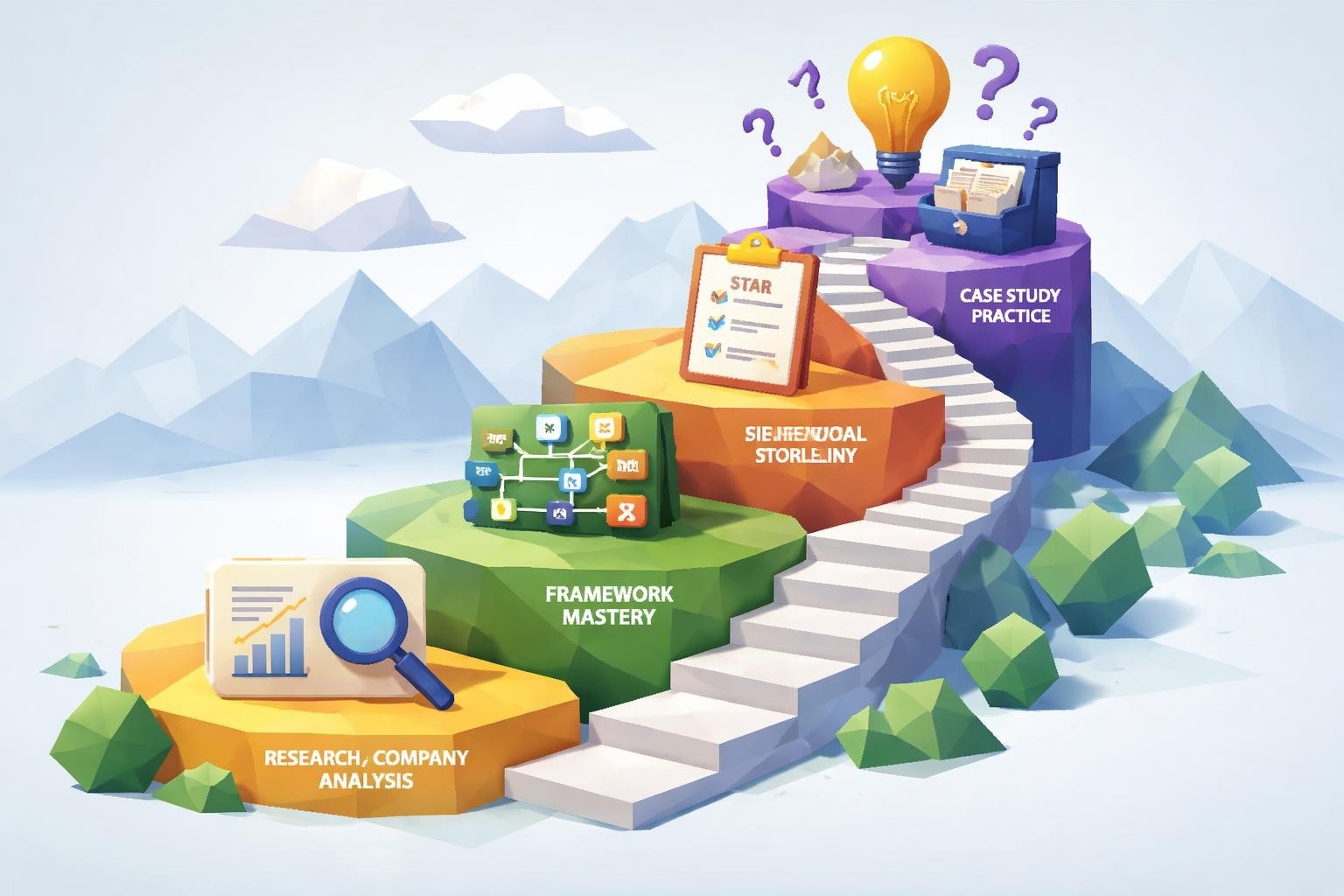
Next, create a checklist for rpa interview questions that are most relevant to your desired position. Group them by technical, process-oriented, and scenario-based categories. For each, write out sample answers and highlight your practical experience, using real project stories and quantifiable results.
Hands-on practice is crucial. Work with the most current versions of RPA tools like UiPath, Power Automate, or Blue Prism. Build sample workflows, experiment with APIs, and tackle common automation challenges. Mock interviews are highly effective; candidates who complete at least three have a 50% higher success rate. Simulate real interview settings, focusing on both technical demos and behavioral responses.
Join online communities and forums dedicated to RPA professionals. Participate in discussions, share solutions, and seek advice on tricky rpa interview questions. Engage with industry experts through webinars, blogs, and networking events to stay informed about evolving best practices.
Pursue certification programs in RPA and intelligent automation. Many employers value current credentials and proof of continuous learning. Use process documentation from your previous work to demonstrate your expertise and structured approach during interviews.
Finally, refine your resume and interview skills in tandem. Explore practical interview and resume tips to ensure your achievements and technical strengths are clearly communicated. Staying updated with the latest trends and dedicating time to structured practice will position you for success in every stage of the interview process.
Now that you’ve explored the essential RPA interview questions and the evolving skills employers are seeking for 2026, you’re already a step ahead in your preparation. But turning knowledge into results takes practice and the right resources. If you want to craft an impressive resume, build tailored cover letters, and sharpen your interview skills with professional guidance, I recommend giving CareerConcierge io a try. Their platform brings together AI-powered tools and expert insights to help you stand out in a crowded job market. Ready to take the next step in your RPA career journey?
Start for free