12 Essential Sales Job Interview Questions for 2026 Success
Discover the 12 essential sales job interview questions for 2026 and proven strategies to excel. Prepare with expert insights to secure your next sales role.

Sales job interviews in 2026 are more competitive and demanding than ever before. Companies are raising the bar, and only the most prepared candidates secure the best opportunities.
Mastering sales job interview questions is the key to standing out in this rapidly evolving market. Knowing what to expect and how to respond gives you an undeniable edge.
This article reveals the 12 essential sales job interview questions for 2026, along with proven strategies and insider insights. Use this guide to prepare with confidence and outperform the competition.
We will break down each must-know question, explain its importance, and provide actionable tips to help you craft winning answers in 2026.
The Evolving Sales Interview Landscape in 2026
Sales job interview questions in 2026 reflect a rapidly transformed landscape. Advancements in artificial intelligence, automation, and CRM platforms are reshaping what employers expect from sales professionals. Candidates must demonstrate not only traditional sales skills but also the ability to thrive in a tech-driven, data-rich environment.

Technological Advancements and New Expectations
With AI-driven tools now standard, sales job interview questions increasingly focus on digital adaptability. Employers expect candidates to be fluent in using automation, analytics, and sophisticated CRM systems. Interviewers might ask about experience with AI-powered lead scoring or automated outreach, testing both technical skills and strategic thinking.
Digital Fluency and Data-Driven Skills
Modern sales teams rely on data for every decision. Interviewers seek evidence that candidates can interpret sales metrics, optimize pipelines, and leverage insights to improve results. Industry reports show that digital fluency and the ability to analyze customer data are among the top traits for 2026. Sales job interview questions often probe how candidates use technology to drive performance.
| Top 2026 Sales Skills | Why They Matter |
|---|---|
| Digital Fluency | Adapting to new technologies |
| Data Literacy | Making informed decisions |
| Adaptability | Navigating market changes |
| Remote Communication | Succeeding in hybrid teams |
Behavioral, Situational, and Remote Skills
The shift toward behavioral and situational sales job interview questions is significant. Employers want real-world examples of problem-solving, resilience, and collaboration. Candidates will be asked to recount specific situations where they overcame objections or worked across teams. The rise of remote and hybrid roles means interviewers also assess digital communication abilities and experience managing virtual sales cycles.
For more on these evolving question types and best practices, candidates can benefit from the Sales Interview - Preparation Guide & Best Practices, which details the STAR method and competency-based interviewing.
Virtual Interviews, AI Assessments, and Key Statistics
Virtual interviews are now the norm, with AI-powered assessments screening candidates for both skills and soft traits. Companies use automated video interviews to evaluate communication, presence, and adaptability. Growth mindset and resilience are tested through scenario-based prompts and real-time challenges.
Recent statistics reveal that the average sales interview process in 2026 lasts 3 to 6 weeks, often involving three or more rounds. Formats range from live virtual panels to asynchronous video submissions and interactive simulations. Success rates favor candidates who prepare for digital assessments and can clearly articulate their value in response to sales job interview questions.
How to Prepare for a Sales Job Interview in 2026
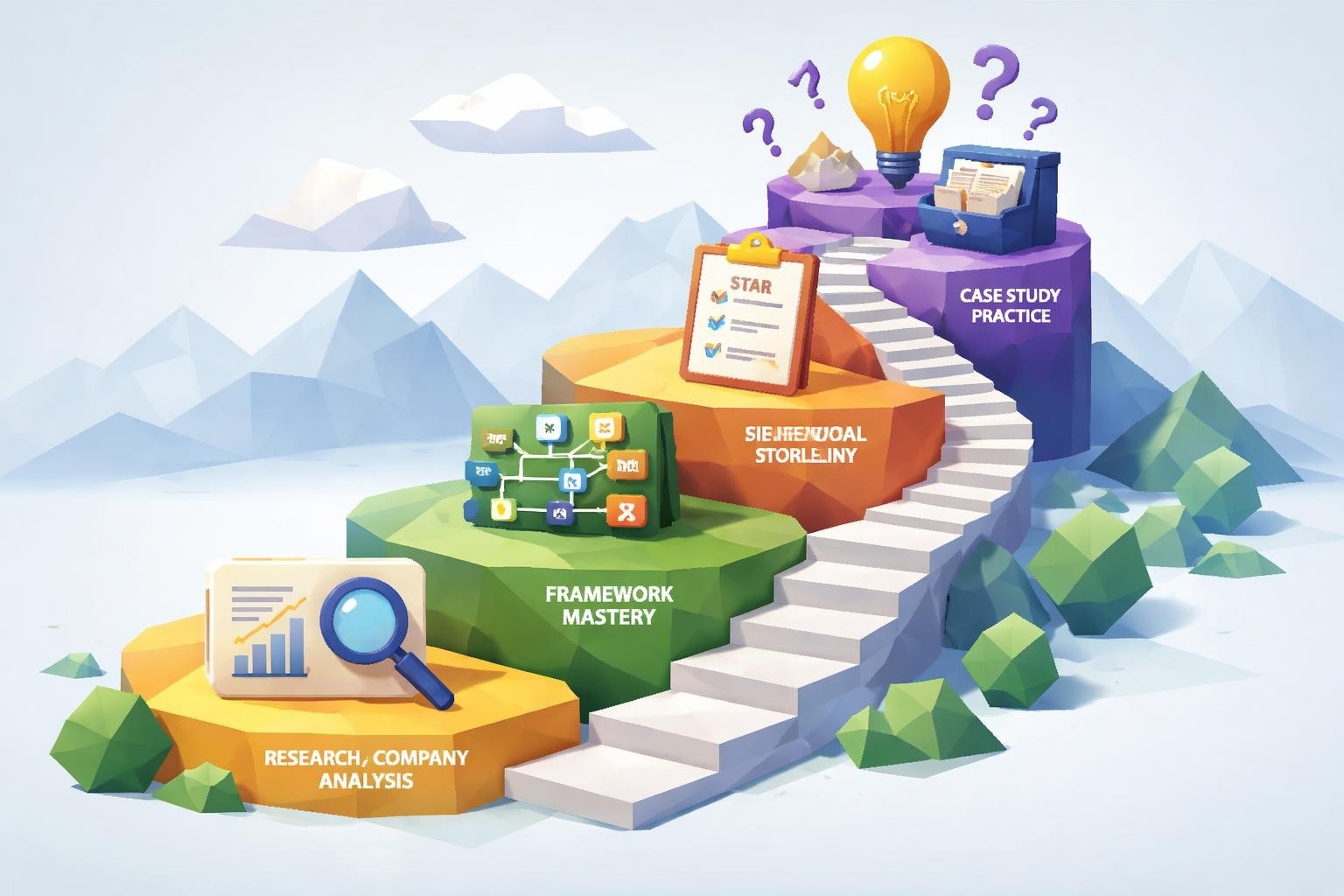
Preparing for a sales job interview in 2026 demands more than traditional methods. The landscape is fast-moving, with technology, data, and expectations shaping every conversation. To stand out, candidates must blend research, practice, and digital readiness to master sales job interview questions and present themselves as forward-thinking professionals.

Research the Company and Role
Begin by immersing yourself in the company's mission, values, and recent milestones. Analyze the job description to pinpoint required skills and core responsibilities. Leverage LinkedIn, Glassdoor, and company blogs to uncover insider perspectives and cultural insights.
For example, if you are interviewing for a SaaS sales position, review recent product launches and read customer testimonials to align your pitch. A thorough understanding of the company will help you tailor your answers to sales job interview questions and demonstrate genuine enthusiasm.
For a step-by-step approach, consult this Interview preparation checklist to ensure you cover all bases before your interview.
Practice Behavioral Interview Techniques
Employ the STAR method (Situation, Task, Action, Result) to structure your responses for behavioral sales job interview questions. This approach ensures your answers are concise and impactful.
Practice telling stories that highlight your results, using numbers where possible to show your impact. Record your responses and review them to refine clarity and delivery. Remember, interviewers look for candidates who can clearly articulate how they solved challenges and contributed to team goals.
Leverage Technology for Interview Prep
Make use of AI-powered platforms and mock interview tools to simulate real-world interview scenarios. These can help you practice responding to sales job interview questions with confidence.
Engage in video interview simulations to enhance your virtual presence. Automated feedback can identify areas for improvement in communication, body language, and tone. Embracing technology in your preparation will set you apart in the digital-first hiring environment of 2026.
Prepare Questions for the Interviewer
Arriving prepared with insightful questions shows your engagement and strategic thinking. Ask about team culture, sales processes, and opportunities for growth to demonstrate your interest.
Consider questions like:
- What are the biggest challenges facing your sales team this year
- How does the company support ongoing professional development
- What tools or technologies does your sales team use daily
Asking thoughtful questions in response to sales job interview questions can leave a strong impression.
Optimize Your Digital Presence
Ensure your LinkedIn and other professional profiles reflect your achievements, experience, and brand. Recruiters routinely review online profiles to evaluate candidate fit and professionalism.
Update your profile with recent wins, certifications, and endorsements relevant to the sales job interview questions you expect to face. An optimized digital presence can serve as a silent advocate during the selection process.
Manage Pre-Interview Logistics
For virtual interviews, double check your internet connection, lighting, and background to create a distraction-free setting. Dress professionally and test your audio and video equipment ahead of time.
For in-person interviews, bring printed copies of your resume and a notepad for notes. Managing these logistics ensures you are calm and prepared to handle any sales job interview questions that arise.
Mindset and Confidence
Adopt techniques to reduce anxiety and boost your self-assurance before the interview. Practice positive visualization, rehearse your answers, and remind yourself of past achievements.
Confidence is contagious. When you approach sales job interview questions with a positive mindset, you project credibility and readiness to tackle challenges. Preparation truly is the foundation for success in 2026.
12 Essential Sales Job Interview Questions for 2026 Success
Mastering sales job interview questions is critical for landing your ideal role in 2026. Interviewers are looking for more than just experience—they want adaptability, digital savvy, and data-driven thinking. Below, we break down the 12 most important sales job interview questions for 2026, with strategies, examples, and insights to help you stand out.

1. Tell Me About Yourself and Your Sales Journey
This opening question sets the stage for the entire interview. Interviewers use it to gauge your self-awareness, communication skills, and ability to summarize relevant experience. When answering, focus on your sales background, major achievements, and how you've adapted through changing environments.
A strong response might follow this structure:
- Briefly state your current role and years in sales.
- Highlight a key accomplishment.
- Explain what drives your passion for sales and learning.
For example:
"In my five years as a SaaS sales specialist, I've consistently exceeded targets, most recently growing pipeline revenue by 40 percent. I thrive in fast-paced environments and continuously upskill in digital tools to stay ahead."
Avoid rambling or including unrelated details. Practice delivering your story confidently. For more tips and updated sales job interview questions, check 10 Sales Interview Questions and Answers for 2026.
2. What Do You Know About Our Company and Why Do You Want to Work Here?
This is a core sales job interview question, used to evaluate your research skills and cultural fit. Show that you've studied the company’s mission, values, and recent developments. Connect your career goals to the company's vision.
For instance, reference a recent product launch or company achievement. You could say: "I noticed your company recently expanded into the APAC market, which aligns with my experience in international SaaS sales. I'm drawn to your innovative culture and see a strong match with my skills."
Data shows that 75 percent of hiring managers prefer candidates who demonstrate genuine interest. Always tailor your answer to the specific employer, avoiding generic statements.
3. Describe a Time You Overcame a Challenging Objection from a Prospect
Interviewers want to assess your resilience, creativity, and communication. Use the STAR method to structure your answer:
- Situation: Set the scene.
- Task: Define your objective.
- Action: Describe what you did.
- Result: Share the outcome.
Example: "A prospect was hesitant about our pricing. I listened to their concerns, provided a detailed ROI analysis, and shared customer testimonials. We closed the deal, and the client renewed the following year."
Objection handling is the number one skill cited by sales leaders for 2026. Focus on empathy, problem-solving, and persistence when addressing these sales job interview questions.
4. How Do You Stay Up-to-Date with Sales Trends and Technology?
Continuous learning is essential in the evolving sales landscape. Employers want to know you proactively update your skills.
Share specific methods:
- Following industry blogs and newsletters.
- Attending webinars and virtual conferences.
- Earning certifications in CRM or sales automation tools.
Example: "I subscribe to top sales podcasts, attend quarterly webinars, and recently completed a certification in AI-powered CRM platforms."
Data shows 68 percent of top sales professionals invest in ongoing development. Highlight your commitment to learning in your sales job interview questions responses.
5. What Sales Metrics Do You Track and Why?
This question tests your understanding of key performance indicators (KPIs). Mention metrics like conversion rates, pipeline velocity, and customer acquisition cost.
Explain how you use data to drive results: "I regularly monitor lead-to-close conversion rates and pipeline velocity to identify bottlenecks. This data helps me prioritize high-potential deals and streamline my process."
Employers want analytical thinkers who leverage sales analytics platforms. In 2026, data-driven decision-making is central to successful sales job interview questions answers.
6. Walk Me Through a Successful Deal You Closed—What Made It Work?
Here, interviewers assess your sales process knowledge. Start from lead generation, discuss your approach, and explain what led to success.
For example: "I identified a large enterprise lead, worked with marketing to customize outreach, and coordinated with product to tailor the demo. Persistent follow-up and addressing stakeholder concerns led to a six-figure deal."
Expect follow-up questions about teamwork or negotiation. Emphasize how you customized your approach and communicated value.
7. How Do You Handle Rejection and Maintain Motivation?
Sales involves frequent rejection. Interviewers want to see emotional intelligence and resilience.
Share your strategies:
- Reframing setbacks as learning opportunities.
- Setting clear goals and celebrating small wins.
- Seeking feedback to improve.
Example: "After losing a major account, I reviewed my approach, sought feedback, and set new weekly targets. This helped me bounce back and close three new deals the next month."
Data reveals 80 percent of sales professionals face regular rejection. A growth mindset is crucial in sales job interview questions.
8. Describe a Time You Collaborated with Other Teams to Achieve a Sales Goal
Cross-functional collaboration is increasingly important. Discuss working with marketing, product, or customer success teams.
Example: "For a product launch, I coordinated with marketing to align messaging and with customer success to ensure a smooth onboarding experience. Our teamwork resulted in a 25 percent increase in first-quarter sales."
Highlight communication, leadership, and adaptability. In 2026, 60 percent of sales roles require regular collaboration.
9. How Do You Prioritize and Manage Your Sales Pipeline?
This sales job interview question evaluates your organizational and strategic skills. Discuss your use of CRM tools, lead scoring, and time management techniques.
Example: "I use our CRM to categorize leads by stage and priority, setting daily tasks for follow-ups. Automation helps me focus on high-value prospects and avoid pipeline stagnation."
Trends show growing use of AI for pipeline management. Show how you maximize efficiency in your process.
10. What Are Your Short- and Long-Term Career Goals in Sales?
Employers look for ambition and alignment with company direction. Share your immediate and future goals, such as advancing from SDR to sales manager.
Example: "My short-term goal is to master enterprise sales and contribute to team targets. Long-term, I aim to lead a high-performing sales team within your organization."
Balance ambition with humility and tie your goals to the company's opportunities. Clear aspirations impress interviewers during sales job interview questions.
11. How Would You Sell Our Product/Service to a Skeptical Prospect?
This question tests your product knowledge and persuasive skills. Structure your answer as a mini pitch tailored to the company's offering.
Example: "I would start by asking about the prospect's pain points, then demonstrate how our product addresses those needs. Sharing relevant case studies and ROI data helps overcome skepticism."
Avoid generic pitches. Customize your approach to the company and role. Creativity and customer focus are key in these sales job interview questions.
12. How Do You Use Data and Feedback to Improve Your Sales Performance?
Self-evaluation and adaptability are highly valued. Discuss how you analyze win/loss reports, seek feedback, and test new approaches.
Example: "After reviewing lost deals, I noticed a pattern in objections. I adjusted my pitch, tested new messaging, and saw a 20 percent improvement in close rates."
Top performers are twice as likely to use feedback loops. Emphasize coachability and continuous improvement in your sales job interview questions answers.
Pro Tips for Answering Sales Interview Questions in 2026
Preparing for sales job interview questions in 2026 means more than memorizing answers. Success now relies on strategy, adaptability, and leveraging technology. These pro tips will help you present your best self, stand out from the competition, and secure your ideal sales role.

Mastering the STAR Method for Sales Interviews
Behavioral questions dominate sales job interview questions in 2026, and the STAR method remains your best tool for clear, concise answers. STAR stands for Situation, Task, Action, and Result.
| Step | What to Cover | Example (Objection Handling) |
|---|---|---|
| Situation | Set the context | "A major client was hesitant about our price" |
| Task | Your responsibility | "I needed to show the value of our solution" |
| Action | Steps you took | "I shared data, testimonials, and ROI cases" |
| Result | Outcome, using numbers if possible | "The client signed a 2-year contract" |
Practice using STAR to structure your stories. Avoid vague details, focus on impact, and always end with measurable results. This approach demonstrates your analytical skills and makes your achievements memorable.
Personalizing Your Answers for Each Company
Generic responses are a red flag in sales job interview questions. Instead, tailor every answer to the company’s industry, culture, and strategic needs. Use specific language from the job description, reference recent company achievements, and align your experience with their priorities.
For example, if you’re interviewing for a SaaS company, highlight your experience with subscription models and customer retention. For retail, emphasize product knowledge and upselling. Personalization shows you have done your homework and are invested in the company’s success.
Leveraging Technology and AI in Your Preparation
In 2026, technology is your ally for mastering sales job interview questions. Use AI-powered platforms for mock interviews, automated feedback, and real-time analytics on your communication style. Resources like Best interview preparation websites can help you find the most effective tools for your needs.
Virtual simulations improve your presence and adaptability in digital interviews. AI resume checkers can also match your achievements with job requirements, ensuring you present yourself as the ideal candidate. Embrace these tools to sharpen your skills and stay competitive.
Demonstrating Emotional Intelligence and Growth Mindset
Employers now seek candidates who display high emotional intelligence and a growth mindset when answering sales job interview questions. Share stories where you learned from setbacks, adapted to change, or received constructive feedback positively.
For instance, describe a time you missed a target, analyzed what went wrong, and implemented a new approach that led to better results. This demonstrates resilience, coachability, and a commitment to continuous improvement—qualities that stand out in a fast-changing sales environment.
Showcasing Quantifiable Achievements
Numbers speak louder than words in sales job interview questions. Prepare a “brag sheet” with key metrics: revenue growth, deals closed, conversion rates, or client retention improvements. Use these figures to support your stories and claims.
For more guidance on presenting your achievements and professional image, explore Interview and resume tips. Highlighting measurable results showcases your impact and makes your contributions clear to interviewers.
Asking Insightful Questions at the End of the Interview
Your opportunity to ask questions is as important as answering them. Prepare thoughtful questions about sales processes, team dynamics, and growth opportunities. This demonstrates strategic thinking and genuine interest.
Sample questions include:
- How does the team use data to refine sales strategies?
- What are the company’s biggest sales challenges in 2026?
- How does leadership support professional development?
Asking these questions shows you are proactive and invested in mutual success.
Common Pitfalls to Avoid
Avoid these frequent mistakes in sales job interview questions:
- Using clichés or overly generic responses
- Failing to research the company and its products
- Not quantifying your achievements
- Overlooking virtual interview etiquette (lighting, background, attire)
- Letting nerves undermine your confidence
Preparation and self-awareness are your best defenses. Practice responses, review your digital presence, and approach each interview as a learning opportunity.
Frequently Asked Questions About Sales Job Interviews in 2026
Preparing for sales job interview questions in 2026 means navigating a landscape shaped by technological advancements, evolving employer expectations, and new industry standards. Below, you will find answers to the most pressing questions about today’s sales interview process.
What are the top traits employers look for in sales candidates in 2026?
Employers now prioritize adaptability, digital fluency, resilience, data literacy, and a customer-centric mindset. These traits help sales professionals thrive in environments where technology, customer expectations, and business models change rapidly. Adaptability is especially important, as product cycles and sales technologies continue to evolve.
How long does the average sales interview process take in 2026?
The typical process lasts between three and six weeks. Candidates often go through multiple rounds, including AI-driven assessments, virtual interviews, and case studies. Companies want to ensure a strong fit, so patience and preparation are key.
What are the most common mistakes sales candidates make in interviews?
Common missteps include lack of company research, generic answers to sales job interview questions, failure to quantify achievements, and poor virtual presence. Employers want candidates who can demonstrate expertise, enthusiasm, and knowledge of the company’s products and values.
How important is industry-specific knowledge for landing a sales job?
Industry expertise is increasingly critical, especially in sectors like tech, SaaS, and regulated industries. Deep understanding of the market, competitors, and customer pain points can make your answers to sales job interview questions stand out. For more examples of impactful answers, visit 10 Sales Interview Questions and Answers.
What role does AI play in modern sales interviews?
AI is used for candidate screening, skill assessments, and simulated role-play scenarios. You may encounter AI-powered video interviews or gamified tests that measure sales aptitude and communication skills. To further enhance your preparation, explore Mastering Sales Interviews: 8 Effective Strategies for Success.
How to follow up after a sales interview for maximum impact?
Send a personalized thank-you note, reference key discussion points, and reiterate your interest in the role. Thoughtful follow-up demonstrates your attention to detail and professionalism.
Are remote sales roles more common in 2026?
Yes, remote and hybrid sales positions are now standard. Digital communication and virtual selling skills are essential, both during the interview and on the job.
Now that you’ve explored the top sales interview questions for 2026 and learned how to showcase your skills with confidence, why not take your preparation further? With CareerConcierge.io, you can build a standout resume, tailor your cover letter, and practice interviews using advanced AI tools—all designed to help you land your dream sales role in this competitive market. If you’re ready to put these strategies into action and give yourself every advantage, you can Get Started Free and start preparing for your next interview with ease.