Secretary Interview Questions: Prepare & Land Your Role
Master secretary interview questions with proven strategies, sample answers, and expert tips. Prepare effectively and land your ideal role in 2026.
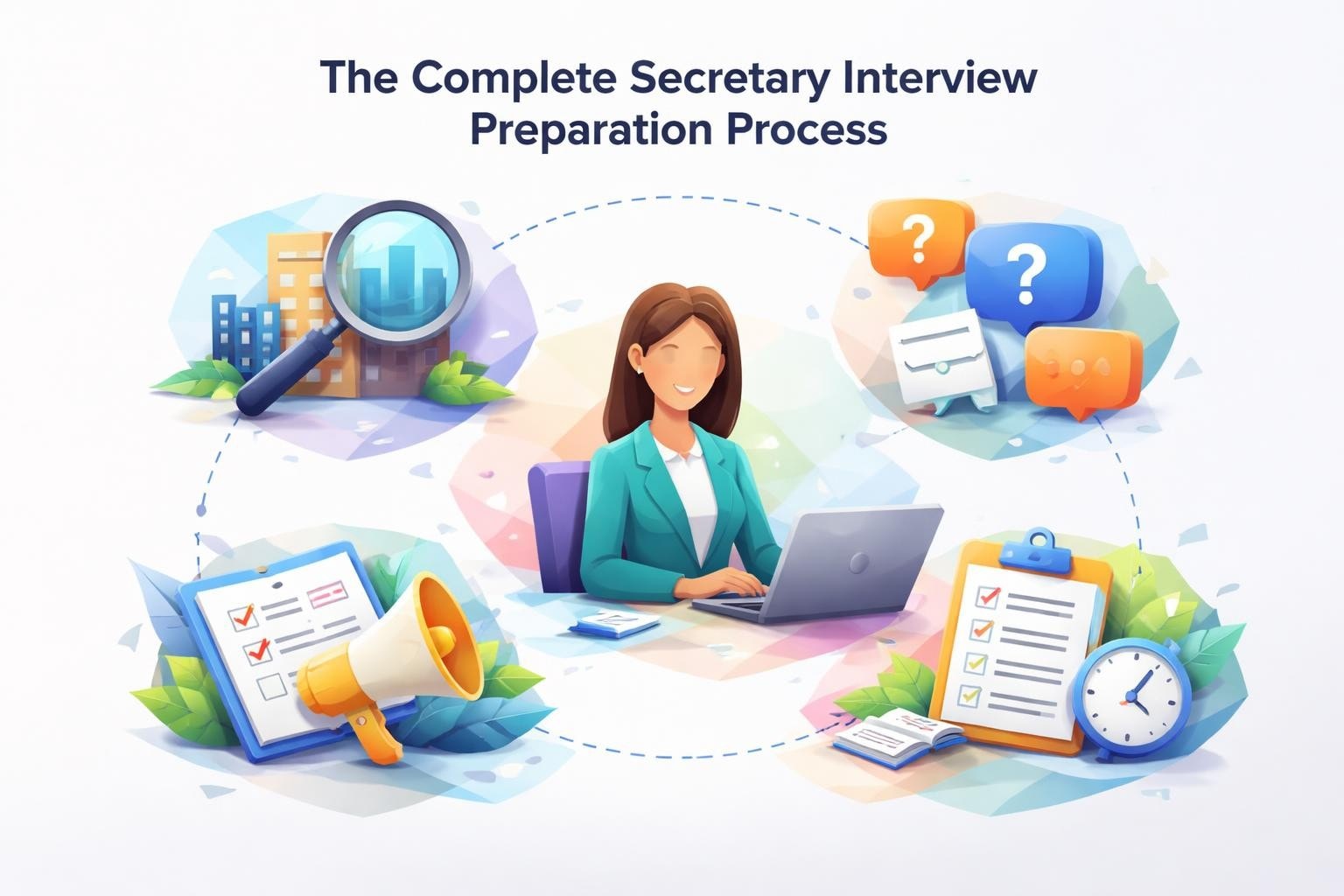
Landing a secretary position requires more than just administrative skills. You need to demonstrate professionalism, organizational excellence, and strong communication abilities during the interview process. In 2026, hiring managers expect candidates to showcase both traditional secretarial competencies and modern technological proficiency. Preparing thoroughly for secretary interview questions can make the difference between receiving an offer and being passed over for another candidate.
Understanding the Secretary Role in Modern Organizations
The secretary position has evolved significantly over the past decade. Today's secretaries serve as critical operational hubs within organizations, managing complex calendars, coordinating cross-functional teams, and handling sensitive information with discretion.
Modern secretaries are expected to excel in multiple areas:
- Digital communication platforms and collaboration tools
- Advanced scheduling and calendar management systems
- Document creation, editing, and formatting
- Data entry and database management
- Professional phone etiquette and client relations
- Confidentiality and information security protocols
Employers seek candidates who can adapt to changing priorities while maintaining exceptional attention to detail. Understanding these expectations helps you frame your responses to secretary interview questions in ways that resonate with hiring managers.

Essential Secretary Interview Questions About Experience
Hiring managers typically begin interviews by exploring your professional background and relevant experience. These questions help them understand how your previous roles have prepared you for their specific needs.
Questions About Administrative Experience
Your responses should demonstrate concrete examples of your capabilities. When asked about your experience with multi-line phone systems, discuss specific software you've used and the call volume you managed. For instance, you might explain how you handled 50-plus daily calls while maintaining accurate message logs and routing urgent matters appropriately.
Common experience-based questions include:
- Describe your experience managing multiple executive calendars
- What scheduling software have you used professionally?
- How have you handled competing priorities from different managers?
- Tell us about your experience composing meeting minutes
- What document management systems are you familiar with?
Similar to office assistant interview questions, secretary positions require you to demonstrate versatility across various administrative tasks. The key is providing specific examples that showcase measurable results.
| Experience Area | What to Highlight | Example Metrics |
|---|---|---|
| Calendar Management | Software proficiency, conflict resolution | Number of calendars managed, scheduling accuracy rate |
| Phone Systems | Multi-line experience, call routing | Daily call volume, customer satisfaction scores |
| Document Preparation | Software skills, attention to detail | Types of documents created, error reduction percentage |
| Meeting Coordination | Logistical planning, stakeholder communication | Meeting sizes coordinated, on-time start percentages |
Behavioral Secretary Interview Questions
Behavioral questions reveal how you handle real-world situations. Interviewers use these to predict your future performance based on past actions. The STAR method (Situation, Task, Action, Result) provides an excellent framework for structuring your responses.
Handling Difficult Situations
One frequently asked question involves managing difficult individuals or challenging workplace dynamics. Your answer should demonstrate emotional intelligence, professionalism, and problem-solving abilities.
When discussing conflict resolution, focus on specific instances where you successfully navigated tense situations. Perhaps you mediated between two team members with scheduling conflicts or managed an upset client while maintaining composure and professionalism.
Key behavioral areas to prepare for:
- Managing confidential information appropriately
- Prioritizing urgent tasks during high-pressure periods
- Adapting to last-minute schedule changes
- Resolving miscommunications between departments
- Handling interruptions while maintaining productivity
According to comprehensive secretary interview resources, demonstrating your ability to maintain professionalism under pressure distinguishes strong candidates from average ones.
Technical Skills and Software Proficiency
In 2026, secretaries must demonstrate comfort with various digital tools and platforms. Interviewers will assess your technical capabilities through direct questions and possibly practical assessments.
Essential Software Categories
Your technical expertise should span multiple categories. Be prepared to discuss your proficiency levels honestly and provide examples of how you've used these tools to improve efficiency or accuracy.
Microsoft Office Suite mastery remains fundamental:
- Word: Document creation, formatting, mail merge, track changes
- Excel: Data entry, formula creation, pivot tables, data analysis
- PowerPoint: Presentation design, template creation, visual communication
- Outlook: Email management, calendar coordination, task tracking
Beyond Microsoft products, familiarity with cloud-based collaboration tools like Google Workspace, Slack, Microsoft Teams, and project management platforms demonstrates your adaptability to modern work environments.

Organizational and Time Management Questions
Strong organizational skills form the foundation of effective secretarial work. Interviewers probe these abilities through scenario-based questions that reveal your approach to complex situations.
Prioritization Strategies
When asked how you prioritize tasks, avoid generic responses. Instead, describe your specific methodology. Do you use the Eisenhower Matrix to categorize urgent versus important tasks? Do you maintain detailed to-do lists with time estimates? Do you communicate regularly with supervisors about shifting priorities?
One effective approach involves explaining your daily planning routine. You might describe reviewing your calendar each morning, identifying critical deadlines, blocking time for focused work, and building in buffer time for unexpected requests.
The ability to manage high-volume workloads appears frequently in common secretary interview questions. Your response should include concrete examples of when you successfully juggled multiple demanding projects simultaneously.
| Prioritization Factor | How to Evaluate | Communication Strategy |
|---|---|---|
| Urgency | Deadline proximity, stakeholder needs | Immediate notification to relevant parties |
| Importance | Strategic impact, executive priorities | Regular status updates, proactive flagging |
| Complexity | Time required, resources needed | Early initiation, milestone tracking |
| Dependencies | Team member availability, sequential tasks | Coordination meetings, shared calendars |
Communication Skills Assessment
Excellent communication separates good secretaries from exceptional ones. Interviewers evaluate both verbal and written communication through various question types.
Written Communication Examples
Be prepared to discuss your experience creating professional correspondence, reports, and presentations. Highlight situations where your clear communication prevented misunderstandings or improved organizational efficiency.
Your communication abilities extend beyond writing skills. Secretaries often serve as the first point of contact for clients, vendors, and stakeholders. Your ability to represent the organization professionally via phone, email, and in-person interactions is crucial.
Demonstrate communication excellence through examples of:
- Crafting executive-level correspondence with appropriate tone
- Translating technical information for non-specialist audiences
- Facilitating communication between departments or teams
- Managing difficult conversations with tact and diplomacy
- Adapting communication style to different stakeholders
Just as customer service interview questions assess interpersonal skills, secretary interviews evaluate your ability to communicate effectively across all organizational levels.
Confidentiality and Discretion Questions
Secretaries regularly handle sensitive information requiring absolute discretion. Interviewers assess your understanding of confidentiality through hypothetical scenarios and questions about past experiences.
Handling Sensitive Information
When asked about managing confidential information, emphasize your understanding of privacy protocols, non-disclosure agreements, and professional boundaries. Describe specific instances where you protected sensitive data or appropriately limited access to privileged information.
Your response should demonstrate awareness that confidentiality extends beyond documents to include conversations, calendar information, and strategic plans. Explain how you physically secure documents, use password protection for digital files, and exercise judgment about what information to share with whom.
Key confidentiality practices to discuss:
- Implementing secure document storage systems
- Using encryption for sensitive electronic communications
- Maintaining professional boundaries in workplace conversations
- Understanding legal requirements (especially for legal secretary positions)
- Recognizing potential security risks and reporting concerns
Problem-Solving and Initiative
Modern secretaries must demonstrate proactive problem-solving abilities. Interviewers want to know how you handle unexpected challenges without constant supervision.
Demonstrating Initiative
Strong candidates provide examples of identifying inefficiencies and implementing improvements. Perhaps you created a new filing system that reduced document retrieval time by 40%. Maybe you noticed recurring scheduling conflicts and developed a protocol that prevented them.
When discussing problem-solving, walk interviewers through your thought process. How do you analyze situations? What resources do you consult? How do you evaluate potential solutions? Do you seek input from colleagues or make independent decisions?
Employers value secretaries who anticipate needs rather than simply responding to requests. Discuss instances where you prepared materials before being asked, identified potential scheduling conflicts proactively, or streamlined processes that benefited the entire team.
Questions to Ask Your Interviewer
The interview isn't just about answering questions. Asking thoughtful questions demonstrates genuine interest and helps you evaluate whether the position aligns with your career goals.
Strategic Questions for Candidates
Your questions should reveal important information about the role, team dynamics, and growth opportunities. Avoid questions easily answered through basic research about the company.
Effective questions to consider:
- What does success look like in this role during the first 90 days?
- How does this position interact with other departments?
- What challenges has the previous secretary faced?
- What opportunities exist for professional development?
- How does the organization support administrative professionals?
- What technology platforms will I use daily?
These questions demonstrate that you're thinking strategically about the role rather than simply seeking any position. They also provide valuable insights that help you make an informed decision if you receive an offer.
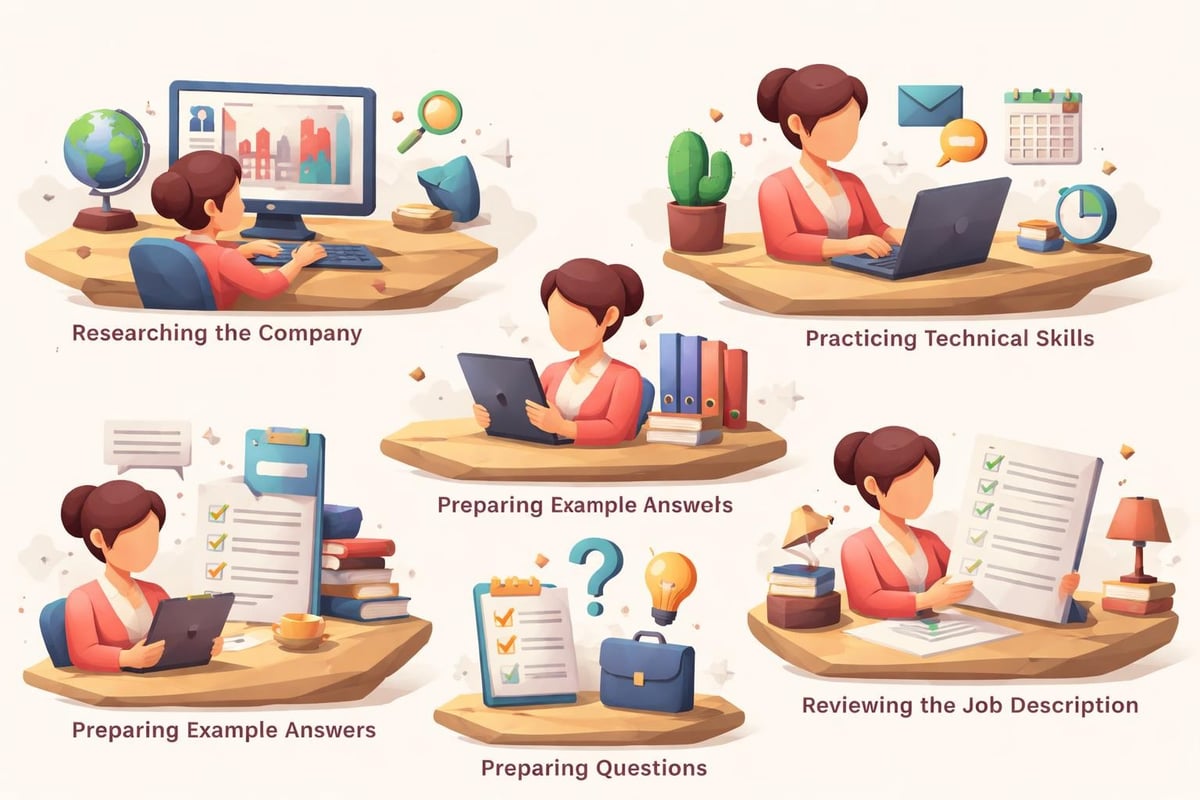
Preparing Your Interview Responses
Effective preparation significantly improves interview performance. Rather than memorizing scripted answers, focus on developing flexible frameworks that allow natural, authentic responses.
The STAR Method in Practice
Structure your behavioral responses using the Situation, Task, Action, Result framework. This approach ensures comprehensive answers that demonstrate your capabilities clearly.
For example, when asked about handling tight deadlines:
Situation: "In my previous role, the executive team scheduled an emergency board meeting with only 48 hours notice."
Task: "I needed to coordinate availability for 15 board members across different time zones, secure a meeting room, prepare materials, and arrange catering."
Action: "I immediately created a shared calendar poll, contacted our preferred vendor for last-minute catering, compiled necessary documents from various departments, and confirmed technology requirements."
Result: "The meeting proceeded smoothly with 100% attendance, all materials distributed 12 hours in advance, and positive feedback from board members about the organization."
This structured approach appears throughout comprehensive interview preparation resources because it effectively showcases your competencies.
Tailoring Responses to Different Industries
Secretary roles vary significantly across industries. A legal secretary faces different expectations than a medical or corporate secretary. Customize your interview preparation based on the specific sector.
Industry-Specific Considerations
Research industry-specific terminology, common challenges, and specialized software. For legal secretaries, emphasize attention to detail with legal documents, understanding of court procedures, and ability to maintain strict confidentiality standards.
Medical secretaries should highlight HIPAA compliance knowledge, medical terminology familiarity, and experience with electronic health records systems. Corporate secretaries might focus on board governance, shareholder communications, and regulatory compliance.
Adapting your preparation by industry:
| Industry | Key Focus Areas | Specialized Skills |
|---|---|---|
| Legal | Document accuracy, court filing procedures, legal terminology | Case management software, e-filing systems |
| Medical | Patient confidentiality, medical coding, appointment scheduling | EHR systems, medical billing software |
| Corporate | Executive support, board coordination, compliance | Governance platforms, investor relations tools |
| Education | Student records, faculty coordination, academic calendars | Student information systems, enrollment platforms |
Final Preparation Strategies
As your interview approaches, implement focused preparation strategies that build confidence and ensure you're ready for any question.
Practice and Refinement
Conduct mock interviews with friends, family, or career coaches. Recording yourself helps identify verbal tics, pacing issues, or unclear explanations. The interview preparation tools available through comprehensive career platforms can provide structured practice opportunities.
Review the job description carefully, identifying key requirements and preparing specific examples that demonstrate each qualification. Research the company thoroughly, understanding their mission, recent news, and organizational culture.
Final week checklist:
- Review and refine your STAR method examples
- Research the company's recent developments and news
- Prepare questions to ask interviewers
- Select professional interview attire
- Plan your route and arrival time
- Gather copies of your resume, references, and portfolio materials
- Practice common secretary interview questions with a partner
The tools available through platforms like CareerConcierge.io can help you optimize your resume, practice responses, and ensure your application materials align with the interview conversation.
Demonstrating Cultural Fit
Beyond skills and experience, employers assess whether you'll integrate well with their team and organizational culture. Your responses should reflect awareness of workplace dynamics and collaborative abilities.
Teamwork and Collaboration
Secretaries rarely work in isolation. Discuss examples of successful collaboration with colleagues, support for team initiatives, and positive contributions to workplace culture. Highlight instances where you helped onboard new employees, assisted colleagues during busy periods, or participated in office improvement initiatives.
Your ability to work effectively with diverse personalities and communication styles demonstrates maturity and professionalism. Share examples of adapting your approach to work successfully with different supervisors or team members.
Similar to administrative assistant positions, secretary roles require balancing independence with collaboration, knowing when to solve problems autonomously and when to seek input or approval.
Mastering secretary interview questions requires thorough preparation, authentic examples, and clear communication of your qualifications. By understanding common question categories, preparing structured responses, and researching the specific organization, you position yourself as a strong candidate who can contribute immediately to the team. Whether you're seeking to refine your interview responses, optimize your resume for ATS systems, or practice with AI-powered tools, CareerConcierge.io provides comprehensive resources to support every stage of your job search. Start preparing today to confidently pursue your ideal secretary position in 2026.