Backend Developer Interview Questions Guide for 2026
Master backend developer interview questions with our comprehensive 2026 guide. Learn technical, behavioral, and system design questions to land your dream job.
Landing a backend developer role in 2026 requires more than just coding skills. You need to demonstrate expertise in server-side architecture, database management, API design, and problem-solving under pressure. Whether you're a seasoned professional or transitioning into backend development, preparing for interviews means understanding the specific backend developer interview questions that hiring managers prioritize. This comprehensive guide walks you through the essential question categories, preparation strategies, and insider tips to help you showcase your technical prowess and land your dream position.
Understanding the Backend Developer Interview Landscape
Backend developer interviews have evolved significantly as companies demand more sophisticated server-side solutions. Modern interviews assess not only your coding abilities but also your understanding of distributed systems, microservices architecture, and cloud infrastructure.
Hiring managers structure these interviews to evaluate multiple competencies simultaneously. You'll encounter technical assessments that test your programming language proficiency, system design challenges that reveal your architectural thinking, and behavioral questions that demonstrate how you handle real-world development scenarios.
The Evolution of Technical Assessments
Companies now blend traditional coding challenges with practical problem-solving scenarios. Instead of memorizing algorithms, you need to articulate your decision-making process and justify technology choices.
Modern interview formats typically include:
- Live coding sessions with real-time collaboration
- System design discussions for scalable architectures
- Code review exercises to assess quality standards
- Debugging challenges with production-like scenarios
- Pair programming sessions with team members
The interview preparation features available through AI-powered platforms can help you practice these diverse formats before your actual interview.
Core Technical Backend Developer Interview Questions
Technical proficiency forms the foundation of any backend developer interview. Interviewers probe your understanding of programming languages, frameworks, and architectural patterns through targeted questions.
Database and Data Management Questions
Database expertise remains critical for backend developers. Expect questions that assess both theoretical knowledge and practical implementation skills.
Common database topics include:
- Database normalization principles and when to denormalize
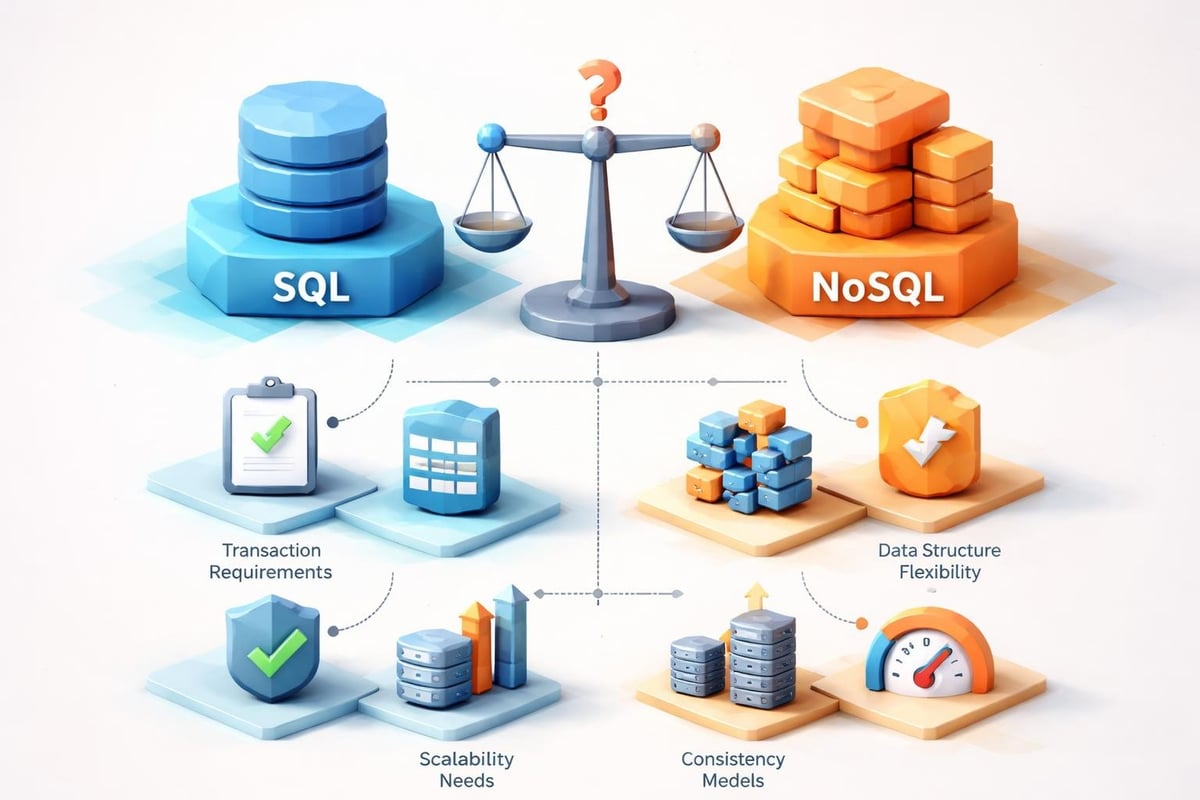
- SQL vs. NoSQL database selection criteria
- Transaction management and ACID properties
- Indexing strategies for query optimization
- Database scaling techniques (sharding, replication, partitioning)
Interviewers often ask you to design database schemas for specific use cases. These backend developer interview questions help you understand how to structure your responses effectively.
| Database Concept | Interview Focus | Example Question |
|---|---|---|
| Normalization | Understanding redundancy | Explain third normal form and its benefits |
| Indexing | Performance optimization | How do composite indexes improve query speed? |
| Transactions | Data integrity | Describe isolation levels in database transactions |
| Scaling | Handling growth | Compare vertical vs. horizontal scaling strategies |
API Development and Integration
APIs serve as the backbone of modern applications. Your ability to design, implement, and maintain robust APIs directly impacts your interview success.
RESTful API design principles frequently appear in technical discussions. You should articulate the differences between REST and GraphQL, explain when to use each approach, and demonstrate knowledge of API versioning strategies.
Key API concepts to master:
- HTTP methods and their proper usage (GET, POST, PUT, DELETE, PATCH)
- Status codes and error handling patterns
- Authentication and authorization mechanisms (OAuth, JWT)
- Rate limiting and API security best practices
- API documentation standards (OpenAPI/Swagger)
According to comprehensive interview resources, candidates who can discuss API design trade-offs stand out significantly.
System Design and Architecture Questions
System design interviews separate junior developers from senior engineers. These questions assess your ability to build scalable, maintainable, and efficient backend systems.
Scalability and Performance Optimization
Interviewers want to know how you handle growth. Explain how you'd scale a system from thousands to millions of users while maintaining performance and reliability.
Scalability discussion points:
- Caching strategies (Redis, Memcached) and cache invalidation
- Load balancing techniques and session management
- Asynchronous processing with message queues
- Content delivery networks (CDNs) for static assets
- Database connection pooling and query optimization
When discussing performance, quantify your impact. Instead of saying "I improved response times," explain "I reduced API latency from 500ms to 120ms by implementing connection pooling and optimizing database queries."
Microservices and Distributed Systems
Modern backend architectures increasingly rely on microservices. You'll need to demonstrate understanding of service decomposition, inter-service communication, and distributed system challenges.
| Microservices Concept | Key Consideration | Common Pitfall |
|---|---|---|
| Service Boundaries | Domain-driven design | Over-fragmentation |
| Communication | REST vs. message queues | Tight coupling |
| Data Management | Database per service | Distributed transactions |
| Deployment | Container orchestration | Configuration complexity |
| Monitoring | Distributed tracing | Incomplete observability |
The ability to discuss circuit breakers, service discovery, and eventual consistency shows architectural maturity. Resources covering backend developer interview questions emphasize these distributed system concepts for 2026 interviews.
Security and Best Practices Questions
Security awareness distinguishes exceptional backend developers. Interviewers assess whether you proactively consider security throughout the development lifecycle.
Common Security Vulnerabilities
You should recognize and prevent common attack vectors. Discuss SQL injection, cross-site scripting (XSS), cross-site request forgery (CSRF), and how your code mitigates these risks.
Essential security practices:
- Input validation and sanitization
- Parameterized queries to prevent injection attacks
- Secure password storage with proper hashing (bcrypt, Argon2)
- HTTPS enforcement and certificate management
- Principle of least privilege for database access
Expert interview preparation includes understanding how to articulate security measures without sounding defensive or unprepared.

Authentication and Authorization Patterns
Modern applications require sophisticated user management. Explain the difference between authentication (verifying identity) and authorization (controlling access), and describe implementation strategies.
Authentication methods to understand:
- Session-based authentication with server-side storage
- Token-based authentication (JWT) for stateless applications
- OAuth 2.0 for third-party authorization
- Multi-factor authentication implementation
- Single sign-on (SSO) integration
According to detailed backend developer resources, candidates who can compare these approaches and justify their choices demonstrate senior-level thinking.
Behavioral and Situational Questions
Technical skills alone don't guarantee interview success. Behavioral questions reveal how you collaborate, handle pressure, and grow from challenges.
Problem-Solving Scenarios
Interviewers present real-world scenarios to assess your analytical thinking. They want to understand your approach to debugging production issues, optimizing slow queries, or resolving architectural bottlenecks.
Structure your responses using the STAR method (Situation, Task, Action, Result). Describe the context, explain your specific role, detail the steps you took, and quantify the outcome.
Effective problem-solving responses include:
- Describing your debugging methodology systematically
- Explaining how you prioritize multiple competing issues
- Demonstrating collaboration with cross-functional teams
- Showing continuous learning from mistakes
- Highlighting metrics that prove impact
Behavioral interview questions for backend developers focus on adaptability and communication skills alongside technical expertise.
Team Collaboration and Code Quality
Backend developers rarely work in isolation. Discuss your experience with code reviews, pair programming, and mentoring junior developers.
Explain your approach to writing maintainable code. Reference design patterns you've implemented, testing strategies you advocate, and documentation standards you follow. Similar to how you'd approach other technical interviews, emphasize quality and collaboration.
Programming Language-Specific Questions
While principles remain consistent, interviewers dive deep into your primary programming language. Whether you specialize in Python, Java, Node.js, Go, or Ruby, expect language-specific backend developer interview questions.
Language Features and Paradigms
Demonstrate mastery of your language's unique features. For Python developers, discuss decorators, context managers, and the Global Interpreter Lock (GIL). Java developers should explain the JVM, garbage collection, and concurrency utilities.
Language-specific topics by category:
| Language | Core Concepts | Advanced Topics |
|---|---|---|
| Python | Decorators, generators | Asyncio, multiprocessing |
| Java | Collections, streams | Spring framework, JVM tuning |
| Node.js | Event loop, callbacks | Clustering, memory management |
| Go | Goroutines, channels | Context handling, interfaces |
| Ruby | Blocks, metaprogramming | Rails conventions, gems |
Framework and Library Knowledge
Beyond core language knowledge, you'll discuss frameworks relevant to your stack. Express.js, Django, Spring Boot, or Ruby on Rails expertise often determines role fit.
Explain the framework's architecture, routing mechanisms, middleware concepts, and ORM capabilities. Compare alternatives and justify when you'd choose one over another based on project requirements.
Testing and Quality Assurance Questions
Professional backend developers prioritize testing. Interviewers assess your testing philosophy and practical implementation experience.
Testing Strategies and Methodologies
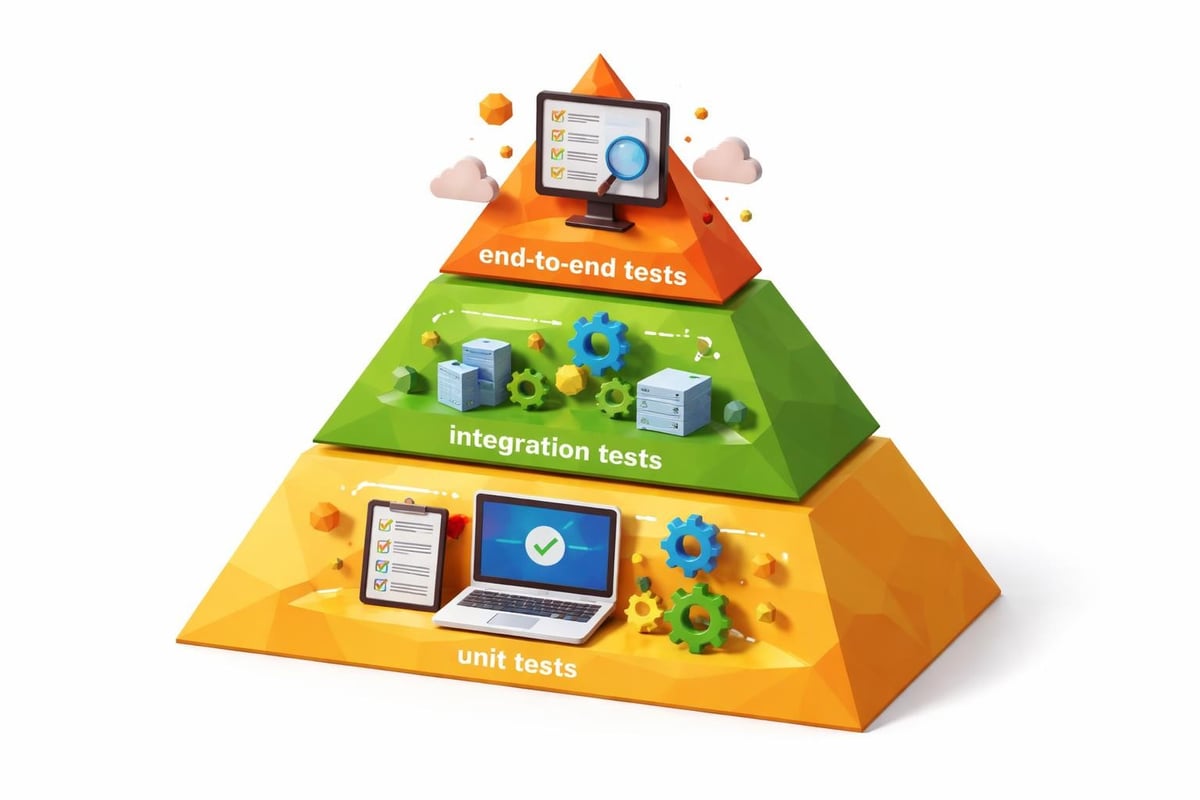
Discuss unit testing, integration testing, and end-to-end testing. Explain the testing pyramid and how you balance different test types for optimal coverage and execution speed.
Comprehensive testing approach includes:
- Unit tests for individual functions and methods
- Integration tests for component interactions
- Contract tests for API agreements
- Performance tests for scalability verification
- Security tests for vulnerability detection
Tools matter too. Mention your experience with testing frameworks like Jest, JUnit, pytest, or RSpec. Discuss continuous integration pipelines and how automated testing prevents regressions.
Code Quality and Maintenance
Quality extends beyond tests. Discuss static analysis tools, linting standards, and code formatting conventions. Explain how you maintain code quality in long-term projects.
Reference your experience with code review processes. Describe how you provide constructive feedback and how you receive criticism professionally. Engineering management perspectives value developers who champion code quality initiatives.
DevOps and Deployment Questions
Backend developers increasingly handle deployment and infrastructure. Understanding DevOps principles and CI/CD pipelines strengthens your candidacy.
Containerization and Orchestration
Docker knowledge has become essential. Explain container benefits, how you structure Dockerfiles, and your approach to multi-stage builds for optimized images.
Kubernetes or similar orchestration platforms frequently appear in interviews. Discuss pods, services, deployments, and how you manage configuration through ConfigMaps and Secrets.
Container and orchestration concepts:
- Image layering and optimization strategies
- Container networking and service discovery
- Volume management for persistent data
- Health checks and rolling updates
- Resource limits and horizontal pod autoscaling
Continuous Integration and Deployment
Describe your CI/CD pipeline experience. Walk through how code moves from development to production, including automated testing, build processes, and deployment strategies.
Explain blue-green deployments, canary releases, or rolling updates. Discuss how you handle database migrations during deployments and ensure zero-downtime updates. Similar depth is expected in other technical interviews that assess production readiness.
Version Control and Collaboration Tools
Git proficiency goes beyond basic commits. Interviewers expect sophisticated version control understanding and collaborative workflow knowledge.
Advanced Git Techniques
Discuss branching strategies like Git Flow or trunk-based development. Explain how you handle merge conflicts, rebase versus merge decisions, and when you'd use interactive rebase.
Git workflow considerations:
- Feature branch naming conventions
- Pull request and code review processes
- Commit message standards and atomic commits
- Handling hotfixes in production
- Tag management for releases
Collaboration Platform Experience
Beyond Git, mention tools like Jira, Confluence, or Linear for project management. Discuss how you document technical decisions, track technical debt, and communicate with non-technical stakeholders.
According to comprehensive interview guides, demonstrating holistic development process understanding sets candidates apart.
Preparing for Your Backend Developer Interview
Preparation determines interview success. Strategic practice builds confidence and reveals knowledge gaps before they impact your performance.
Mock Interviews and Practice Resources
Simulate real interview conditions through mock sessions. Practice explaining your thought process aloud, as interviewers value clear communication as much as correct answers.
Effective preparation strategies:
- Review fundamental computer science concepts (algorithms, data structures)
- Build small projects demonstrating key backend concepts
- Practice system design on a whiteboard or digital canvas
- Study your previous projects to discuss specific challenges
- Research the company's technology stack and architecture
The AI-powered interview preparation tools at CareerConcierge.io provide personalized practice sessions tailored to backend development roles, helping you refine responses and build confidence.
Tailoring Your Responses to Company Context
Generic answers fail to impress. Research the company's products, technical blog posts, and engineering challenges. Reference specific technologies they use when discussing your experience.
Customize your questions for the interviewer. Instead of asking "What's the tech stack?" (easily researched), ask "How does your team approach database scaling as user traffic grows?" This demonstrates preparation and genuine interest.
Common Mistakes to Avoid
Understanding pitfalls helps you sidestep them. Even experienced developers make preventable errors during backend developer interview questions.
Technical Communication Errors
Avoid jumping straight to coding without clarifying requirements. Ask questions to understand constraints, expected scale, and success criteria before proposing solutions.
Communication best practices:
- Verbalize your thinking process during coding challenges
- Admit knowledge gaps honestly rather than fabricating answers
- Ask for clarification when requirements seem ambiguous
- Explain trade-offs between different solution approaches
- Connect technical decisions to business outcomes
Overlooking Non-Technical Aspects
Technical brilliance means little without teamwork skills. Discuss how you collaborate, mentor others, and contribute to team culture. Balance technical depth with interpersonal awareness.
Just as with product manager interviews, demonstrating cross-functional communication skills proves you can thrive in modern development environments.
Salary Negotiation and Offer Evaluation
Once you've impressed interviewers, prepare for compensation discussions. Backend developers command competitive salaries, but negotiation requires research and confidence.
Market Rate Research
Investigate salary ranges for your experience level, location, and technology stack. Sites like Glassdoor, Levels.fyi, and Blind provide data points for informed negotiations.
Consider total compensation beyond base salary. Stock options, bonuses, retirement matching, health benefits, and professional development budgets significantly impact your financial well-being.
Evaluating Technical Opportunities
Assess the role's growth potential. Will you work with modern technologies? Does the team invest in continuous learning? Are there opportunities for architectural influence and technical leadership?
The quality of your immediate team matters enormously. During interviews, gauge team dynamics, code quality standards, and whether senior engineers mentor junior developers. Your daily experience depends on these factors.
Mastering backend developer interview questions requires technical expertise, clear communication, and strategic preparation. Whether you're refining your system design skills or practicing behavioral responses, thorough preparation transforms interviews from stressful ordeals into opportunities to showcase your capabilities. CareerConcierge.io provides AI-powered tools for resume optimization, interview preparation, and application tracking, helping you present your strongest candidacy and land your ideal backend developer role with confidence.