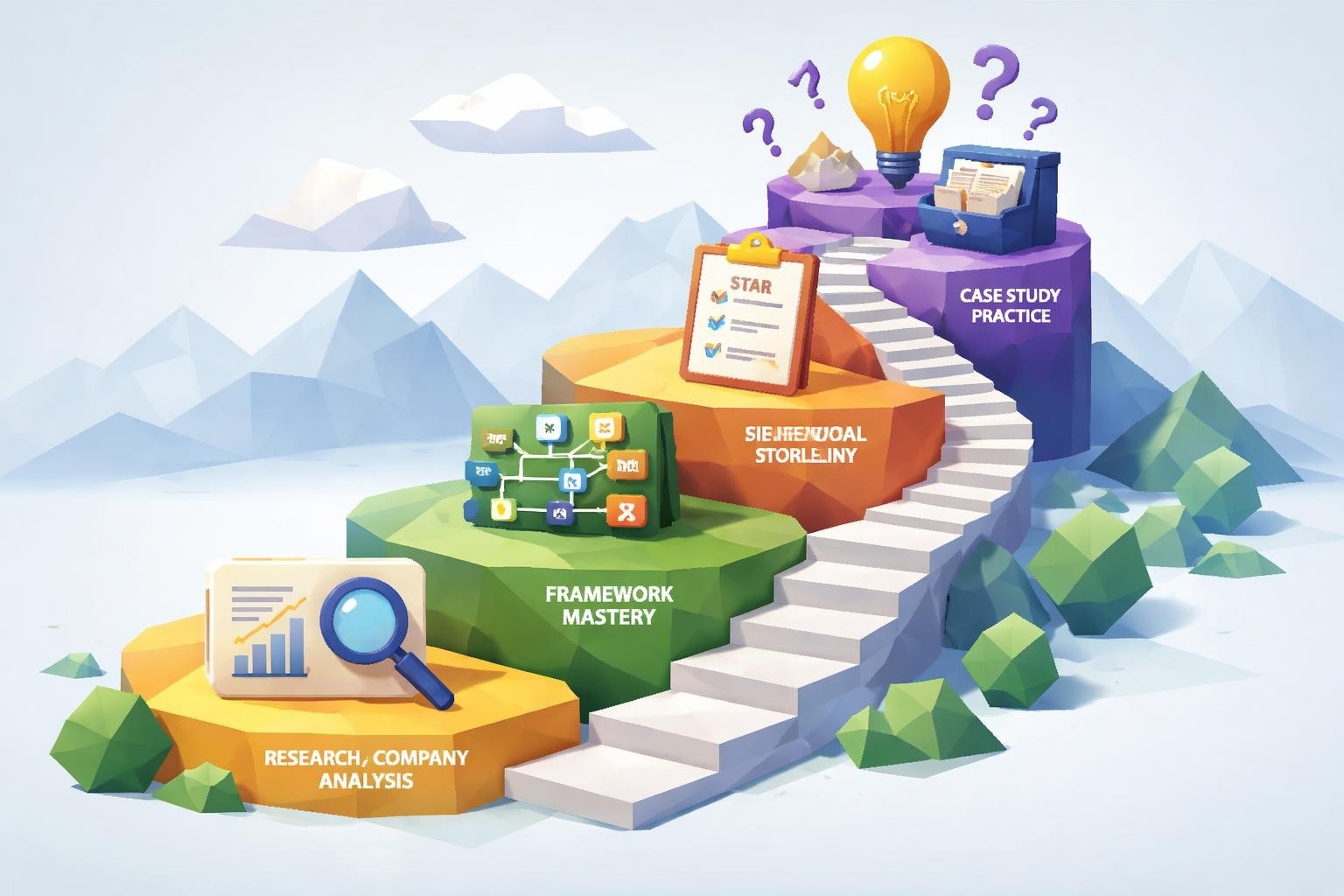
Google Interview Preparation Guide: Land Your Dream Job in 2026
Master google interview preparation with expert strategies, skill-building tips, and proven techniques to help you secure your dream Google job in 2026.
Landing a job at Google is a dream for many, but with over two million applicants each year and only about 4,000 hires, the competition in 2026 will be fiercer than ever. The path to success requires more than just technical skills—it demands strategic planning and in-depth google interview preparation.
This guide offers a step-by-step roadmap, breaking down each stage of the Google interview process. You will discover what sets successful candidates apart, learn proven strategies, and gain access to expert resources. Ready to maximize your chances and stand out among top contenders? Start your journey here.
Understanding the Google Interview Process in 2026
Landing a job at Google is a dream for many, but the path can feel daunting. With millions of applicants vying for just a few thousand positions, knowing what to expect is crucial. A clear understanding of the google interview preparation process in 2026 gives you a strategic edge and reduces anxiety.

Overview of Google’s Hiring Stages
Google's hiring process in 2026 remains comprehensive and structured. It starts with resume screening, where automated systems and recruiters review applications for core skills and experience.
Next is a recruiter call, which covers your background, motivation, and fit for the role. If you advance, you’ll face technical phone screens. These often involve solving coding problems or answering conceptual questions in real time.
Successful candidates are invited to onsite interviews, typically held virtually or at a Google campus. There are usually 4 to 6 rounds, including coding, system design, and behavioral interviews. The focus of each round depends on the role level. For example, entry-level (SWE-I) positions emphasize coding and data structures, while higher levels (SWE-II, SWE-III) include system design and leadership scenarios.
A unique aspect of google interview preparation is the emphasis on “Googlyness.” Google values passion for technology, curiosity, ethics, teamwork, and adaptability. These qualities are assessed in both behavioral and technical rounds.
Consider this sample candidate journey:
| Stage | Purpose | Who Evaluates |
|---|---|---|
| Resume Screening | Initial fit | Recruiter/ATS |
| Recruiter Call | Motivation, background | Recruiter |
| Technical Screens | Coding/DSA skills | Google Engineer |
| Onsite Interviews | Coding, design, behavior | Multiple Engineers |
| Hiring Committee | Final decision | Senior Googlers |
Despite receiving over 2 million resumes annually, Google hires only about 4,000 people. This makes each stage highly selective.
To see a detailed breakdown of these stages and expectations, refer to the Google Interview Process Overview.
Understanding each step demystifies the google interview preparation process and allows you to plan your study and practice sessions efficiently.
What Google Interviewers Look For
During the google interview preparation journey, it’s essential to know what interviewers prioritize. First, problem-solving ability is key. They want to see how you approach unfamiliar problems, not just if you can recall solutions.
Communication skills matter just as much. Interviewers expect you to “think out loud,” explaining your reasoning and choices clearly. This habit shows your logical process and helps interviewers follow your approach.
Code quality is another major focus. Google expects efficient, readable, and well-tested code. Attention to edge cases and clear variable naming can set you apart.
Collaboration is also assessed. Google values team players who listen, adapt, and seek feedback. The feedback process is rigorous—each interviewer scores candidates on a 1 to 4 scale, and the hiring committee reviews all feedback before making a decision.
For example, a candidate who demonstrates curiosity, humility, and deep technical insight often scores highly in both “Googlyness” and technical rounds. Mastering these expectations is fundamental to successful google interview preparation.
Building the Core Skills Google Demands
Securing a role at Google in 2026 requires mastering the foundational skills that set outstanding candidates apart. Every successful google interview preparation journey begins with a deep dive into data structures, programming languages, and computer science fundamentals.
Mastering Data Structures & Algorithms
At the heart of google interview preparation lies a strong command of data structures and algorithms. Google’s technical interviews consistently emphasize topics such as:
- Arrays and linked lists
- Trees and graphs
- Stacks, queues, and heaps
- Sorting and searching algorithms
- Dynamic programming and recursion
- Hashing, tries, and segment trees
Building expertise in these areas is crucial. Most interview questions are of medium difficulty, according to candidate experiences. Many top performers practice 300 or more problems on platforms like LeetCode before applying.
A strategic approach is to mix problem types and revisit challenging ones. Resources such as LeetCode, GeeksforGeeks, InterviewBit, Cracking the Coding Interview, and Elements of Programming Interviews are invaluable. For a focused look at question trends and strategies, refer to the Google Interview Questions Guide 2026, which offers real examples and up-to-date insights.
Consistent, targeted practice is not just helpful—it is the only shortcut to mastery. Integrate daily problem-solving into your google interview preparation schedule to ensure lasting results.
Programming Language Proficiency
Selecting and mastering a programming language is another pillar of effective google interview preparation. Candidates usually choose between Java, C++, or Python. The key is not just familiarity, but deep expertise in one language.
Consider the following comparison:
| Language | Strengths | Common Use at Google |
|---|---|---|
| Java | Strong libraries, type safety | Very popular |
| C++ | Performance, memory management | Used for systems |
| Python | Rapid prototyping, readability | Frequent in scripts |
Understanding built-in libraries, syntax nuances, and language-specific pitfalls is essential. For example, Java is favored for its robust standard libraries and predictable performance. During google interview preparation, practice implementing solutions in your chosen language, focusing on clarity, efficiency, and correctness.
Computer Science Fundamentals
A solid grasp of computer science fundamentals further distinguishes top candidates in google interview preparation. Key topics include:
- Operating systems: threads, concurrency, deadlocks
- Discrete math: sets, logic, combinatorics
- Probability and complexity theory
Interviewers often test knowledge through questions on tree traversals, graph representations, or NP-complete problems. Reviewing these subjects improves your ability to tackle both technical and system design rounds.
Strong fundamentals are not just about memorization. They empower you to approach unfamiliar problems with confidence and creativity during your google interview preparation. Dedicate time each week to theory review and practical application.
Step-by-Step Preparation Strategy for Google Interviews
Preparing for a Google interview in 2026 requires a focused, systematic approach. This step-by-step google interview preparation strategy will help you build confidence, avoid common pitfalls, and maximize your chances of success.

Step 1: Self-Assessment and Timeline Planning
Begin your google interview preparation by evaluating your current skills. Are you a beginner, intermediate, or advanced in data structures and algorithms? Honest self-assessment helps you set realistic goals.
Most candidates require 3 to 6 months of daily practice. Create a preparation calendar with weekly milestones. For example, dedicate the first two weeks to reviewing core concepts and then progress to solving problems by topic.
A typical expectation is to solve two medium-level problems or one hard problem within 45 minutes. Use a simple table to track your progress:
| Week | Focus Area | Problems Solved | Notes |
|---|---|---|---|
| 1 | Arrays, Strings | 20 | Review basics |
| 2 | Linked Lists, Trees | 18 | Practice coding |
| ... | ... | ... | ... |
Setting a clear timeline is the foundation of effective google interview preparation.
Step 2: Structured Practice and Learning
Structured practice is the backbone of google interview preparation. Use trusted platforms like LeetCode, InterviewBit, and GeeksforGeeks to cover a mix of easy, medium, and hard problems. Focus on a balanced approach: breadth for topic coverage and depth for mastery.
Keep a problem journal. Document your mistakes, learning points, and revisit challenging problems. For example, aim to solve 320 LeetCode, 80 InterviewBit, and 30 GFG problems before your interviews.
Remember, consistent and deliberate practice is far more valuable than just solving random problems. This step will cement your google interview preparation success.
Step 3: Time Management and Pacing
Effective time management is crucial for google interview preparation. Simulate real interview conditions by using a timer—20 minutes for medium problems, 40 to 45 minutes for hard ones.
Practice writing code in plain text editors or Google Docs. This improves your speed and accuracy without relying on IDE auto-complete or syntax highlighting.
Try this routine:
- Select a random problem.
- Set a timer.
- Write your solution in a text editor.
- Test your code thoroughly.
This habit trains you to think and code efficiently under pressure, a vital skill for the google interview preparation journey.
Step 4: Mock Interviews and Feedback
Mock interviews are a game-changer in google interview preparation. Use platforms like Pramp, LeetCode Mock, and Exponent to simulate the real experience. Schedule regular sessions and seek feedback from peers or mentors.
Early mock interviews help you identify gaps, manage nerves, and adapt your communication style. Failing in a mock session is a valuable learning opportunity.
To further enhance your practice, consider leveraging AI-powered interview prep tools for personalized feedback and realistic simulations. These tools streamline your preparation and help you focus on areas that need improvement.
Step 5: Building a Personalized Roadmap
The final step in your google interview preparation is creating a customized roadmap. Break your plan into weekly milestones: topic mastery, coding sessions, theory reviews, and mock interviews.
Adjust your schedule for work or personal commitments. For instance, dedicate weekdays to coding and weekends to theory and review. As interviews approach, increase the frequency of mocks.
Track your progress and remain flexible. The key to successful google interview preparation is continuous improvement and adapting your strategy as you grow.
Excelling in Google’s System Design and Behavioral Interviews
Excelling in the system design and behavioral rounds is essential for effective google interview preparation. These interviews are designed to assess not only your technical expertise but also your ability to collaborate, communicate, and adapt in real-world scenarios. Understanding what Google seeks and how to present your strengths can make all the difference.
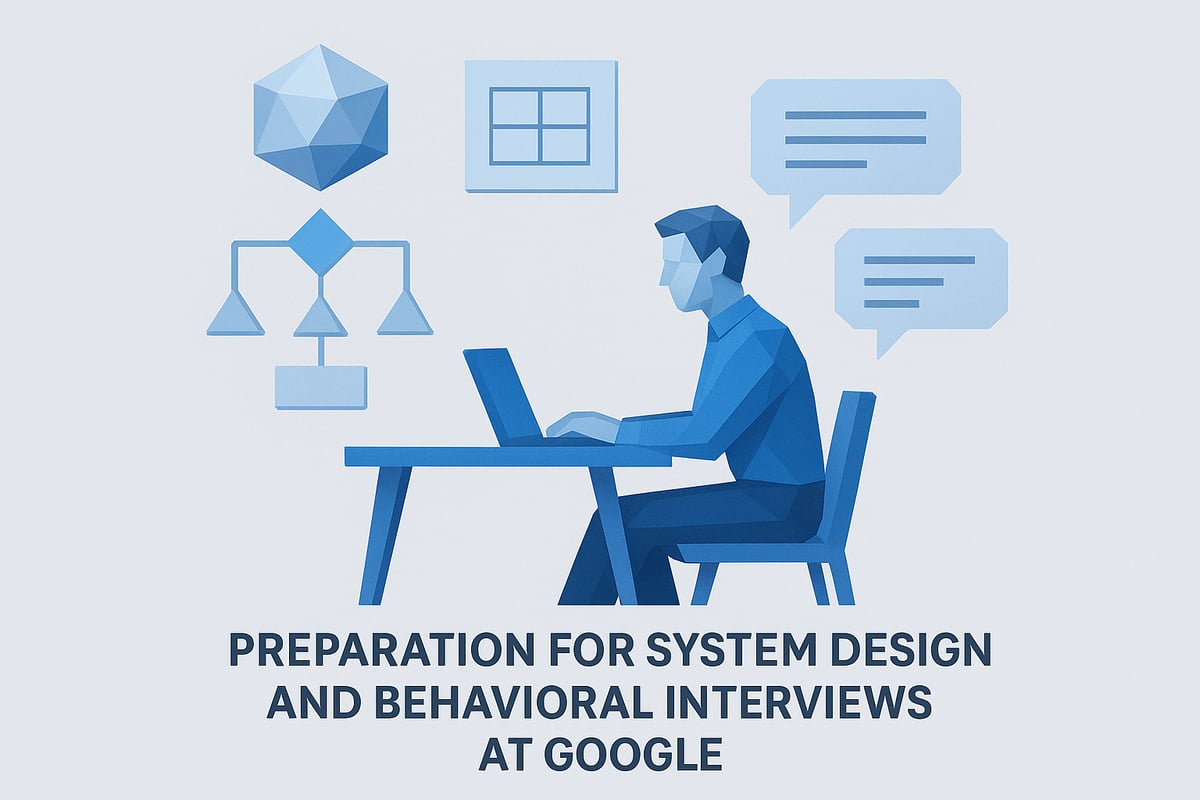
System Design Interview Preparation
For candidates at L4 and above, system design interviews are a core part of google interview preparation. These rounds test your ability to architect robust, scalable, and maintainable systems. Expect questions that challenge you to design platforms like Gmail, YouTube, or Uber, often with intentionally ambiguous requirements.
Key concepts to master include:
- Distributed systems
- Load balancing and sharding
- CAP theorem and consistency models
- Replication and fault tolerance
- Network protocols and caching strategies
Google interviewers evaluate how you handle trade-offs, clarify vague requirements, and break down large problems. For instance, you might be asked, “Design a URL shortening service.” Start by outlining functional requirements, sketching high-level architecture, and discussing scalability strategies.
A strong system design answer demonstrates:
- Clear communication and structured thinking
- Justification for each design choice
- Consideration for edge cases and future growth
Recommended resources for this stage of google interview preparation include Grokking the System Design Interview, Designing Data-Intensive Applications, and YouTube channels such as Gaurav Sen. Practicing open-ended problems, focusing on both breadth and depth, will help you build the confidence needed for these high-stakes rounds.
Behavioral Interview Strategies
Behavioral interviews are equally critical in google interview preparation. Google places a strong emphasis on “Googlyness”—qualities like teamwork, ethical judgment, and adaptability. The S.A.R. (Situation, Action, Result) or STAR framework is invaluable for structuring your responses to behavioral questions.
Consider these typical behavioral questions:
- Tell me about a time you faced a major challenge on a team project.
- How do you handle receiving critical feedback?
- Describe a situation where you had to adapt quickly to change.
When answering, briefly set the context, explain your specific actions, and highlight the measurable results. For example, “In my last project, we faced an unexpected production outage. I coordinated cross-team communication, identified the root cause, and implemented a long-term fix, reducing future incidents by 30 percent.”
Behavioral rounds carry significant weight in final decisions. According to candidate reports, strong storytelling and authenticity can tip the scales in your favor. For a firsthand perspective on what to expect, review this Google Interview Experience 2026, which shares practical insights into the behavioral assessment process.
Communication and Soft Skills
Outstanding communication is a non-negotiable aspect of google interview preparation. Interviewers look for candidates who can articulate their thought process, clarify ambiguous requirements, and respond positively to hints or feedback.
To strengthen your soft skills:
- Practice “thinking out loud” during problem-solving.
- Clarify assumptions before jumping into solutions.
- Listen actively and ask clarifying questions.
- Remain calm when faced with ambiguous or evolving questions.
Sometimes, a well-articulated approach can compensate for minor technical slips. If you get stuck, express your reasoning and invite feedback. These moments showcase your growth mindset and openness to collaboration.
For actionable strategies on aligning your communication and overall interview approach with top tech expectations, explore these interview and resume optimization tips. Consistently refining your soft skills will help you stand out, both in the interview and on the job.
Advanced Tips, Common Mistakes, and Insider Insights for 2026
The difference between a good candidate and a standout one in google interview preparation often comes down to advanced strategy, self-awareness, and avoiding common pitfalls. As you approach the final stages of your journey, remember that Google’s standards are high, but the right approach can set you apart.
Getting Noticed by Google in 2026
Standing out during google interview preparation starts well before you get an interview. With recruiters spending around 15 seconds reviewing each resume, clarity and impact are crucial.
- Resume: Keep it to one page, use quantifiable achievements, and avoid exaggeration.
- Referrals: Leverage connections at Google, attend conferences, and build a robust LinkedIn and GitHub presence.
- Competitions: Participate in Google Kickstart or Code Jam; advancing in these can catch a recruiter’s eye.
- ATS Optimization: Use tools and follow best practices to ensure your resume passes automated screening. For in-depth guidance, review How to create an ATS-friendly resume.
Consistent networking, a well-crafted resume, and competitive programming can boost your visibility and improve your google interview preparation results.
Navigating the Technical Interview
Technical rounds are a core part of google interview preparation. Practice coding on whiteboards, paper, and collaborative docs to simulate real interviews.
- Problem Solving: Start with a brute force approach, then optimize.
- Testing: Always test your code for edge cases and discuss time and space complexity.
- Topics: Focus on binary trees, graphs, dynamic programming, sorting, and operating system fundamentals.
Here is a quick comparison of common technical interview environments:
| Environment | Pros | Cons |
|---|---|---|
| Whiteboard | Mimics onsite experience | No syntax highlighting |
| Google Docs | Collaboration practice | No auto-complete |
| Paper | Focuses on logic, structure | Harder to revise |
Mastering these environments is a critical part of google interview preparation. Simulate real conditions, stay calm under time pressure, and always clarify questions before coding.
What NOT to Do: Common Pitfalls
Avoiding common mistakes is just as important as preparing the right way. During google interview preparation, even small errors can derail your progress.
- Attitude: Stay humble and open to feedback. Avoid arrogance or rigidity.
- Communication: Clarify the problem statement and your assumptions before you start coding.
- Testing: Never skip code testing or ignore interviewer cues.
- Perseverance: Do not say “I can’t do it.” Show determination, even if you are stuck.
Many candidates lose out due to resume errors as well. Review Common resume mistakes to avoid to ensure your application is not held back by preventable issues.
Mindset and Continuous Improvement
A growth mindset is the backbone of effective google interview preparation. Each failure is an opportunity to learn and get better.
- Track your progress: Keep a journal of mistakes and revisit weak areas.
- Seek feedback: Use mock interviews and peer reviews to find blind spots.
- Embrace patience: Improvement is incremental, not instant.
Remember, hiring committees often favor candidates who show adaptability and consistent improvement. Enjoy the journey and respect the process.
Frequently Asked Questions and Quick Answers
To wrap up your google interview preparation, here are answers to the most common questions:
| Question | Answer |
|---|---|
| Which DSA topics are most important for Google? | Arrays, trees, graphs, dynamic programming, and hashing. |
| Is competitive programming mandatory? | Not required, but it helps with problem-solving speed. |
| Can you get an interview without a referral? | Yes, though referrals can improve your chances. |
| Best programming language for Google interviews? | Java, C++, or Python—choose the one you know best. |
| How to choose problems to practice? | Focus on breadth and depth across core topics, not just volume. |
Take these insights to heart, and let your google interview preparation journey be guided by strategy, reflection, and continuous learning.
You've just explored a detailed roadmap for acing Google interviews in 2026, from mastering core technical skills to developing a standout resume and nailing the behavioral rounds. If you're serious about landing your dream job, why not give yourself every advantage? With CareerConcierge.io, you can streamline your application, get your resume ATS-ready, and prepare with AI-powered tools tailored to top tech roles. Thousands of candidates have already boosted their interview rates and confidence using these resources. Ready to take the next step? Start for free and put yourself on the path to success.