Restaurant Interview Questions: Complete 2026 Guide
Master restaurant interview questions with proven answers, preparation strategies, and expert tips to land your dream hospitality job in 2026.

The restaurant industry continues to thrive in 2026, with establishments across the country searching for talented individuals who can deliver exceptional dining experiences. Whether you're pursuing a server position, applying for a line cook role, or aiming for restaurant management, understanding what hiring managers ask during interviews gives you a significant competitive advantage. Preparing thoughtful, strategic responses to common restaurant interview questions separates memorable candidates from those who blend into the background.
Understanding the Restaurant Hiring Landscape
Restaurant hiring managers face unique challenges when building their teams. They need employees who can handle high-pressure situations, work collaboratively, and maintain composure during peak service hours. The questions they ask reveal whether candidates possess these essential qualities.
What Makes Restaurant Interviews Different
Unlike traditional corporate interviews, restaurant interviews often assess practical skills alongside personality traits. Hiring managers evaluate your ability to think on your feet, manage multiple tasks simultaneously, and recover gracefully from mistakes. These real-world competencies matter more than rehearsed answers in this fast-paced industry.
Key areas restaurants assess:
- Customer service orientation and problem-solving abilities
- Team collaboration and communication skills
- Stress management and adaptability
- Technical knowledge specific to the role
- Cultural fit with the establishment's values
The 20 common restaurant interview questions that hospitality professionals encounter range from behavioral scenarios to role-specific technical inquiries. Understanding this breadth helps you prepare comprehensively.
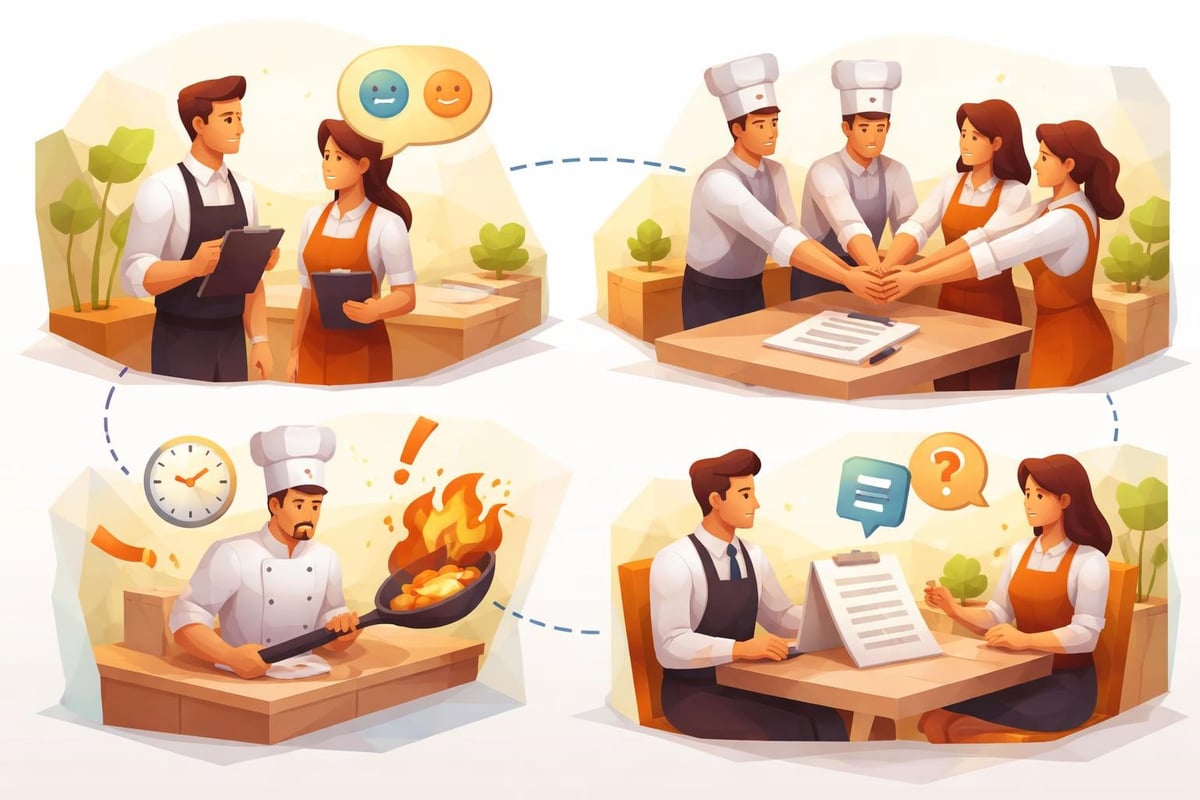
Essential Restaurant Interview Questions and Strategic Answers
Mastering restaurant interview questions requires understanding the intent behind each inquiry. Hiring managers design questions to reveal specific competencies and predict future performance.
Customer Service Scenarios
"Describe a time when you dealt with a difficult customer" ranks among the most frequent questions in restaurant interviews. This question evaluates your conflict resolution skills, emotional intelligence, and commitment to customer satisfaction.
Effective response framework:
- Set the scene with specific context
- Explain the customer's concern objectively
- Detail your actionable steps
- Share the positive outcome
- Highlight lessons learned
When answering, focus on remaining calm, listening actively, and finding solutions rather than assigning blame. Emphasize your ability to turn negative experiences into positive ones through attentive service and creative problem-solving.
Teamwork and Collaboration Questions
Restaurant success depends on seamless coordination between front-of-house and back-of-house teams. Interviewers ask about teamwork to gauge how well you'll integrate into their existing staff dynamics.
| Question Type | What It Reveals | Your Strategy |
|---|---|---|
| "How do you handle disagreements with coworkers?" | Conflict management skills | Show maturity and focus on resolution |
| "Describe your ideal team environment" | Cultural fit and expectations | Align with restaurant's values |
| "How do you support struggling team members?" | Leadership and empathy | Demonstrate collaborative spirit |
Similar to office assistant interview questions, restaurant scenarios test your interpersonal abilities. The difference lies in the urgency and public nature of restaurant work.
Handling Pressure and Fast-Paced Environments
"How do you prioritize tasks during a rush?" directly addresses your stress management capabilities. Restaurants experience predictable busy periods and unexpected surges, requiring employees who thrive under pressure.
Strong candidates explain their systematic approach to multitasking. Discuss how you assess urgency, communicate with teammates, and maintain quality standards even when overwhelmed. Provide concrete examples from previous experiences, quantifying results whenever possible.
The essential restaurant interview questions designed to identify top talent often focus on these pressure-testing scenarios because they predict real job performance.
Role-Specific Restaurant Interview Questions
Different positions require distinct skill sets, and interview questions reflect these variations. Tailoring your preparation to your target role increases your success rate significantly.
Server and Front-of-House Positions
Server interviews emphasize customer interaction, menu knowledge, and sales abilities. Expect questions about upselling techniques, handling multiple tables, and managing special dietary requests.
Common server questions:
- "How would you recommend menu items to guests?"
- "What's your approach to remembering orders without technology?"
- "How do you handle demanding guests during peak hours?"
- "Describe your experience with POS systems"
Demonstrate enthusiasm for food and beverage, showcasing genuine interest in enhancing guest experiences. Your answers should reveal attentiveness, memory skills, and sales orientation without appearing pushy.
Kitchen and Back-of-House Roles
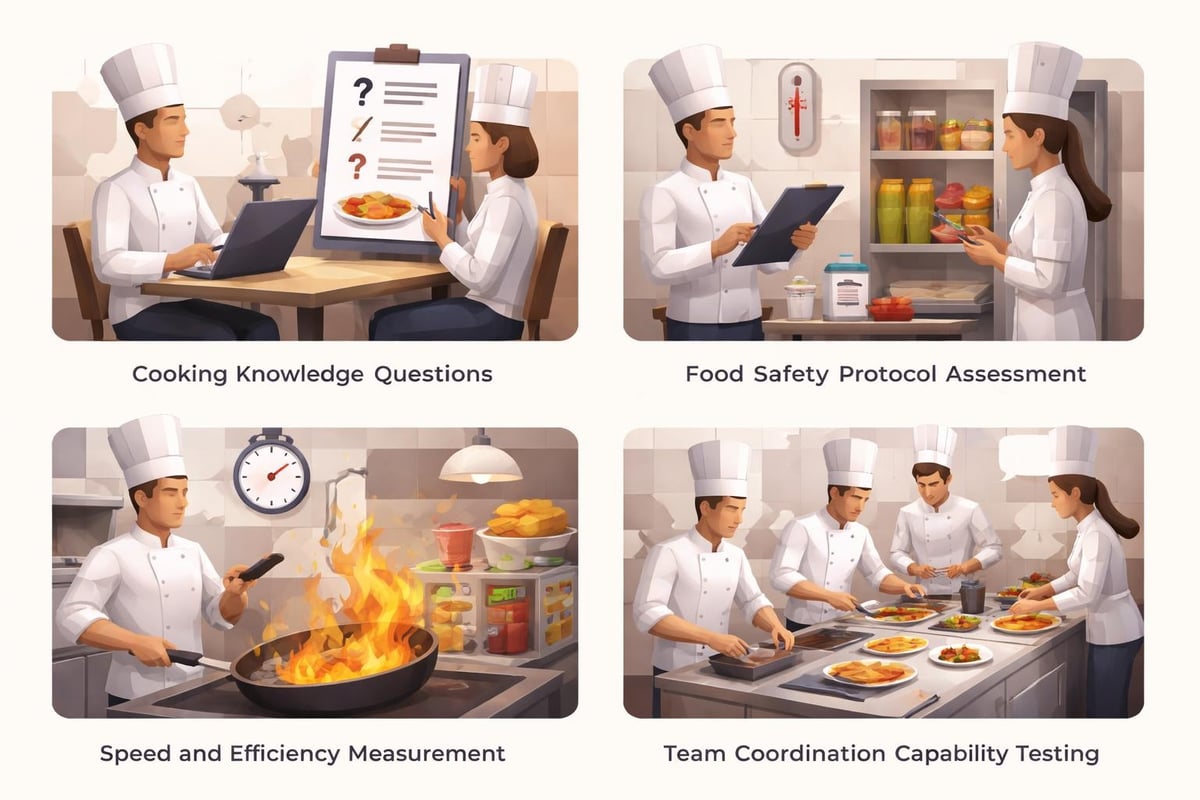
Line cooks, prep cooks, and dishwashers face questions about food safety, technique, and efficiency. Technical knowledge matters significantly in these positions.
Hiring managers might ask about knife skills, cooking methods, temperature requirements, or equipment operation. They also assess your ability to follow recipes precisely while adapting to ingredient availability or special requests.
"How do you maintain food safety standards during busy service?" tests both knowledge and practical application. Reference specific certifications, training, or experiences that demonstrate your commitment to safe food handling practices.
Management and Supervisory Candidates
Restaurant management interviews dive deeper into leadership philosophy, operational knowledge, and business acumen. Candidates face questions about staff development, cost control, and conflict resolution at higher stakes levels.
Management-focused questions include:
- "How do you motivate underperforming employees?"
- "Describe your approach to scheduling and labor cost management"
- "How would you handle a serious customer complaint?"
- "What metrics do you track to measure restaurant success?"
- "How do you balance staff satisfaction with operational efficiency?"
Your responses should demonstrate strategic thinking, data-driven decision-making, and genuine concern for employee welfare. Similar to project manager interview questions, management inquiries assess organizational and leadership capabilities.
Behavioral Questions That Reveal Character
Behavioral interview questions predict future performance based on past actions. These questions typically start with "Tell me about a time when..." or "Describe a situation where..."
Adaptability and Problem-Solving
Restaurants face constant challenges from equipment failures to ingredient shortages. Interviewers want to know how you respond when plans change unexpectedly.
"Tell me about a time when you had to adapt quickly to a changing situation" requires a specific example showing flexibility and creative thinking. Perhaps you covered for an absent colleague, adjusted to new menu items with minimal training, or improvised when equipment malfunctioned.
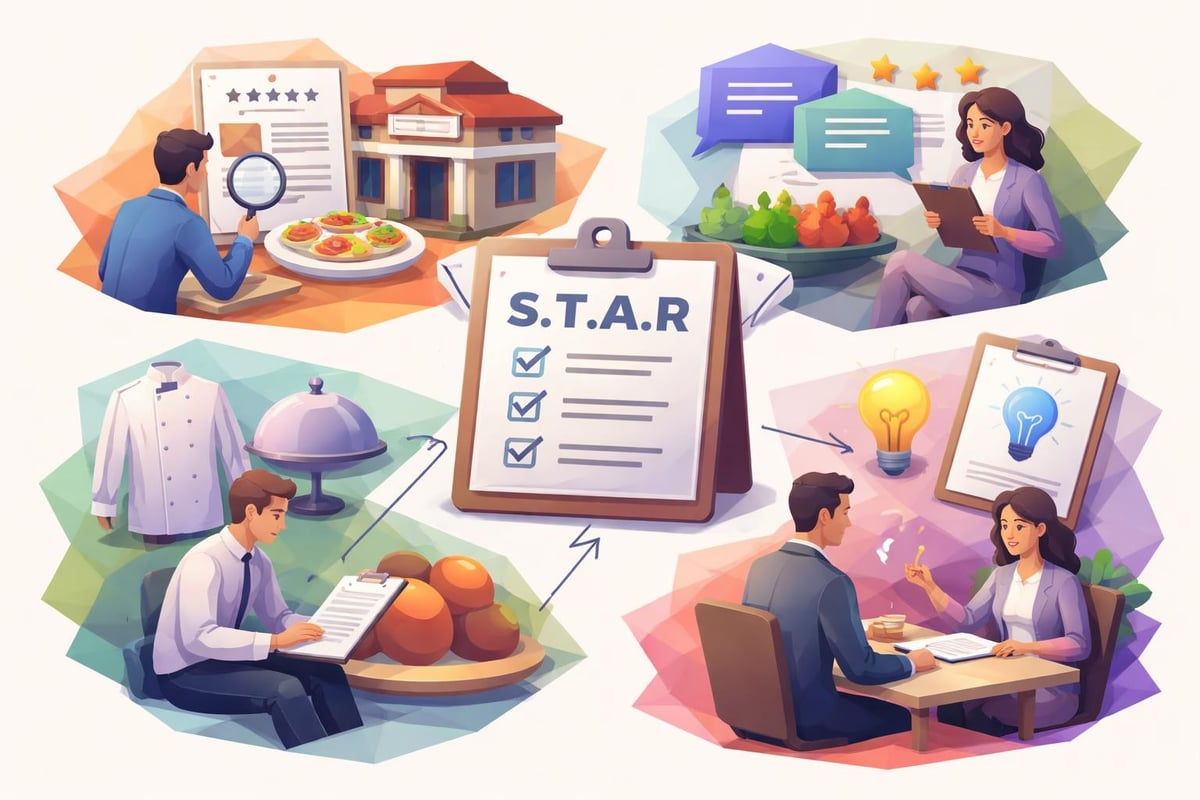
Structure your answer using the STAR method: Situation, Task, Action, Result. This framework keeps responses focused and demonstrates clear thinking under pressure.
Initiative and Self-Motivation
"Give an example of when you went above and beyond for a customer" reveals your service philosophy and willingness to exceed minimum expectations. Strong candidates share stories showing proactive problem-solving rather than reactive service.
Maybe you noticed a guest's anniversary and coordinated a complimentary dessert, or you researched allergen information to ensure safe dining for a guest with restrictions. These examples illustrate genuine care and attention to detail.
The 13 restaurant interview questions and answers that employers frequently use often include these behavioral components to assess cultural fit.
Questions About Availability and Logistics
Practical considerations matter immensely in restaurant staffing. Hiring managers need reliable team members who can work when the business needs them most.
Scheduling Flexibility
"What is your availability?" seems straightforward but requires honest, strategic answering. Restaurants operate evenings, weekends, and holidays when other businesses close. Your willingness to work these shifts significantly impacts hiring decisions.
Be truthful about constraints while emphasizing flexibility. If you cannot work certain days due to commitments, state this clearly upfront. Honesty prevents future scheduling conflicts and demonstrates integrity.
Transportation and Reliability
"How will you get to work?" and "What would you do if your transportation failed?" assess reliability. Restaurants cannot tolerate frequent tardiness or absences, especially during service hours.
Explain your primary transportation method and backup plans. If you rely on public transit, know the schedule and alternative routes. If you drive, mention your vehicle's reliability or your ability to arrange rides if problems arise.
Preparing Your Own Questions to Ask
Interviews should be bidirectional conversations. Asking thoughtful questions demonstrates genuine interest and helps you assess whether the restaurant aligns with your career goals.
Questions About Culture and Environment
Strong questions to ask include:
- "How would you describe the restaurant's culture and team dynamic?"
- "What does success look like in this role after 90 days?"
- "How does the restaurant support employee development and growth?"
- "What challenges does the team currently face?"
These questions reveal valuable information about work environment, expectations, and advancement opportunities. They also show you're evaluating fit, not just seeking any job.
Operational and Practical Inquiries
Understanding day-to-day operations helps you prepare for success. Ask about training processes, typical shift structures, and performance evaluation methods.
"What does the onboarding process look like?" shows you're already thinking about integration and success. "How does the restaurant handle busy seasons or special events?" demonstrates awareness of industry dynamics.
Just as you would research customer service interview questions for service-oriented roles, preparing questions for interviewers shows professionalism and engagement.
Advanced Preparation Strategies for Restaurant Interviews
Success in restaurant interviews extends beyond memorizing answers. Strategic preparation encompasses research, practice, and presentation.
Research the Establishment Thoroughly
Visit the restaurant as a guest before your interview if possible. Experience the service, study the menu, and observe the atmosphere. This firsthand knowledge allows you to reference specific details during your interview, demonstrating genuine interest.
Review online presence including the website, social media, and customer reviews. Understanding the restaurant's positioning, target demographic, and reputation helps you tailor responses appropriately.
| Research Element | Where to Find It | How to Use It |
|---|---|---|
| Menu and cuisine style | Restaurant website | Reference favorite dishes, demonstrate knowledge |
| Company values and mission | About page, social media | Align your answers with their priorities |
| Recent news or awards | Google search, local media | Show awareness and congratulate achievements |
| Customer feedback patterns | Review sites | Address common themes in your answers |
Practice with Mock Interviews
Rehearsing restaurant interview questions out loud builds confidence and reveals areas needing improvement. Use interview preparation tools to simulate realistic scenarios and receive feedback on your responses.
Record yourself answering common questions, then review the footage critically. Notice verbal tics, body language, and pacing. This self-awareness helps you present professionally during the actual interview.
Presentation and Professional Appearance
First impressions matter significantly in hospitality. Dress appropriately for the restaurant's style while maintaining professionalism. Fine dining establishments typically expect business attire, while casual restaurants may accept smart casual clothing.
Arrive 10-15 minutes early, demonstrating punctuality and respect for the interviewer's time. Bring copies of your resume, a list of references, and any relevant certifications. These materials show organization and preparedness.
Common Mistakes to Avoid During Restaurant Interviews
Even well-prepared candidates make errors that cost them opportunities. Awareness of common pitfalls helps you avoid these mistakes.
Negativity About Previous Employers
When asked "Why did you leave your last restaurant job?" resist the temptation to criticize former employers. Negative comments raise red flags about your professionalism and discretion.
Instead, frame departures positively. Perhaps you sought new challenges, wanted experience with different cuisine styles, or needed schedule changes for personal growth. Focus on what you're moving toward rather than what you're escaping.
Vague or Generic Answers
"I'm a hard worker who loves people" lacks specificity and fails to differentiate you from other candidates. Every restaurant applicant claims these qualities.
Provide concrete examples and quantifiable achievements. "I consistently maintained a 95% customer satisfaction rating across 200+ tables monthly" creates much stronger impact than generic statements.
Lack of Enthusiasm or Energy
Restaurant work demands energy and positivity. Candidates who appear disengaged or unenthusiastic during interviews suggest they'll bring the same attitude to the job.
Show genuine excitement about the opportunity. Smile, maintain good posture, and express authentic interest in the position. Your energy should reflect the pace and positivity restaurants need from their team members.
Failing to Follow Up
After your interview, send a thank-you email within 24 hours. Reference specific discussion points and reiterate your interest in the position. This simple gesture demonstrates professionalism and keeps you top-of-mind during decision-making.
The 10 essential restaurant interview questions that hiring managers prioritize all assess qualities like professionalism, which extends beyond the interview itself.
Leveraging Technology for Interview Success
Modern job seekers have access to powerful tools that streamline interview preparation. Using these resources strategically enhances your competitive position.
Resume and Application Optimization
Before reaching the interview stage, your application must pass initial screening. Using an ATS resume checker ensures your resume includes relevant keywords and formatting that applicant tracking systems recognize.
Tailoring your resume for restaurant positions means highlighting relevant experience, certifications like food handler's cards, and specific achievements in hospitality settings. Generic resumes rarely advance to the interview stage.
AI-Powered Interview Preparation
Technology now offers sophisticated interview practice through AI platforms. These tools simulate realistic scenarios, provide feedback on answers, and help identify improvement areas.
Practice answering restaurant interview questions using varied phrasing and approaches. The more comfortable you become discussing your experience and qualifications, the more naturally and confidently you'll perform during actual interviews.
Building a Strong Professional Narrative
Your career story should flow logically, connecting past experiences to your current restaurant opportunity. Whether you're transitioning from another industry or advancing within hospitality, articulate clear motivations and career goals.
Use cover letter generation tools to develop compelling narratives that support your application. A strong cover letter introduces your personality and passion before the interview begins.
Industry-Specific Certifications and Training
Certain qualifications significantly strengthen your candidacy for restaurant positions. Mentioning these during interviews demonstrates commitment to professional development.
Valuable certifications include:
- ServSafe Food Handler or Manager certification
- Alcohol service certification (state-specific requirements)
- Allergen awareness training
- First aid and CPR certification
When asked "What qualifications make you a strong candidate?" these certifications provide concrete evidence of your preparedness and professionalism. They also show you understand industry standards and prioritize safety.
Negotiating Compensation and Benefits
While not strictly interview questions, discussions about compensation inevitably arise during the hiring process. Approaching these conversations strategically protects your interests while maintaining professionalism.
Understanding Restaurant Compensation Structures
Restaurant pay varies significantly by position. Servers often earn minimum wage plus tips, while kitchen staff typically receive hourly rates without gratuities. Management positions may include salaries, bonuses, and profit-sharing arrangements.
Research typical compensation for your target role in your geographic area. When asked about salary expectations, provide a range based on market data rather than an arbitrary number.
Beyond Base Pay Considerations
Benefits matter, especially in an industry where many employees lack traditional corporate perks. Ask about:
- Health insurance availability and employer contributions
- Meal policies during shifts
- Paid time off or sick leave
- Employee discounts
- Advancement opportunities and timeline
These factors significantly impact total compensation and job satisfaction. Don't hesitate to inquire about them during appropriate interview stages.
Mastering restaurant interview questions positions you for success in one of the most dynamic and rewarding industries. By preparing strategic responses, researching thoroughly, and presenting yourself professionally, you stand out among competitive applicant pools. Whether you're starting your hospitality career or advancing to leadership roles, CareerConcierge.io provides comprehensive tools for resume optimization, interview preparation, and application enhancement that help you land your dream restaurant position with confidence.