UI UX Designer Interview Questions for 2026
Master UI UX designer interview questions with expert answers, preparation strategies, and insights to land your dream design role in 2026.
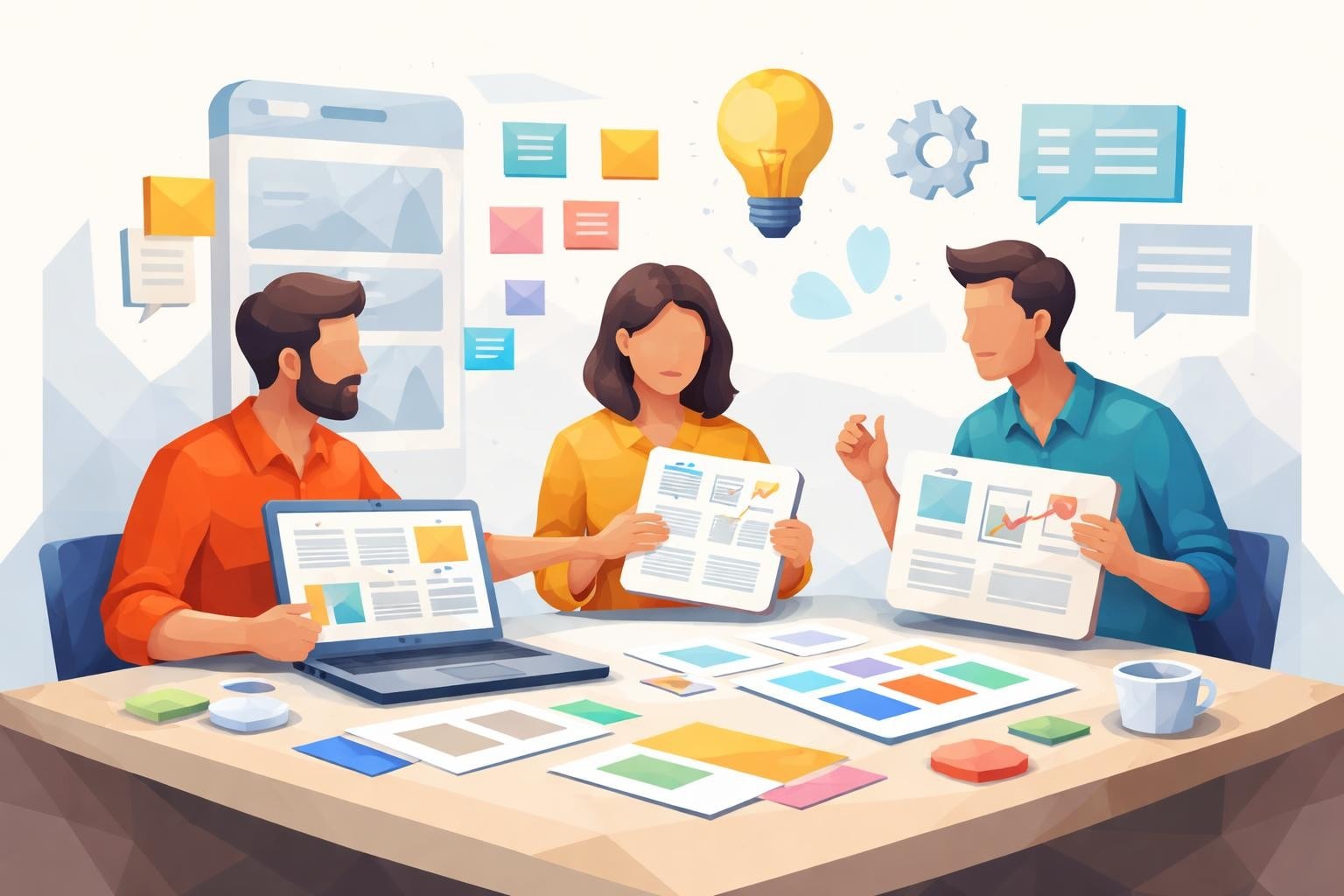
Landing a UI UX designer position requires more than just a strong portfolio. Hiring managers want to assess your problem-solving abilities, design thinking process, collaboration skills, and understanding of user-centered principles. As the design field continues to evolve in 2026, preparing for ui ux designer interview questions has become increasingly sophisticated, requiring candidates to demonstrate both technical expertise and strategic thinking. Whether you're a seasoned designer or transitioning into this dynamic field, understanding what interviewers are looking for can make the difference between receiving an offer and continuing your search.
Understanding the Interview Landscape
The UI UX design interview process typically consists of multiple stages that evaluate different aspects of your capabilities. Most companies structure their interviews to assess technical skills, design process knowledge, portfolio work, and cultural fit.
Portfolio presentations often serve as the centerpiece of design interviews. Interviewers want to see your thought process, not just the final product. When presenting case studies, be prepared to discuss your research methodology, design iterations, user feedback incorporation, and measurable outcomes.
Common Interview Formats
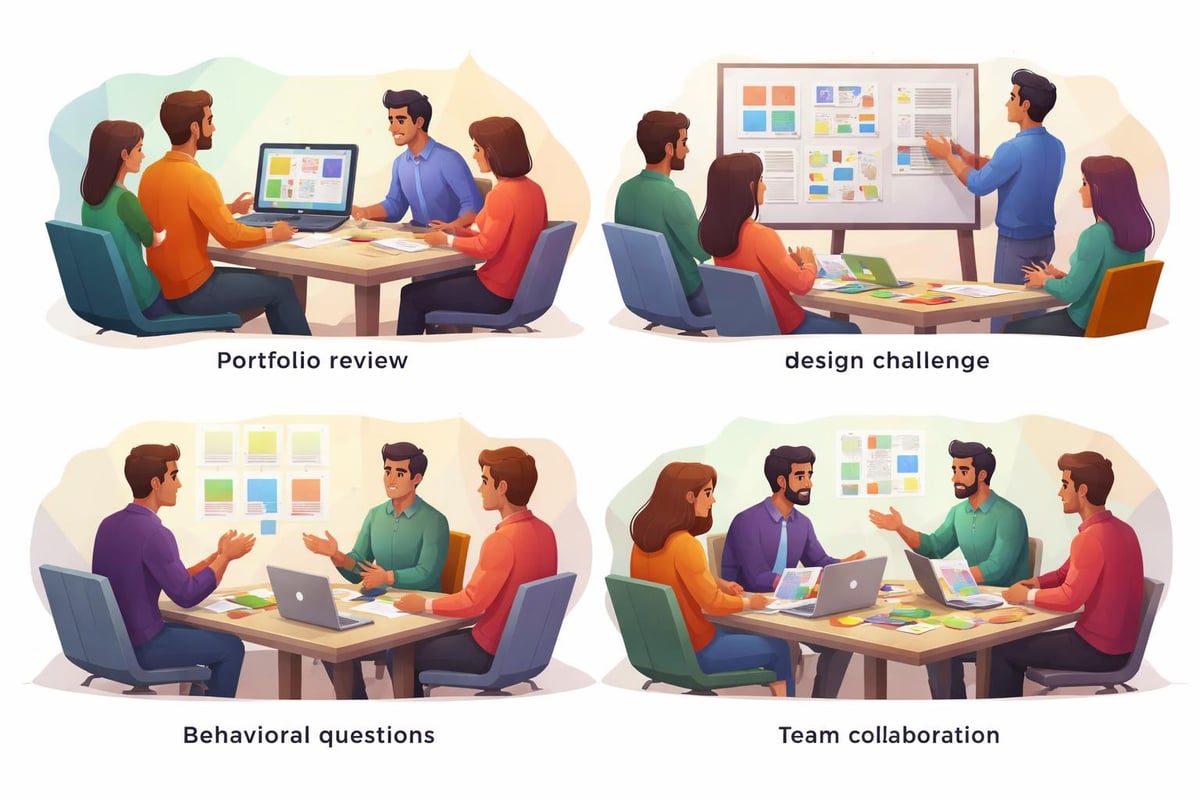
Design interviews in 2026 typically follow one of several formats:
- Behavioral interviews that explore your past experiences and decision-making
- Portfolio reviews where you walk through 2-3 projects in detail
- Design challenges or whiteboard exercises that test real-time problem-solving
- Technical assessments evaluating tool proficiency and design systems knowledge
- Team collaboration sessions that simulate working with cross-functional partners
Understanding which format you'll encounter helps you prepare targeted responses. Many companies combine multiple formats across several interview rounds, so versatility in your preparation is essential.
Core UI UX Designer Interview Questions
Mastering fundamental ui ux designer interview questions requires understanding the principles behind each query. Interviewers rarely ask questions just to hear textbook definitions; they want to understand how you apply concepts in real-world scenarios.
Design Process and Methodology
One of the most frequently asked questions explores your design process from concept to completion. When answering questions about your methodology, structure your response around concrete examples that demonstrate user-centered thinking.
Question: "Walk me through your design process for a recent project."
Strategic Response: Start with discovery and research phases, explain how you gathered user insights, describe ideation and wireframing stages, discuss usability testing iterations, and conclude with implementation and post-launch metrics. The Caltech guide on UI/UX interview questions emphasizes the importance of articulating each phase clearly with specific examples.
User Research and Testing
Questions about user research reveal whether you make design decisions based on data or assumptions. Interviewers want to know how you validate ideas and incorporate feedback.
| Research Method | When to Use | Key Benefit |
|---|---|---|
| User Interviews | Early discovery phase | Deep qualitative insights |
| Usability Testing | Prototype validation | Identifies friction points |
| A/B Testing | Post-launch optimization | Quantitative performance data |
| Card Sorting | Information architecture | User mental models |
| Heat Mapping | Interaction analysis | Behavioral patterns |
Question: "How do you prioritize which user research methods to employ?"
Strategic Response: Discuss project constraints like timeline, budget, and stage of development. Explain how you balance qualitative and quantitative methods, and provide an example where research findings significantly influenced your design direction.
Technical and Tool-Based Questions
While design thinking matters most, technical proficiency remains essential. Interviewers assess your familiarity with industry-standard tools and your ability to work within design systems and collaborative environments.
Design Tools and Software
Modern UI UX designers must demonstrate proficiency across multiple platforms. In 2026, questions often focus on how you choose tools for specific tasks rather than just which tools you know.
- Figma for collaborative interface design and prototyping
- Sketch for Mac-based UI design workflows
- Adobe XD for end-to-end UX design
- InVision for prototyping and stakeholder presentations
- Miro or FigJam for collaborative workshops and brainstorming
Beyond naming tools, explain your selection criteria. For instance, you might choose Figma for projects requiring real-time collaboration with developers or Adobe XD when working within an Adobe Creative Cloud ecosystem.
Design Systems and Consistency
Question: "How do you ensure design consistency across multiple platforms?"
This question evaluates your understanding of design systems, component libraries, and scalability. Discuss how you've created or contributed to design systems, maintained documentation, and collaborated with development teams to ensure implementation accuracy. Reference specific examples where a design system improved efficiency or user experience consistency.
Behavioral and Situational Questions
Behavioral interview questions reveal how you handle challenges, collaborate with teams, and grow from experiences. The LinkedIn guide on UX designer interviews highlights how these questions assess soft skills that are crucial for design success.
Handling Feedback and Criticism
Designers must navigate feedback from stakeholders, users, developers, and fellow designers. How you receive and incorporate criticism demonstrates emotional intelligence and professional maturity.
Question: "Describe a time when you received negative feedback on a design you were proud of. How did you respond?"
Strategic Response: Share a specific example that shows vulnerability and growth. Explain the feedback you received, your initial reaction, how you processed the criticism, what actions you took to address concerns, and what you learned from the experience. The article on handling feedback provides excellent frameworks for structuring these responses.

Conflict Resolution
Working in cross-functional teams inevitably creates conflicting priorities. Interviewers want to know you can navigate disagreements professionally while advocating for user needs.
Scenario-based questions might include:
- "What would you do if a product manager insisted on a feature that contradicts your user research?"
- "How do you handle situations where developers say your design is too complex to implement?"
- "Describe a time when stakeholders disagreed with your design recommendations."
When answering these ui ux designer interview questions, use the STAR method: describe the Situation, explain your Task, detail your Actions, and share the Results. Emphasize collaborative problem-solving rather than winning arguments.
Portfolio-Specific Questions
Your portfolio represents your professional identity. Interviewers scrutinize case studies to understand your capabilities, so preparing to discuss your work in depth is non-negotiable.
Case Study Deep Dives
Expect interviewers to ask probing questions about specific projects:
"What was the biggest challenge in this project, and how did you overcome it?" Focus on problem-solving methodology and creative solutions.
"If you could redesign this project today, what would you do differently?" Demonstrate growth mindset and continuous learning.
"How did you measure the success of this design?" Show that you think beyond aesthetics to business impact and user satisfaction metrics.
"Who were the key stakeholders, and how did you manage their expectations?" Highlight communication and project management skills.
Discussing Failures and Pivots
Strong candidates don't just showcase successes. The UXFol blog on interview topics emphasizes that discussing failures demonstrates self-awareness and resilience.
Question: "Tell me about a design project that didn't go as planned."
Strategic Response: Choose an example where you learned valuable lessons. Explain what went wrong, what you would do differently, and how that experience improved your approach to subsequent projects. Authenticity matters more than perfection.
Advanced and Trending Topics
As the field matures, ui ux designer interview questions increasingly cover emerging technologies and methodologies. Staying current with industry trends signals your commitment to professional growth.
Accessibility and Inclusive Design
Accessibility is no longer optional. Interviewers assess whether you design for diverse user populations, including those with disabilities.
Key topics to prepare:
- WCAG compliance and accessibility standards
- Color contrast ratios and visual hierarchy
- Screen reader compatibility and semantic HTML
- Keyboard navigation and alternative input methods
- Inclusive design principles that benefit all users
Demonstrate knowledge by discussing specific projects where you implemented accessibility features and how they improved the overall user experience. Tools like WAVE, axe, or Lighthouse should be part of your quality assurance vocabulary.
AI and Emerging Technologies
In 2026, artificial intelligence significantly impacts design workflows. Interviewers want to know how you leverage AI tools while maintaining human-centered design principles.
Question: "How do you incorporate AI and automation into your design process?"
Discuss AI-powered tools for tasks like design system management, content generation, user testing analysis, or accessibility checking. Emphasize that AI augments rather than replaces human creativity and empathy. If you're preparing for technical interviews as well, resources like CareerConcierge.io's interview prep can help you articulate complex concepts clearly.
Business and Strategy Questions
Senior UI UX designers must understand business objectives beyond creating beautiful interfaces. Strategic questions assess whether you can align design decisions with company goals.
ROI and Metrics
Question: "How do you demonstrate the business value of UX improvements?"
Effective designers speak the language of business. Discuss metrics like:
- Conversion rate improvements from redesigns
- Reduced support tickets due to better usability
- Increased user engagement measured through analytics
- Time-to-task completion reductions
- Customer satisfaction scores and NPS improvements
Provide concrete examples with percentages or numerical improvements. According to BetterTeam's interview questions resource, quantifying impact distinguishes exceptional candidates from average ones.
Balancing Constraints
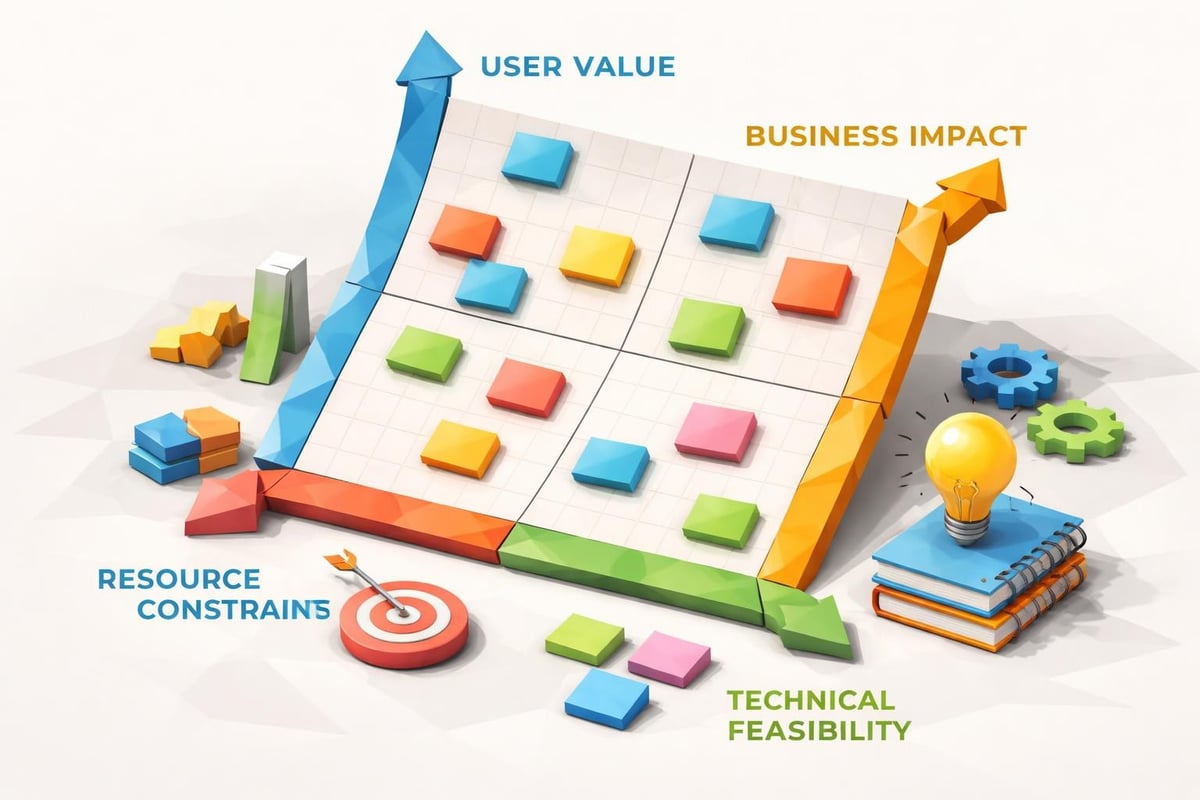
Real-world design involves tradeoffs between user needs, business goals, technical feasibility, and timeline constraints.
Question: "How do you prioritize features when you have limited time and resources?"
Strategic Framework:
- Assess user impact through research data
- Evaluate business value and strategic alignment
- Consider technical complexity and dependencies
- Apply frameworks like MoSCoW (Must have, Should have, Could have, Won't have)
- Collaborate with product managers and developers for realistic scoping
The Outsource Accelerator guide emphasizes that strong candidates demonstrate flexibility while maintaining user advocacy.
Questions to Ask Your Interviewer
Interviews are bidirectional. The questions you ask reveal your priorities and help you assess company fit. Thoughtful inquiries demonstrate genuine interest and professional maturity.
Design Culture and Process
- "How does the design team collaborate with product management and engineering?"
- "What does the design critique process look like here?"
- "How much autonomy do designers have in proposing new features or improvements?"
- "What design tools and systems does the team currently use?"
Growth and Development
- "What opportunities exist for professional development and continuing education?"
- "How does the company support designers in staying current with industry trends?"
- "What does success look like for this role in the first 90 days?"
- "How is feedback given to designers, and how often do performance reviews occur?"
These questions show you're thinking beyond just getting hired. You're evaluating whether the company supports the kind of designer you want to become. Similar to approaches discussed in questions to ask in a phone interview, your inquiries should be strategic and purposeful.
Preparation Strategies
Success in design interviews requires structured preparation. Creating a study plan ensures you cover all necessary areas without becoming overwhelmed.
Building Your Response Library
Prepare 5-7 core stories that demonstrate different competencies:
- A project showcasing user research excellence
- An example of overcoming significant constraints
- A situation where you advocated for users against stakeholder pressure
- A collaborative success with cross-functional teams
- A failure that led to important learning
- An instance of innovative problem-solving
- A project with measurable business impact
The GeeksForGeeks UI/UX interview guide suggests that having these stories ready allows you to adapt responses to various question formats.
Mock Interviews and Practice
Practicing ui ux designer interview questions with peers or mentors provides invaluable feedback. Platforms like CareerConcierge.io offer AI-powered interview preparation tools that simulate real interview scenarios and provide personalized feedback.
Effective practice techniques:
- Record yourself answering common questions to identify verbal tics
- Conduct portfolio walkthroughs with non-designers to ensure clarity
- Time your responses to avoid rambling or being too brief
- Practice whiteboard challenges with real-time constraints
- Seek feedback from experienced designers on your case study presentations
Portfolio Refinement
Your portfolio must be interview-ready, meaning case studies should clearly communicate your process, not just showcase pretty screens. The Eleken blog on UX interview questions notes that interviewers spend limited time reviewing portfolios, so clarity and conciseness matter.
Portfolio checklist:
- Each case study includes problem statement, research methods, design process, and outcomes
- Projects demonstrate range across different industries or problem types
- Metrics and results are quantified where possible
- Process artifacts like wireframes, user flows, and iterations are visible
- Contact information and relevant links are easily accessible
Industry-Specific Considerations
Different industries emphasize different aspects of UI UX design. Understanding sector-specific priorities helps you tailor responses appropriately.
| Industry | Key Focus Areas | Common Questions |
|---|---|---|
| E-commerce | Conversion optimization, checkout flows | "How do you reduce cart abandonment?" |
| Healthcare | Compliance, accessibility, data privacy | "How do you design for HIPAA compliance?" |
| Fintech | Security, trust, complex workflows | "How do you balance security with usability?" |
| SaaS | Onboarding, feature adoption, scalability | "How do you design for different user expertise levels?" |
| Education | Engagement, learning paths, accessibility | "How do you measure learning effectiveness through design?" |
Research the company's industry before your interview and prepare examples relevant to their domain. Resources like Workable's designer interview questions often categorize questions by industry context.
Remote Interview Considerations
In 2026, many design interviews occur remotely. Virtual interviews present unique challenges and opportunities that require specific preparation.
Technical preparation:
- Test your internet connection, camera, and microphone beforehand
- Ensure proper lighting and professional background
- Have backup devices ready in case of technical issues
- Close unnecessary applications to prevent notifications
- Keep your portfolio and work samples easily accessible
Presentation adaptation:
- Share your screen confidently when presenting portfolio work
- Use digital whiteboarding tools fluently for design exercises
- Maintain eye contact by looking at the camera, not the screen
- Prepare digital versions of any physical materials you might reference
- Practice virtual collaboration tools the company uses
Similar to principles covered in interview best practices, understanding the medium enhances your performance regardless of format.
Final Preparation Tips
As your interview approaches, consolidate your preparation with these final steps:
Research the company thoroughly:
- Use their product extensively and identify potential improvements
- Read recent company news, blog posts, and social media updates
- Review the design team's public work and Medium articles
- Understand their user base and competitive landscape
- Prepare thoughtful questions based on your research
Day-of preparation:
- Review your portfolio one final time
- Prepare questions to ask interviewers
- Dress professionally, even for remote interviews
- Arrive (or log on) 10 minutes early
- Have water nearby and take calming breaths
Post-interview follow-up:
- Send personalized thank-you emails within 24 hours
- Reference specific conversation points from your interview
- Reiterate your interest and how your skills align with their needs
- Include any work samples or resources you discussed during the interview
Mastering ui ux designer interview questions requires understanding both the technical and human elements of design work. Success comes from articulating your process clearly, demonstrating empathy for users, showing business acumen, and presenting authentic examples of your growth as a designer. Whether you're preparing your portfolio, refining your responses, or researching the company, CareerConcierge.io provides comprehensive tools including interview preparation resources, resume optimization, and AI-powered feedback to help you present your best self and land your dream design role.