Essential Guide to AI for Cover Letter Writing in 2026
Discover how ai for cover letter writing boosts your job search in 2026 with expert strategies, top tools, and tips to create standout, personalized applications.
AI is transforming how professionals approach job applications, making cover letter writing smarter, faster, and more effective in 2026. This essential guide reveals how ai for cover letter is changing the landscape, empowering job seekers to craft standout, personalized documents that secure interviews. Inside, you will discover the latest trends, a step-by-step process for leveraging AI, best tools, advanced customization strategies, potential pitfalls, and what to expect in the future. Unlock expert insights and actionable steps to ensure your cover letters rise above the competition.
The Rise of AI in Cover Letter Writing: Trends and Impact in 2026
Artificial intelligence is fundamentally changing the way job seekers approach the application process. In 2026, the use of ai for cover letter creation is no longer a novelty but a widespread standard across industries. Candidates at every career stage are embracing AI-powered platforms to streamline and enhance their cover letters.

AI Adoption: A New Norm for 2026
Recent data reveals that over 70 percent of job seekers now rely on ai for cover letter and resume generation. This rapid adoption is driven by the need for efficiency and the promise of better results. AI-driven platforms are no longer limited to tech-savvy professionals; they are accessible to students, mid-career changers, and executives alike.
A compelling example comes from a recent survey, where 72 percent of readers believed an AI-generated cover letter was written by a human, highlighting the growing sophistication and acceptance of these tools (AI's Impact on Cover Letter Perception). This finding underscores how ai for cover letter writing is closing the gap between machine-generated and authentic human communication.
How AI Tools Transform the Cover Letter
AI platforms analyze job descriptions and resumes to generate content tailored to each opportunity. By parsing keywords, responsibilities, and company values, these tools ensure that every ai for cover letter draft aligns closely with employer expectations. Unlike generic templates, modern AI solutions create hyper-personalized, ATS-optimized cover letters that reflect genuine qualifications.
Let’s compare the traditional and AI-driven approaches:
| Feature | Traditional Cover Letter | AI-Generated Cover Letter |
|---|---|---|
| Personalization | Manual, time-intensive | Automated, data-driven |
| Keyword Optimization | Prone to omissions | Integrated, ATS-focused |
| Consistency | Varies by applicant | Systematic |
| Turnaround Time | Hours | Minutes |
| Accessibility | Skill-dependent | Universal |
Impact on Recruiters and the Application Process
Recruiters are noticing significant changes in application quality due to ai for cover letter adoption. The use of AI leads to faster screening, improved relevance, and a reduction in manual review. Companies—such as IBM, Google, and many startups—report higher satisfaction with the clarity and structure of AI-enhanced cover letters.
For job seekers, this means a more level playing field. AI offers equal access to professional-grade tools, regardless of background or resources. The democratization of the job search process is accelerating, with ai for cover letter solutions bridging gaps in writing ability and application strategy.
Evolving Expectations and the Need for Authenticity
With the rise of ai for cover letter tools, recruiters have become more skilled at identifying formulaic or overly polished submissions. As AI-generated content becomes more prevalent, hiring managers now expect a blend of technical precision and genuine personality in each cover letter.
Feedback from recruiters suggests that while AI can elevate baseline quality, applicants must still inject authentic stories and unique perspectives. The future of ai for cover letter writing will hinge on the balance between efficiency and individuality, ensuring every application stands out for the right reasons.
Step-by-Step Guide: How to Use AI for Cover Letter Writing in 2026
Navigating the competitive job market in 2026 requires more than just determination. With the right approach, ai for cover letter creation can transform your job application process. This step-by-step guide will show you how to harness AI tools effectively, ensuring your cover letters are personalized, ATS-optimized, and impactful.
Step 1: Gather Your Materials
Before using ai for cover letter writing, start by collecting essential documents. An updated resume and the detailed job description are must-haves. Many AI platforms allow you to upload your LinkedIn profile or resume directly, streamlining the process.
These documents help the AI extract relevant experiences, skills, and industry keywords. Organize your files in clearly labeled folders for quick access. Include supporting materials such as certifications, portfolio links, or reference letters if relevant.
When uploading personal information to any AI platform, always check the privacy policy. Opt for tools that offer clear data protection measures. By preparing your materials thoughtfully, you set a strong foundation for effective ai for cover letter creation.
Step 2: Select the Right AI Tool
Choosing the best ai for cover letter platform can make all the difference. Focus on these criteria:
- ATS optimization: Ensures your cover letter passes automated screening.
- Customization options: Allows edits for tone, format, and industry.
- Security: Protects your personal information.
- Industry-specific templates: Boosts relevance and professionalism.
Here’s a quick comparison table of top tools:
| Feature | Careerflow | Competitor A | Competitor B |
|---|---|---|---|
| ATS Check | Yes | Yes | No |
| Custom Templates | Yes | Limited | Yes |
| Data Privacy | Strong | Standard | Standard |
| Free Trial | Yes | Yes | No |
User testimonials often highlight increased interview rates and time saved. For deeper insights on strategies and tool features, refer to AI cover letter strategies. Select a tool that aligns with your industry and offers flexibility for unique job applications.
Step 3: Input Job Description and Personalize Prompts
After selecting your ai for cover letter platform, import or paste the job description into the tool. AI uses this to tailor content specifically for the role. Most platforms allow prompt customization, letting you emphasize particular skills or company values.
For example, prompts might include:
- "Highlight my leadership experience managing cross-functional teams."
- "Emphasize alignment with the company’s sustainability mission."
- "Showcase my expertise in project management and digital transformation."
By providing detailed, specific prompts, you guide the AI to generate targeted, relevant content. This approach ensures your achievements match the job’s requirements. Avoid generic instructions to prevent bland or repetitive outputs.
Step 4: Choose and Customize Templates
Next, select from a range of professional templates within your ai for cover letter platform. Templates often vary by industry—classic for finance, creative for marketing, or university-branded for academic roles.
Steps for customization include:
- Matching template tone and style to company culture.
- Adjusting length and format as needed.
- Ensuring consistency with your resume design and content.
Template types you might encounter:
- Classic (formal, businesslike)
- Skills-focused (emphasizing technical expertise)
- Creative (visual elements for design roles)
- University-branded (academic applications)
Personalize the template to reflect your unique strengths and the company’s expectations. This keeps your application cohesive and memorable.
Step 5: Generate, Edit, and Refine Your Cover Letter
Once your ai for cover letter tool produces a draft, review it carefully. AI-generated content is a strong starting point, but editing is essential. Focus on:
- Adjusting tone for authenticity and professionalism.
- Clarifying statements, avoiding vague or repetitive language.
- Using AI editing features to check grammar and active voice.
- Applying prompts like "make this sound more enthusiastic" or "align with the job description’s requirements."
Balance the efficiency of AI with your personal voice. This step ensures your cover letter stands out and avoids formulaic results. Editing helps you maintain control over the final message.
Step 6: Final Review and ATS Optimization
Before submitting, ensure your ai for cover letter is ATS-friendly. This means checking for relevant keywords, consistent formatting, and no unusual file types or graphics.
Many AI tools scan for ATS compatibility and suggest improvements. Save each cover letter in organized folders by job title or company for easy future access.
For example, Careerflow’s application management features help track your documents and deadlines. Always perform a final human review to catch errors and confirm your cover letter accurately reflects your qualifications. This last check can be the difference between landing an interview or missing out.
Best Practices for Customizing AI-Generated Cover Letters
AI for cover letter writing has become a standard tool in 2026, but personalization is what sets successful applications apart. To truly stand out, job seekers must go beyond automated drafts and inject real personality into their cover letters. This section explores proven strategies for making AI for cover letter outputs unique, authentic, and tailored for each opportunity.
Make AI-Generated Content Unique and Personal
Start by using AI for cover letter creation as a foundation, not a finished product. Relying solely on generic outputs can lead to bland, formulaic applications that recruiters can spot instantly.
To personalize, add specific anecdotes and achievements from your own career. For example, if the AI suggests you are a "team player," expand on this by describing a project where your collaboration led to measurable results.
Consider these customization steps:
- Replace general phrases with concrete examples.
- Mention technologies, industries, or roles that are unique to your experience.
- Highlight soft skills with real scenarios.
This approach ensures your AI for cover letter draft reflects your individuality and value.
Align with Company Mission and Values
A standout cover letter connects your story to the company’s mission and culture. While AI for cover letter tools can analyze job descriptions, it is up to you to demonstrate genuine alignment.
Research the employer’s values and refer to recent company initiatives or awards. Customize your letter to address how your background supports the organization’s goals. For example, if applying to a sustainability-focused firm, mention your experience leading a green initiative.
Compare these two approaches:
| Approach | Example Text |
|---|---|
| Weak | "I am excited to apply for this role at your company." |
| Strong | "Your commitment to renewable energy inspires me. At my last job, I reduced energy costs by 20 percent through innovative project management." |
Adding this level of detail to your AI for cover letter result makes it much more compelling.
Use AI as a Brainstorming Partner
Treat AI for cover letter generators as creative partners, not just writers. Use their suggestions to spark ideas but always edit for your authentic voice.
Try these tactics:
- Ask the AI for alternative phrasings or to reframe your achievements.
- Use prompts that focus on unique challenges you have solved.
- Experiment with different tones to match the company culture.
For more on optimizing your letter for both humans and applicant tracking systems, see these ATS-friendly resume and cover letter tips.
Foster Learning and Growth
Relying entirely on AI for cover letter writing can hinder your professional development. Limit direct copying and instead, use AI feedback to improve your skills.
Request explanations when AI suggests changes. This helps you understand what makes a strong cover letter and how to adapt your approach in the future.
Before submitting, always review and adapt your letter for the specific job and employer. Each application deserves a fresh approach, even when using AI for cover letter support.
Potential Pitfalls and How to Avoid Them When Using AI for Cover Letters
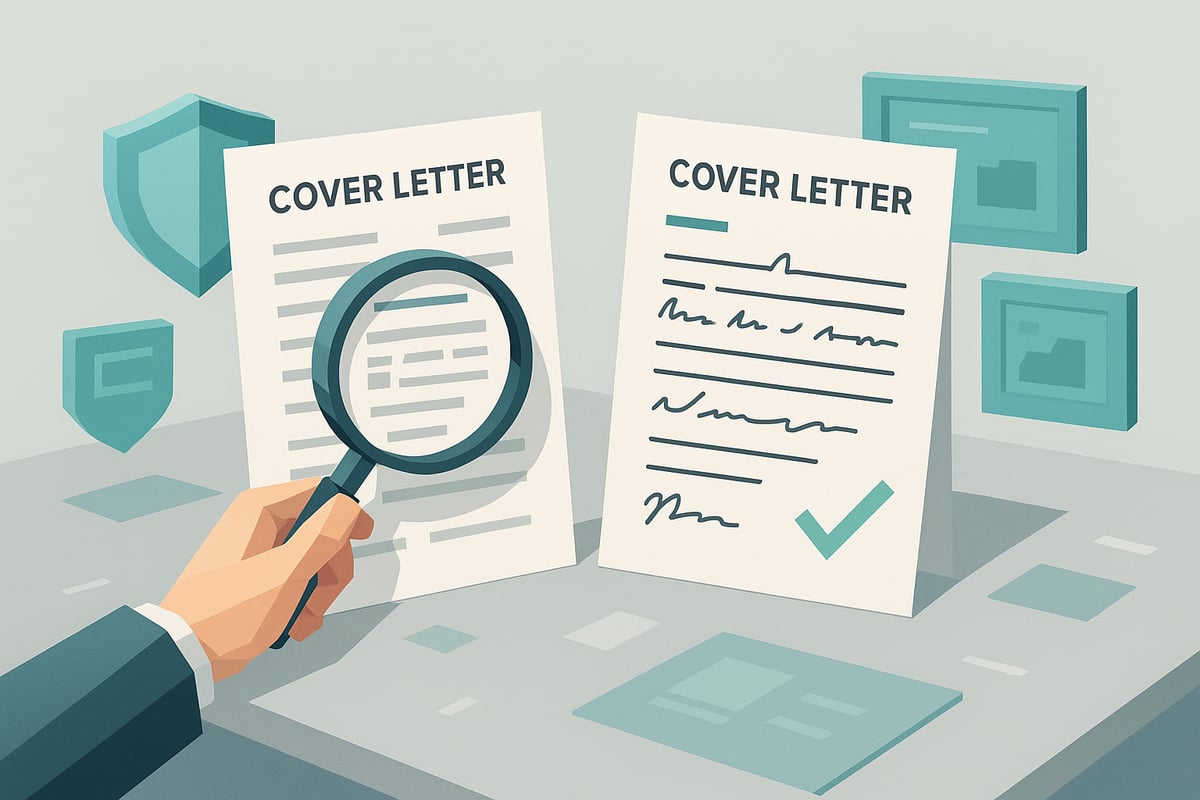
Artificial intelligence is streamlining the job application process, but using ai for cover letter writing comes with unique challenges. As AI becomes more sophisticated in 2026, job seekers must be aware of potential pitfalls to avoid setbacks and maximize their success. Recognizing these issues early helps ensure your cover letter stands out for the right reasons.
Recognizing Overly Generic or Formulaic Outputs
A common issue when using ai for cover letter writing is producing documents that sound too generic or formulaic. Recruiters in 2026 are increasingly alert to repetitive phrasing, unnatural transitions, and content that lacks genuine personality.
Signs of formulaic AI-generated cover letters:
- Overuse of standard phrases without specific details
- Repetitive sentence structures throughout the letter
- Unusual punctuation patterns or awkward transitions
To avoid this, review your AI draft for unique, role-specific examples. Personalize each paragraph so it reflects your actual experience and voice. According to recent research on AI's Role in Job Application Processes, recruiters often spot AI-generated content due to its predictability, leading to higher scrutiny of applications.
Risks of Inaccuracy and Overselling
Another pitfall of relying on ai for cover letter writing is the risk of inaccuracies or overstatements. AI tools might inadvertently "hallucinate" achievements, exaggerate your skills, or misinterpret your background if the input is unclear.
Examples of inaccuracy:
- Listing awards or certifications you do not have
- Misrepresenting previous job roles or responsibilities
- Overstating technical or language proficiency
Always fact-check and verify every detail the AI includes. Use your own records to cross-check achievements. A truthful, accurate cover letter not only builds trust but also prevents awkward moments if you advance to interviews.
Data Privacy and Responsible AI Use
When using ai for cover letter creation, safeguarding your personal information is crucial. Sharing resumes or sensitive data with online platforms requires careful consideration of privacy and security.
Best practices for data privacy:
- Choose reputable platforms with transparent privacy policies
- Avoid uploading unnecessary documents containing sensitive data
- Regularly update passwords and monitor account activity
For a deeper look at how to select secure tools, explore this guide on AI letter writer tools. Responsible use of AI helps protect your data and ensures you remain in control of your application process.
Balancing AI Efficiency with Personal Development
While ai for cover letter writing accelerates the application process, it is vital not to rely solely on automation. Overdependence can limit your growth as a communicator and reduce your ability to express your authentic self.
Tips for maintaining a human touch:
- Edit AI drafts to reflect your own tone and story
- Add specific anecdotes that showcase your individuality
- Use AI as a brainstorming partner, not just a writer
By balancing AI efficiency with personal input, you create cover letters that resonate with employers and support your long-term career development.
The Future of AI in Cover Letter Writing: What to Expect Beyond 2026
The landscape of ai for cover letter writing is poised for remarkable change as we approach and move beyond 2026. The integration of advanced technologies promises to transform not just how cover letters are created, but how they reflect each job seeker's unique strengths and aspirations.
Emerging Trends: Personalization and Multimedia Integration
In the years ahead, ai for cover letter tools will evolve to offer much deeper personalization. These platforms will not only tailor language and tone for each employer, but also integrate multimedia elements like video introductions and interactive portfolios. This shift will help candidates stand out in competitive markets, providing recruiters with richer insights into applicants' communication skills and creativity.
Video and audio features will likely become standard, allowing job seekers to introduce themselves beyond text. As a result, ai for cover letter solutions will bridge the gap between traditional documents and dynamic, engaging self-presentations.
AI’s Growing Understanding: Soft Skills and Culture Fit
The next generation of ai for cover letter platforms will analyze more than just qualifications. Advanced algorithms will assess soft skills, emotional intelligence, and cultural alignment with target companies. By drawing from large datasets and feedback, AI will identify subtle cues in both job descriptions and candidate experiences.
This nuanced analysis will help match applicants to roles where they are most likely to thrive. As ai for cover letter tools become more sophisticated, they will support job seekers in presenting themselves authentically and persuasively in every application.
Conversational AI and Predictive Analytics
Conversational AI will soon guide users through the cover letter writing process interactively, offering real-time suggestions and clarifying questions. These smart agents will act as writing coaches, helping users brainstorm achievements and refine their narratives. For a glimpse of these capabilities, platforms like Grammarly are already introducing AI agents that provide context-aware feedback to elevate professional writing. Learn more about these trends in Grammarly's AI Writing Enhancements.
Predictive analytics will also play a key role, using recruiter feedback and market data to suggest improvements. This will ensure ai for cover letter outputs are not only tailored but also optimized for each industry’s evolving standards.
Human-AI Collaboration and Ethics
As ai for cover letter solutions advance, collaboration between humans and AI will become the norm. Job seekers will work alongside AI, using it as a brainstorming partner rather than a replacement. This hybrid workflow will harness the strengths of both technology and individual creativity.
With these advancements come important ethical questions. Transparency in AI-generated content, bias mitigation, and robust data privacy will be essential. The broader adoption seen in professional writing, as highlighted in studies like AI Adoption in Scientific Writing, shows the need for clear guidelines and trust in ai for cover letter processes.
Preparing for the Future: AI Literacy and Lifelong Learning
Looking beyond 2026, success in the job market will depend on more than using ai for cover letter tools. Job seekers will need to develop AI literacy, understanding how to guide, edit, and personalize AI-generated content. Lifelong learning will be vital as the technology and job search landscape continue to evolve.
Emphasizing authenticity, adaptability, and continuous skill development will ensure candidates not only keep pace with ai for cover letter innovations but also stand out in an increasingly digital world.
As you’ve seen throughout this guide, harnessing AI for cover letter writing in 2026 can truly set you apart—from creating tailored, ATS-optimized content to making every application more personal and effective. If you’re ready to put these strategies into action and streamline your job search, you don’t have to do it alone. CareerConcierge io gives you all the tools you need—from resume enhancements to AI-powered cover letter generation and interview prep—all in one place. \
Why not take the next step toward your dream job? Start for free