AI Letter Writer Guide: Master Effortless Letters in 2026
Master the ai letter writer in 2026 with our expert guide Learn how to create polished personalized letters quickly for any occasion and boost your communication
Imagine being able to craft any letter, whether it is business, academic, or personal, in just minutes—without stress and with flawless results. The rapid evolution of ai letter writer technology in 2026 has transformed the way we communicate, making it easier than ever to produce impactful, polished correspondence. This guide is designed to demystify these powerful tools, explain their capabilities, and provide practical steps for users of all backgrounds. Discover how ai letter writer solutions work, their advantages and drawbacks, how to personalize your letters, and expert tips for getting the most out of every message. Ready to master effortless letter writing? Let us begin.
The Rise of AI Letter Writers in 2026
The ai letter writer landscape has transformed dramatically since 2023, driven by breakthroughs in natural language processing and contextual awareness. Modern AI systems now understand not just word choice, but also the intent and emotional tone behind every message. This leap forward has made the ai letter writer a staple tool for professionals, students, and anyone needing polished communication.
By 2026, adoption has soared. Over 60 percent of professionals and students regularly use an ai letter writer for tasks ranging from business emails to heartfelt apologies. These tools have also expanded their capabilities, supporting business, academic, personal, legal, and creative correspondence. With seamless integration into productivity suites and communication platforms, users can generate, edit, and send letters without leaving their workflow.
Today's ai letter writer platforms offer enhanced multilingual support, adapting tone and style to suit different audiences. Whether crafting a formal business proposal or a casual thank-you note, users benefit from AI's ability to tailor content precisely. To dive deeper into the technological evolution and core capabilities, see How AI Letter Writers Work.
How AI Letter Writers Have Evolved
Since 2023, the ai letter writer has benefited from massive improvements in AI technology. Natural language engines are now capable of understanding subtle context, adjusting for cultural nuances, and providing relevant suggestions in real-time. This means the ai letter writer can generate drafts that feel both authentic and tailored to the recipient.
Adoption statistics are striking. Grammarly and ToolBaz report that over 60 percent of their user base relies on an ai letter writer for daily communication. The range of supported letter types has grown, including business contracts, academic references, personal notes, and even legal correspondence. Integration with platforms like Microsoft Office and Google Workspace makes it easy to access these tools wherever you work.
Today's ai letter writer is also more versatile in language and tone. Users can specify whether they want a formal, persuasive, or friendly message. Multilingual support allows for seamless communication across borders, breaking down barriers for non-native speakers.
Market Leaders and Popular Tools
Several platforms dominate the ai letter writer market in 2026. Grammarly leads with its AI letter generator, serving millions each month. ToolBaz stands out for its customizable model selection, letting users pick between advanced engines like Gemini 2.5 Pro, GPT 5, and Claude Sonnet 4. OpenAI-powered solutions offer both free and premium tiers, catering to different needs and budgets.
Accessibility is a key differentiator. Most ai letter writer tools are now browser-based, but desktop and mobile apps ensure users can write on the go. Export options include TXT, DOC, and HTML, making it simple to share or archive letters.
Below is a quick comparison of leading platforms:
| Platform | Model Options | Free Tier | Export Formats | Monthly Users (Millions) |
|---|---|---|---|---|
| Grammarly | Proprietary/NLP | Yes | DOC, TXT | 20+ |
| ToolBaz | Gemini, GPT, Claude | Yes | DOC, HTML | 5+ |
| OpenAI | GPT 5, Custom | Yes | TXT, DOC | 10+ |
The ai letter writer market continues to grow as tools become more user-friendly and powerful.
Why AI Letter Writers Matter Now
In 2026, the ai letter writer is essential for anyone seeking efficiency and quality. Drafting letters now takes seconds instead of hours, freeing up time for higher-value work. AI ensures grammatical accuracy, consistent structure, and the right tone for every message.
For non-native speakers and those with writing anxiety, an ai letter writer levels the playing field. It helps users convey ideas clearly, boosting confidence and professionalism. Real-world data shows that letters generated by AI receive higher response rates, improve job application outcomes, and foster stronger relationships.
As organizations and individuals aim for faster, more impactful communication, the ai letter writer has become a critical asset in both personal and professional spheres.
Core Benefits and Drawbacks of AI Letter Writers
Major Advantages
The ai letter writer has transformed how we approach written communication in 2026. Its main appeal lies in speed. With just a few clicks, users can generate polished letters in seconds, saving valuable time for other priorities. Consistency is another core benefit, as these tools ensure proper formatting and a professional tone, regardless of the type of correspondence.
Versatility is built into every leading ai letter writer. Whether drafting a business inquiry, academic request, or heartfelt thank you note, the tool adapts to countless scenarios. Customization is simple, allowing users to set the tone, length, and style to match their needs. Built-in grammar and spell-check features automatically reduce errors, resulting in cleaner, more professional output.
For those experiencing writer’s block, the ai letter writer provides templates and inspiration, making it easier to get started. Especially for job seekers, using AI to draft cover letters can dramatically boost both confidence and quality, as explored in AI-Powered Cover Letter Tips. This advantage is helping more people communicate effectively and professionally.
Key Limitations and Risks
Despite its strengths, the ai letter writer is not without limitations. Privacy remains a top concern, especially when sensitive personal details are involved. Users must understand how their data is handled, referencing privacy policies from trusted platforms.
Emotional nuance can sometimes be lost. While an ai letter writer is excellent at structure and grammar, it may struggle to convey deep empathy or handle complex emotional contexts. There is also a risk of misinterpretation, with occasional errors in tone or context that require human review.
Over-reliance on an ai letter writer may impact personal writing skills over time. Ethical considerations, such as ensuring transparency and authenticity in communication, are crucial to maintain trust and integrity.
Data Snapshot
Recent data highlights the growing impact of ai letter writer tools. Studies show that 95 to 98 percent of AI-optimized resumes and letters pass applicant tracking systems and professional screening. Over 4,000 professionals have reported improved efficiency after integrating an ai letter writer into their workflow.
This leap in productivity and accuracy is reshaping how organizations and individuals communicate. As adoption continues to rise, the ai letter writer is poised to become an indispensable asset for anyone aiming to streamline their correspondence in 2026.
Step-by-Step Guide: How to Use an AI Letter Writer in 2026
Mastering an ai letter writer in 2026 is straightforward when you follow a proven, step-by-step process. Whether you need a professional business letter or a heartfelt personal note, these tools empower you to communicate with clarity and confidence.

Step 1: Define Your Letter’s Purpose and Audience
Start by clarifying the exact reason for your letter. Is it a business inquiry, a personal thank you, an academic application, or a legal request? Pinpointing your purpose sets the foundation for the ai letter writer to deliver relevant and impactful content.
Identify your recipient. Note their name, title, and your relationship with them. This information allows the ai letter writer to personalize your message, improving engagement and response rates.
Decide on the desired tone and outcome. Should your letter be persuasive, formal, apologetic, or congratulatory? The more specific you are, the more accurately the ai letter writer can tailor your draft.
Step 2: Gather and Input Key Details
Next, collect all essential information the ai letter writer will need. This includes:
- Your name and contact details
- Recipient’s address and contact information
- Main points or requests you want to make
- Any attachments or enclosures you plan to add
Provide relevant background or context. For example, if you are following up on a previous conversation, mention it. Inputting clear prompts such as “professional and concise” or “warm and friendly” will guide the ai letter writer toward your preferred style.
Step 3: Choose the Right AI Letter Writer Tool
With your details ready, compare available ai letter writer platforms. Evaluate options like Grammarly, ToolBaz, and OpenAI-based solutions. Consider whether you need a free or premium service, and check features such as:
- Model quality (e.g., Gemini-2.5-Pro, GPT-5)
- Language support for multilingual letters
- Export formats (TXT, DOC, HTML)
Assess privacy policies to ensure your data stays secure. Choose an ai letter writer that matches your workflow, whether you prefer browser-based, desktop, or mobile access.
Step 4: Generate and Review Your Letter
Submit your prompt and let the ai letter writer create a draft. Carefully review the output for:
- Grammatical accuracy
- Proper formatting
- Logical flow and coherence
Edit the letter to add emotional nuance or personal touches. Built-in editing tools, such as Grammarly’s suggestions, can help you refine your draft. For job applications, consider referencing strategies from Building ATS-Friendly Resumes to ensure your letter passes automated screenings.
Step 5: Finalize, Export, and Send
Once satisfied with your draft, finalize your letter by:
- Adding digital or handwritten signatures
- Including any attachments or enclosures
- Exporting your letter in your preferred format
Integrate the ai letter writer with your email client or print the letter as needed. Save your favorite templates for future use, streamlining your workflow.
Practical Example Walkthrough
Let’s walk through two real-world scenarios using an ai letter writer:
Example 1: Job Offer Letter
- Prompt: “Generate a formal job offer letter for a marketing manager position, professional and concise.”
- AI Output: The draft includes company details, position, salary, and contact information.
- Human Edits: Adjust tone for warmth, add specific onboarding instructions, and personalize the closing.
Example 2: Formal Complaint Letter
- Prompt: “Write a formal complaint letter to a landlord regarding unresolved repairs, assertive yet respectful.”
- AI Output: Clear structure, issue outlined, polite yet firm requests.
- Human Edits: Insert specific dates, add a personal anecdote, and clarify the desired resolution.
Troubleshooting Common Issues
Even the best ai letter writer tools may need adjustments. Common challenges include:
- Output feels too generic: Refine your prompts with more detail or adjust the tone.
- Off-tone or awkward phrasing: Edit manually for emotional nuance and authenticity.
- Privacy concerns: Limit sensitive information and review platform security settings.
- Writer’s block: Use ai suggestions as inspiration, then personalize your message.
By following these steps, you can maximize the power of your ai letter writer and create letters that resonate, save time, and achieve your goals.
Personalization and Human Touch: Making AI Letters Truly Yours
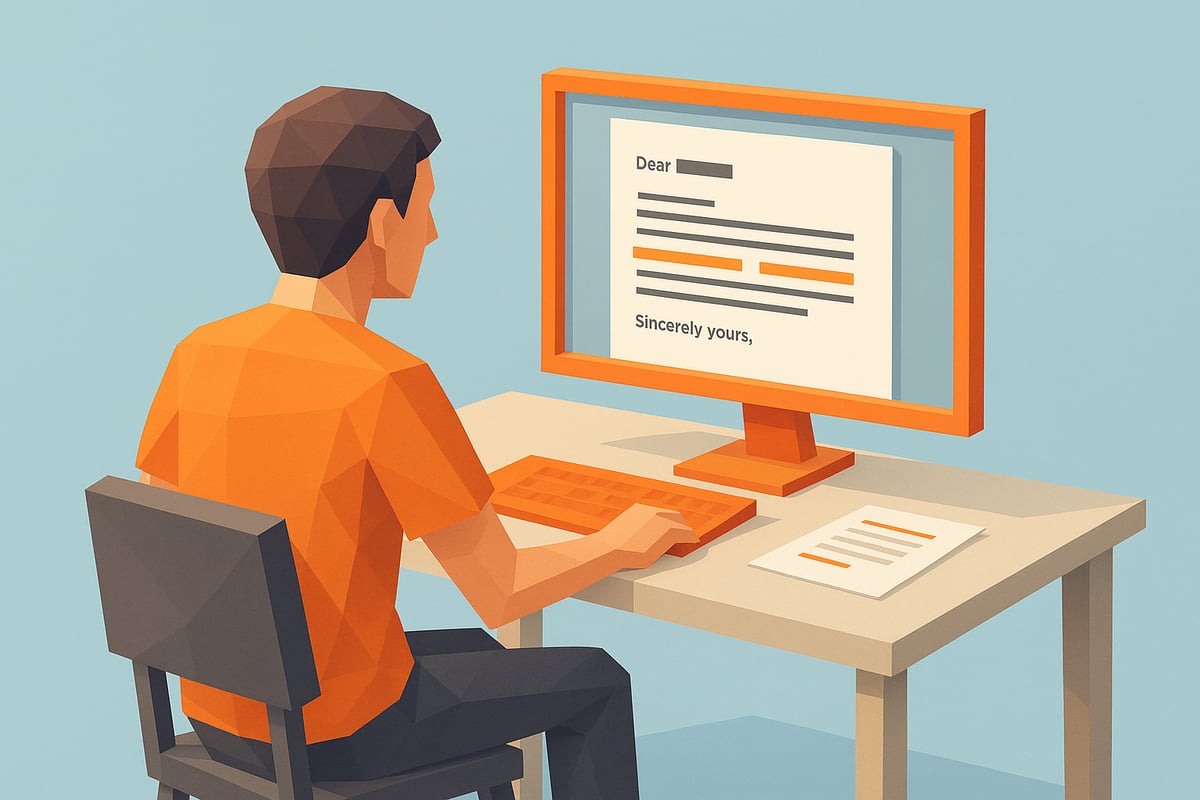
Bringing a personal touch to your correspondence is essential, even when using the most advanced ai letter writer. While these tools can deliver polished drafts in seconds, true connection comes from adding your unique voice and experiences.
Techniques for Personalizing AI-Generated Letters
To ensure your ai letter writer output stands out, start by weaving in personal anecdotes or memories. Mention shared experiences, recent collaborations, or mutual connections to establish rapport. Adjust the language and tone so it reflects your personality, whether you prefer a formal style or a conversational approach.
- Reference specific projects or events you have experienced with the recipient.
- Alter greetings and sign-offs to match your relationship, avoiding generic templates.
- Insert details such as inside jokes, shared milestones, or unique interests.
These modifications help your letter feel authentic and tailored, making a lasting impression.
Balancing AI Efficiency with Authenticity
An ai letter writer excels at structure, grammar, and generating ideas, but it cannot fully replicate your emotional nuance. Decide when to trust the tool’s efficiency, such as for drafting business inquiries, and when to step in for more sensitive messages like thank-you notes or condolences.
For example, use the initial draft as a foundation, then revise sections where warmth and empathy matter most. Consider the recipient’s expectations and the context of your relationship. This balance ensures your message resonates while saving valuable time.
Data and User Insights
Personal edits are critical for satisfaction with ai letter writer tools. According to recent surveys, 90 percent of users report improved results after adding their own touches. In fact, the Consumer Adoption of AI Report 2026 highlights that more individuals now use AI for drafting, but always personalize before sending.
Take the example of a student applying for internships. They use an ai letter writer to draft application letters, then customize each one with details relevant to the company and role. This approach consistently leads to higher response rates and a stronger sense of connection.
Real-World Use Cases: AI Letter Writers for Every Occasion
AI letter writer tools have rapidly transformed communication across countless industries in 2026. From professional correspondence to heartfelt personal notes, these platforms now power daily interactions for millions. Let us explore how ai letter writer solutions deliver measurable results in real-world scenarios.
Business and Professional Letters
In business, an ai letter writer is a game-changer for efficiency and professionalism. Companies rely on these tools for sales pitches, client communications, cover letters, and even resignation letters. For example, branding agencies use ai letter writer platforms to craft polished client proposals, ensuring consistent tone and quick turnaround.
A major benefit is the integration of resume and cover letter builders, which streamline job applications. For a deeper dive into AI-powered resume writing, see the Free Resume Builder Features overview. Businesses report faster document generation, increased response rates, and more polished communication, all thanks to the ai letter writer.
Academic and Student Letters
Students and educators also benefit from ai letter writer technology. Drafting application letters, recommendation requests, and networking emails becomes easier and more effective. Many students now save over three hours per application cycle by leveraging these platforms.
Research confirms that academic users rely on ai letter writer tools to improve readability and grammar. Insights into adoption patterns can be found in AI Tool Usage in Academic Writing. As a result, both students and faculty experience higher quality correspondence and reduced writing anxiety.
Personal and Creative Correspondence
On a personal level, ai letter writer platforms empower users to express themselves in new ways. Whether it is a love letter, apology, thank-you note, or invitation, the technology provides structure and inspiration. For instance, someone drafting a condolence letter can start with an ai letter writer template, then add personal touches for warmth and sincerity.
This approach helps users overcome writer’s block, ensuring messages are heartfelt yet polished. The ai letter writer’s adaptability makes it suitable for creative projects and emotional conversations alike.
Legal and Administrative Letters
Legal professionals increasingly turn to ai letter writer applications for efficiency and accuracy. Drafting cease and desist notices, information requests, or demand letters becomes a streamlined process. The ai letter writer generates compliant, properly formatted drafts, which lawyers and paralegals can then review for context and nuance.
This workflow reduces manual effort, minimizes errors, and accelerates client service. Administrative teams in various sectors also use ai letter writer tools to manage official correspondence with speed and consistency.
Government and Organizational Use
Government agencies and large organizations adopt ai letter writer platforms to handle administrative communications, public notices, and formal requests. These tools help standardize messaging, maintain compliance, and reduce the administrative burden on staff.
By automating routine letters, agencies free up time for strategic priorities. The ai letter writer ensures clarity and correctness, which is critical in public sector communications. As a result, workflows are streamlined and response times are improved across departments.
Expert Tips and Best Practices for Mastering AI Letter Writers
Mastering the ai letter writer landscape in 2026 means combining technology with skill and awareness. With rapid advancements, following proven best practices can help you consistently achieve high-quality, secure, and authentic results.
Maximizing Output Quality
To get the most from your ai letter writer, start with a detailed and specific prompt. The more context and clear instructions you provide, the better the AI will tailor your letter.
- Specify recipient, purpose, and tone.
- Include key points or outcomes you want to highlight.
- Experiment with different models or writing modes.
Review every AI-generated draft carefully. Use built-in suggestions to refine grammar and structure. Always add a personal touch before sending. According to recent AI Adoption in Writing Professions reports, professionals who combine AI efficiency with thoughtful editing achieve the best results.
Ensuring Data Privacy and Security
Before using any ai letter writer, check the platform’s privacy policy and security features. Only enter the minimum required personal details. Look for tools that offer robust encryption and compliance with local regulations.
| Tool | Encryption | GDPR Compliance | Data Retention |
|---|---|---|---|
| Grammarly | AES-256 | Yes | 30 days |
| ToolBaz | AES-256 | Yes | 7 days |
| OpenAI | AES-256 | Yes | 14 days |
Avoid sharing sensitive information on unsecured platforms. When possible, use private browsing modes or desktop applications for added control. Remember, your ai letter writer should enhance security, not create new risks.
Staying Ahead of AI Trends
The ai letter writer field evolves quickly. Stay informed about new features, such as real-time collaboration or emotion detection. Join user communities and forums to exchange tips and templates.
Regularly update your preferred tools to access the latest improvements. Explore multilingual support and advanced personalization options. Keep an eye on market expansion and adoption rates, as highlighted in AI Writing Assistant Software Market Growth.
Avoiding Common Pitfalls
Even the best ai letter writer is not infallible. Always review for factual errors or off-tone content. Do not rely solely on AI; continue honing your personal writing skills.
Common pitfalls include:
- Over-reliance on default templates
- Failing to check for context accuracy
- Ignoring emotional nuance
Customize each letter for its recipient and context. Use AI for speed and inspiration, but never sacrifice authenticity.
Future Outlook: What’s Next for AI Letter Writing?
Looking ahead to 2027, expect ai letter writer tools to deliver deeper personalization and advanced emotional intelligence. Features like voice-to-letter and seamless integration with digital assistants will become standard.
AI will play a larger role in business, education, and personal communication. Staying proactive and adaptable will ensure you benefit from these innovations. The future of ai letter writer technology promises even greater efficiency and impact for users everywhere.
Now that you’ve seen how AI letter writers can save you time, boost your confidence, and bring polish to every message, why not experience it for yourself? Whether you’re applying for your dream job, reaching out to new connections, or simply want to communicate more effectively, CareerConcierge io gives you all the tools you need—from tailored resumes to professional letter templates and a free ATS checker. You don’t have to navigate job applications alone—let cutting edge AI give you an edge.
Get Started Free