CI/CD Interview Questions: Prepare for Success in 2026
Master CI/CD interview questions with this comprehensive guide. Learn key concepts, common questions, and preparation strategies for DevOps roles.

The demand for DevOps professionals who understand Continuous Integration and Continuous Deployment (CI/CD) has surged dramatically in 2026. Organizations across all industries now rely on automated pipelines to deliver software faster and more reliably. Whether you're applying for a DevOps engineer position, a software developer role, or a QA automation job, mastering cicd interview questions is essential to landing your dream position. This comprehensive guide will help you understand the most critical concepts, prepare effective responses, and demonstrate your expertise during technical interviews.
Understanding CI/CD Fundamentals
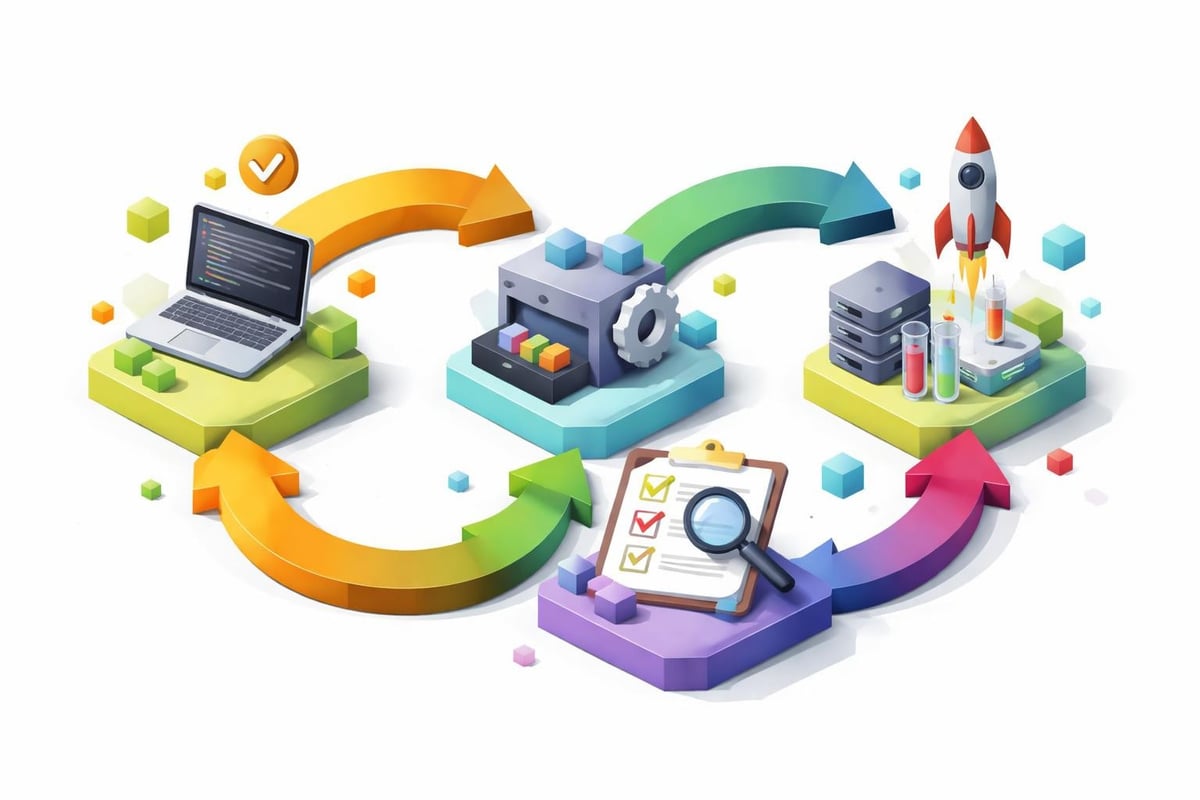
Before diving into specific cicd interview questions, you need to establish a solid foundation in core concepts. Continuous Integration involves automatically merging code changes from multiple developers into a shared repository several times daily. This practice helps identify integration issues early and reduces the time needed to validate new code.
Continuous Deployment takes this concept further by automatically releasing every change that passes automated tests to production. Some organizations prefer Continuous Delivery, which requires manual approval before production deployment. Understanding these distinctions is crucial because interviewers often begin with questions that assess your grasp of these fundamental differences.
Key Terminology You Must Know
Your ability to speak the language of CI/CD demonstrates professional competence. Here are essential terms that frequently appear in interviews:
- Build automation: The process of automatically compiling source code into executable artifacts
- Pipeline: A sequence of automated processes that move code from repository to production
- Artifact repository: Storage system for build outputs like JAR files, Docker images, or executables
- Deployment strategy: Methods such as blue-green, canary, or rolling deployments
- Infrastructure as Code: Managing infrastructure through version-controlled configuration files
Interviewers often ask candidates to explain how these components work together within a complete CI/CD ecosystem. Your responses should demonstrate not just theoretical knowledge but practical understanding of implementation challenges.
Common Technical Questions About CI/CD Tools
Modern DevOps environments utilize various tools to implement CI/CD pipelines. Jenkins remains widely used, but platforms like GitLab CI, GitHub Actions, CircleCI, and Azure DevOps have gained significant market share. This comprehensive list of 50 CI/CD interview questions covers the most frequently asked technical queries about these platforms.
Jenkins-Specific Questions
Jenkins continues to dominate enterprise environments despite newer alternatives. Expect detailed questions about:
Pipeline types: Declarative versus scripted pipelines, their syntax differences, and appropriate use cases for each. Declarative pipelines offer simpler syntax and built-in validation, while scripted pipelines provide greater flexibility for complex workflows.
Agent configuration: How Jenkins distributes build jobs across multiple machines, configures build agents, and manages resource allocation. Understanding label-based agent selection and cloud-based dynamic agent provisioning demonstrates advanced knowledge.
Plugin ecosystem: The role of plugins in extending Jenkins functionality, security considerations when installing third-party plugins, and best practices for plugin management. Mentioning specific plugins you've used adds credibility to your responses.
| Jenkins Concept | Beginner Understanding | Advanced Understanding |
|---|---|---|
| Pipelines | Knows basic syntax | Can optimize for parallel execution |
| Security | Understands user roles | Implements credential management and audit trails |
| Scaling | Single master setup | Distributed builds with multiple agents |
| Maintenance | Manual plugin updates | Automated configuration as code |
Pipeline Design and Architecture Questions
Designing effective CI/CD pipelines requires balancing speed, reliability, and maintainability. Interviewers assess your architectural thinking through scenario-based questions about pipeline design decisions.
Structuring Multi-Stage Pipelines
A well-designed pipeline includes distinct stages with clear responsibilities. Start by explaining your approach to organizing stages:
- Source stage: Triggering builds based on code commits, pull requests, or scheduled intervals
- Build stage: Compiling code, resolving dependencies, and creating deployable artifacts
- Test stage: Running unit tests, integration tests, and security scans
- Deploy stage: Releasing to staging environments, running smoke tests, and promoting to production
- Monitor stage: Tracking deployment success and application health metrics
Senior-level cicd interview questions often explore how you handle pipeline failures, implement rollback mechanisms, and maintain pipeline performance as codebases grow. The ability to discuss specific challenges you've faced and solutions you've implemented distinguishes experienced candidates from those with only theoretical knowledge.
Handling Complex Deployment Scenarios
Real-world deployments involve complications that simple tutorials don't address. Prepare to discuss:
- Database migration strategies during application updates
- Managing configuration differences across environments
- Implementing feature flags for gradual rollouts
- Coordinating deployments across microservices architectures
For data engineering roles specifically, this collection of CI/CD questions for data engineers highlights unique considerations around data pipeline reliability and schema changes.
Testing Within CI/CD Pipelines
Automated testing forms the backbone of reliable CI/CD systems. Interviewers want to understand your testing philosophy and practical experience with test automation frameworks.
Test Pyramid and CI/CD Integration
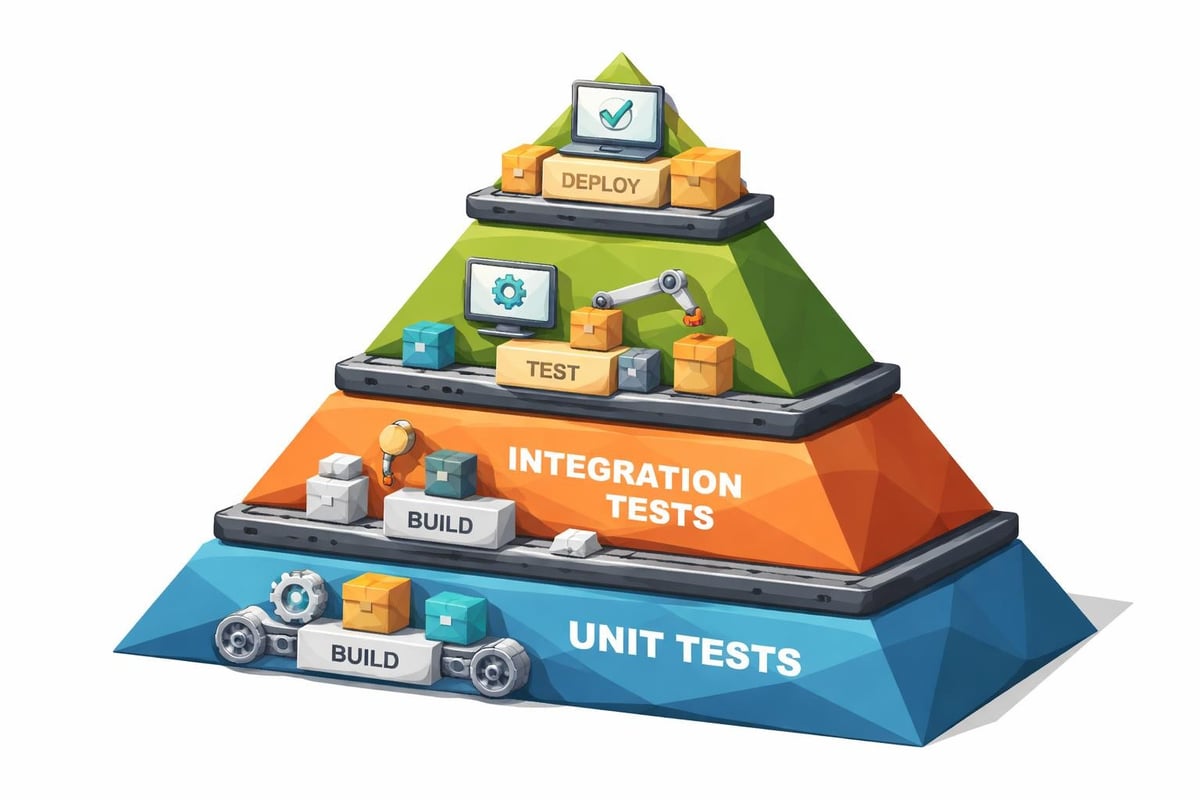
The test pyramid concept guides how different test types fit into your pipeline:
- Unit tests: Fast, isolated tests that run on every commit
- Integration tests: Verify component interactions, run less frequently
- End-to-end tests: Validate complete user workflows, typically in staging environments
- Performance tests: Assess application behavior under load
Quality gates determine whether builds advance to subsequent stages. Discuss specific metrics you've used as quality gates, such as code coverage thresholds, security vulnerability counts, or performance benchmarks. For QA professionals, these top CI/CD questions for testing roles focus on integrating Selenium, Cypress, and other testing frameworks into pipelines.
Test Automation Best Practices
Effective test automation in CI/CD environments requires careful planning:
- Keep test execution time reasonable by parallelizing test suites
- Implement proper test data management strategies for consistent results
- Use containerization to ensure test environment consistency
- Maintain clear test failure reporting for quick debugging
- Regularly review and remove flaky tests that undermine confidence
Interviewers appreciate candidates who can discuss the balance between comprehensive testing and pipeline speed. Mention specific optimizations you've implemented, such as selective test execution based on code changes or intelligent test ordering based on failure history.
Security and Compliance in CI/CD
Security considerations permeate modern CI/CD practices. Expect questions about securing pipelines, managing secrets, and ensuring compliance with industry regulations.
Secret Management
Never hardcode credentials in pipeline scripts or store them in version control. Discuss your experience with:
- Dedicated secret management tools like HashiCorp Vault, AWS Secrets Manager, or Azure Key Vault
- Pipeline-specific secret storage such as Jenkins Credentials or GitHub Secrets
- Runtime secret injection rather than build-time inclusion
- Secret rotation policies and automated credential updates
Security Scanning Integration
Modern pipelines incorporate security scanning at multiple stages:
| Scan Type | Purpose | Pipeline Stage | Example Tools |
|---|---|---|---|
| SAST | Static code analysis | Build | SonarQube, Checkmarx |
| DAST | Dynamic security testing | Deploy | OWASP ZAP, Burp Suite |
| SCA | Dependency vulnerabilities | Build | Snyk, WhiteSource |
| Container scanning | Image vulnerabilities | Build/Deploy | Trivy, Clair |
Demonstrating knowledge of security scanning tools and their integration points shows you understand security as a continuous process, not a final checkpoint.
Advanced CI/CD Concepts for Senior Roles
Senior DevOps positions require deep expertise in advanced CI/CD patterns and architectural decisions. This collection of 100 advanced CI/CD questions targets experienced professionals working with complex pipeline configurations.
GitOps and Infrastructure as Code
GitOps principles treat Git repositories as the single source of truth for both application code and infrastructure definitions. Explain how you've implemented:
Declarative infrastructure: Using Terraform, CloudFormation, or Pulumi to define infrastructure in code, enabling version control and automated provisioning.
Automated reconciliation: Tools like ArgoCD or Flux that continuously monitor Git repositories and automatically apply changes to Kubernetes clusters or cloud infrastructure.
Environment promotion: Strategies for moving changes from development through staging to production using Git branching strategies and automated promotion pipelines.
Monitoring and Observability
Successful CI/CD implementations include comprehensive monitoring to track pipeline performance and deployment outcomes:
- Pipeline metrics: Build duration, failure rates, and deployment frequency
- Deployment tracking: Correlating deployments with application performance changes
- Alert configuration: Automatic notifications for pipeline failures or anomalous deployments
- Trend analysis: Long-term tracking to identify bottlenecks and improvement opportunities
Candidates who can discuss specific metrics they've tracked and improvements they've driven based on data stand out in competitive interview processes.
Behavioral Questions About CI/CD Implementation
Technical knowledge alone doesn't guarantee interview success. Hiring managers also assess your problem-solving approach, collaboration skills, and ability to drive organizational change.
Handling Pipeline Failures
Describe specific incidents where pipelines failed and how you diagnosed and resolved them:
- Identify the failure point through logs and monitoring data
- Determine root cause distinguishing between code issues, infrastructure problems, or configuration errors
- Implement immediate fixes to restore pipeline functionality
- Apply long-term solutions to prevent recurrence
- Document learnings for team knowledge sharing
Driving CI/CD Adoption
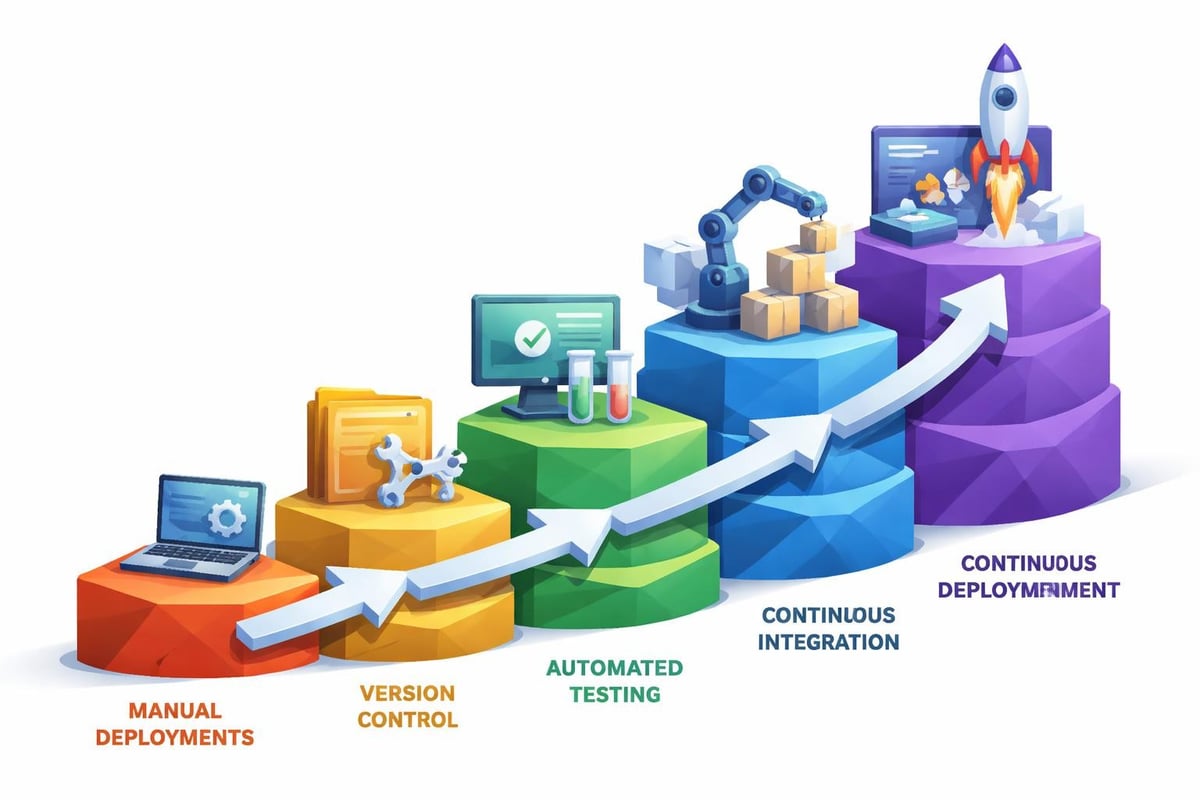
Many organizations still rely on manual deployment processes. Discuss your experience:
- Building stakeholder buy-in by demonstrating ROI through faster deployment cycles and reduced errors
- Creating incremental adoption plans that don't disrupt existing workflows
- Providing training and documentation to help teams transition
- Measuring and communicating success through deployment frequency, lead time, and change failure rate metrics
Similar to what you might find in backend developer interview questions, behavioral questions assess how you apply technical knowledge in real organizational contexts.
Cloud-Native CI/CD Patterns
Cloud platforms have transformed CI/CD implementation with managed services and serverless execution models. Modern cicd interview questions increasingly focus on cloud-native approaches.
Container-Based Pipelines
Containerization provides consistency across development, testing, and production environments:
Docker in CI/CD: Building container images as pipeline artifacts, implementing multi-stage builds for optimization, and using containers as isolated test environments.
Kubernetes deployments: Leveraging Kubernetes for progressive delivery patterns like canary releases, implementing pod disruption budgets for zero-downtime deployments, and using operators for application lifecycle management.
Service mesh integration: Coordinating deployments across microservices using service meshes like Istio or Linkerd for advanced traffic management and observability.
Serverless Pipeline Execution
Cloud-native CI/CD often utilizes serverless computing for cost-effective, scalable pipeline execution:
- Event-driven triggers: Responding to code commits, container registry updates, or scheduled events
- Pay-per-execution pricing: Reducing costs compared to dedicated build servers
- Automatic scaling: Handling variable pipeline loads without capacity planning
- Managed services: Reducing operational overhead through platforms like AWS CodePipeline or Google Cloud Build
Preparing Your Interview Strategy
Successfully navigating technical interviews requires more than memorizing answers. Strategic preparation increases your confidence and performance.
Practice with Real Scenarios
Review your past projects and prepare detailed explanations of:
- Pipeline architectures you've designed or worked with
- Specific problems you've solved through CI/CD automation
- Tools and technologies you've implemented and why you chose them
- Metrics and outcomes that demonstrate the impact of your work
This approach aligns with effective interview preparation strategies that emphasize concrete examples over abstract knowledge.
Research Company-Specific Context
Before your interview, investigate:
- Technology stack: What CI/CD tools does the company currently use?
- Development practices: What does their current deployment process look like?
- Scale and complexity: How many deployments per day/week do they handle?
- Industry requirements: Are there specific compliance or security considerations?
Tailoring your responses to the company's context demonstrates genuine interest and helps interviewers envision you in the role. This research phase is as important as the technical preparation covered in resources like this CI/CD interview guide PDF.
Demonstrating Continuous Learning
The DevOps landscape evolves rapidly, with new tools and practices emerging regularly. Interviewers value candidates who demonstrate commitment to continuous learning.
Staying Current with Industry Trends
Discuss how you keep your skills current:
- Following industry leaders and thought leaders on social media and blogs
- Participating in online communities like DevOps forums or Slack channels
- Attending conferences or virtual meetups focused on CI/CD and DevOps
- Contributing to open source CI/CD tools or documentation
- Experimenting with new tools in personal projects or sandbox environments
Certification and Formal Training
While not always required, relevant certifications can strengthen your candidacy:
| Certification | Focus Area | Ideal For |
|---|---|---|
| AWS Certified DevOps Engineer | Cloud-native CI/CD | AWS-heavy environments |
| Google Cloud Professional DevOps Engineer | GCP CI/CD services | Google Cloud shops |
| Certified Kubernetes Administrator | Container orchestration | Kubernetes-based deployments |
| Jenkins Engineer | Jenkins mastery | Jenkins-focused roles |
Mention certifications you hold or are pursuing, but emphasize practical experience over credentials alone.
Interview Day Best Practices
Technical preparation matters, but interview performance also depends on communication skills and presentation.
Structuring Your Responses
When answering cicd interview questions:
Start with the big picture: Provide context before diving into technical details. Explain why a particular approach matters before describing how to implement it.
Use concrete examples: Reference specific projects, tools, and outcomes from your experience rather than speaking in generalities.
Acknowledge trade-offs: Demonstrate nuanced thinking by discussing alternative approaches and why you chose a particular solution.
Ask clarifying questions: Don't hesitate to ask for additional context about hypothetical scenarios before proposing solutions.
Just as you would prepare for SRE interview questions or other technical roles, practice articulating complex concepts clearly and concisely.
Handling Technical Challenges
Many CI/CD interviews include hands-on exercises or whiteboarding sessions:
- Write sample pipeline code in Jenkins, GitLab CI, or GitHub Actions syntax
- Design pipeline architectures on whiteboards, explaining component interactions
- Debug failing pipeline scripts by analyzing logs and identifying issues
- Optimize existing pipelines for better performance or reliability
Approach these exercises methodically, thinking aloud to help interviewers understand your problem-solving process. Making your thought process visible often matters more than reaching a perfect solution.
Salary Negotiation and Career Advancement
Understanding CI/CD thoroughly positions you for competitive compensation and career growth opportunities.
Market Value for CI/CD Skills
DevOps engineers with strong CI/CD expertise command premium salaries in 2026. Research typical compensation ranges for:
- Junior DevOps engineers: $75,000-$100,000 depending on location and company size
- Mid-level positions: $100,000-$140,000 with 3-5 years experience
- Senior DevOps engineers: $140,000-$180,000+ with specialized expertise
- DevOps architects: $180,000-$250,000+ for strategic leadership roles
Geographic location, company funding stage, and specific technology expertise significantly influence these ranges. Use this knowledge during salary negotiations following successful interviews.
Career Path Progression
CI/CD expertise opens multiple career advancement paths:
- Technical depth: Becoming a CI/CD subject matter expert or platform engineer
- Breadth: Expanding into broader DevOps, SRE, or cloud architecture roles
- Management: Leading DevOps teams or infrastructure organizations
- Consulting: Helping multiple organizations implement CI/CD practices
Consider which path aligns with your interests and strengths as you prepare for interviews and negotiate offers.
Mastering cicd interview questions requires combining theoretical knowledge with practical experience and clear communication. By understanding fundamental concepts, familiarizing yourself with popular tools, and practicing scenario-based problem-solving, you'll position yourself as a strong candidate for DevOps and development roles. Whether you're targeting your first DevOps position or advancing to senior technical leadership, thorough preparation demonstrates your commitment to excellence. CareerConcierge.io offers comprehensive interview preparation tools, AI-powered resume optimization, and personalized coaching to help you stand out in competitive technical interviews and land your ideal role in 2026.