Top 10 Embedded Software Engineer Interview Questions 2026
Prepare for success with these top embedded software engineer interview questions for 2026. Gain expert insights, sample scenarios, and proven strategies to excel.
The landscape for embedded software engineering roles in 2026 is more competitive than ever. With rapid advancements in IoT, automotive technologies, and AI-powered devices, organizations are searching for candidates who can adapt and innovate in this evolving field.
As the demand grows, so does the need for professionals who can confidently answer embedded software engineer interview questions and demonstrate technical excellence. This article is designed to help you stand out by offering the top 10 questions likely to appear in interviews next year.
Inside, you'll find in-depth analysis, practical scenarios, and expert insights to strengthen your interview performance. Ready to boost your career? Start mastering these essential questions today.
The Evolving Role of Embedded Software Engineers in 2026
The landscape for embedded software engineer interview questions is rapidly changing as embedded systems become the backbone of innovation across industries. In 2026, companies are integrating intelligent, connected devices into automotive, healthcare, consumer electronics, and industrial automation sectors. This evolution means embedded engineers are not just coding, but powering the smart products people rely on every day.
Industry Transformation in 2026
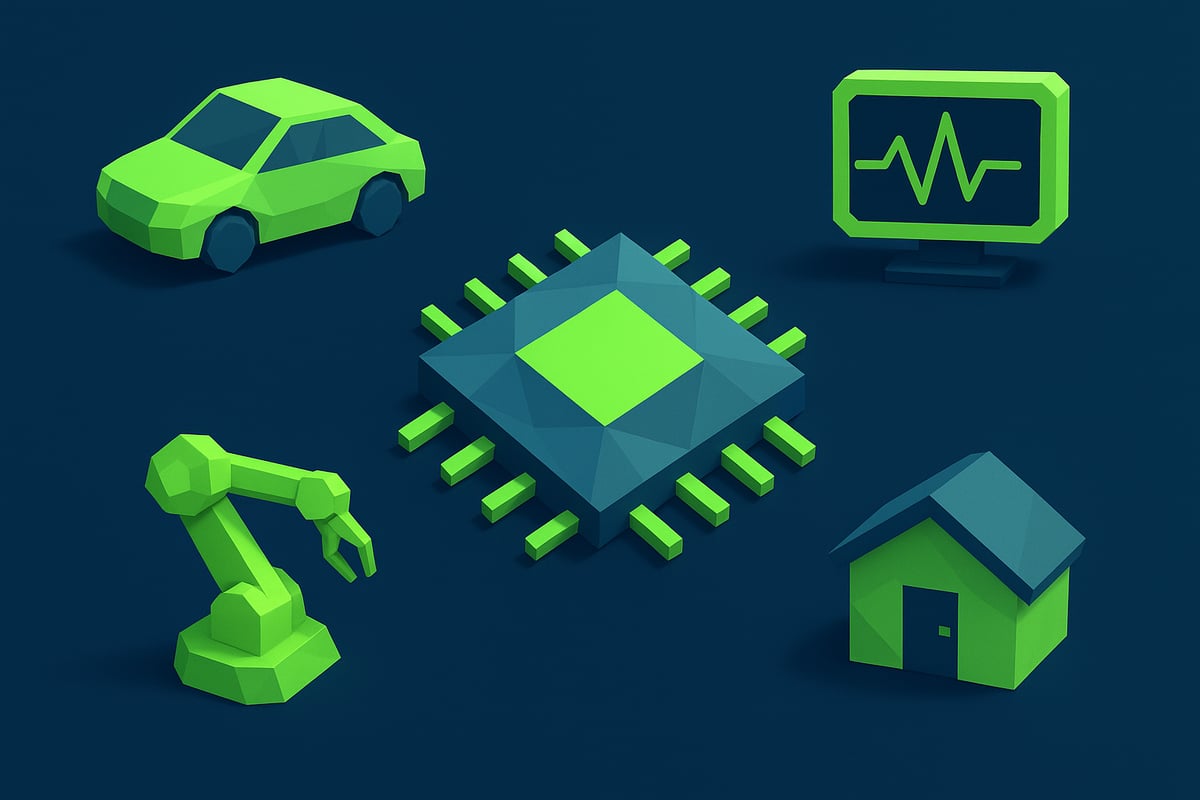
Embedded systems are now embedded in nearly every aspect of modern life. Automotive manufacturers use embedded AI for self-driving and safety features. Hospitals rely on real-time embedded devices for patient monitoring. Smart homes and factories depend on these systems for seamless automation. As a result, embedded software engineer interview questions increasingly focus on industry-specific applications and problem-solving.
Essential Skills for Modern Embedded Engineers
To meet 2026 demands, candidates must blend traditional expertise with new skills. Core programming languages like C and C++ remain vital, but knowledge of Rust and Python is rising. Familiarity with microcontrollers, FPGAs, and system-on-chip platforms is essential. Engineers also need experience with edge computing, real-time AI, and robust cybersecurity measures.
| Traditional Skills | Emerging Skills |
|---|---|
| C/C++ Programming | Rust, Python |
| RTOS Experience | Edge AI Integration |
| Hardware Debugging | Secure Connectivity |
This shift is reflected in embedded software engineer interview questions, which now probe both foundational and cutting-edge competencies.
Adaptability in Evolving Ecosystems
Rapid advances in hardware and software mean adaptability is a must. Engineers face new chip architectures, evolving operating systems, and dynamic development tools. Employers assess adaptability through embedded software engineer interview questions that explore how candidates handle upgrades, migrations, and unexpected technical challenges.
Adapting quickly is no longer optional; it is a core expectation for embedded engineers aiming to stay ahead.
Growth, Statistics, and Real-World Examples
The job market for embedded engineers is expanding. According to Embedded Software Engineer Job Growth Statistics 2026, a 12% increase in positions is projected by 2026. This growth is fueled by the surge in autonomous vehicles, wearable health devices, and industrial IoT.
For example, embedded AI powers real-time object recognition in vehicles and enables predictive maintenance in factories. These innovations are central themes in embedded software engineer interview questions, pushing candidates to demonstrate not just technical skill but also vision for future applications.
Cross-Disciplinary Expertise and Challenges
Success in 2026 requires cross-disciplinary knowledge. Embedded engineers must collaborate across hardware, software, and cybersecurity domains. Key challenges include:
- Navigating resource constraints (memory, power, size)
- Maintaining real-time performance
- Ensuring device interoperability
Interviewers frequently ask embedded software engineer interview questions about handling these complexities, seeking candidates who can think holistically and communicate effectively with diverse teams.
The evolving role of embedded software engineers in 2026 is both demanding and rewarding. Mastery of new technologies, adaptability, and a broad perspective are all crucial for excelling in this dynamic field.
Key Skills and Competencies for Embedded Software Engineers
Mastering the right skills is essential for anyone aiming to excel in embedded software engineer interview questions. In 2026, employers are looking for candidates who combine technical proficiency with adaptability and strong communication abilities.

Programming Languages and Code Efficiency
A solid grasp of C and C++ remains the foundation for tackling embedded software engineer interview questions. These languages enable direct hardware manipulation and efficient memory use.
Today, Assembly is still required for ultra-low-level tasks, while Python and Rust are gaining traction for rapid prototyping and safety-critical applications. Rust, in particular, is increasingly valued for its memory safety and concurrency features. Reviewing Top 10 Technical Embedded Software Engineering Interview Questions 2026 can give insight into how recruiters value language proficiency.
Selecting the right language often depends on system constraints and project goals.
Hardware Knowledge and Platform Versatility
Deep familiarity with microcontrollers, microprocessors, FPGAs, and SoC platforms is vital. Candidates should understand how to interface with different architectures, manage power consumption, and optimize for real-world limitations.
Experience with ARM Cortex families, RISC-V, and custom silicon is especially advantageous. Hardware-centric knowledge enables engineers to choose the best solution for each application, which is often a focus in embedded software engineer interview questions.
Real-Time Operating Systems (RTOS)
Knowledge of RTOS is crucial for time-sensitive and mission-critical applications. Expect interviewers to probe your experience with platforms like FreeRTOS, Zephyr, or VxWorks.
Understanding task scheduling, resource allocation, and interrupt management is essential. Many embedded software engineer interview questions will assess your ability to balance real-time constraints with system resources.
Debugging and Problem-Solving Tools
Systematic debugging is a cornerstone of embedded development. Proficiency with tools such as JTAG, logic analyzers, and simulation environments is a frequent topic in embedded software engineer interview questions.
Engineers should be skilled at isolating and resolving hardware-software integration issues, using step-by-step troubleshooting and thorough documentation. Simulation and emulation techniques are especially valuable for catching complex bugs before deployment.
Communication Protocols and Standards
Understanding serial and wireless protocols is a must. Knowledge of I2C, SPI, UART, CAN, and Bluetooth/Wi-Fi standards is often tested.
Interviewers may ask about protocol selection, implementation, and troubleshooting. This competency ensures seamless device interoperability and system reliability.
Soft Skills and Collaboration
Technical knowledge alone does not guarantee success in embedded software engineer interview questions. Effective collaboration with cross-functional teams and clear documentation are equally important.
Adaptability and strong communication help engineers navigate project challenges and evolving requirements. Demonstrating these soft skills can set you apart in a competitive interview environment.
A well-rounded skill set, covering both technical and interpersonal strengths, prepares candidates to confidently answer embedded software engineer interview questions in 2026.
Top 10 Embedded Software Engineer Interview Questions 2026
Preparing for embedded software engineer interview questions in 2026 requires more than technical knowledge. The selection of these questions is based on industry trends, recruiter feedback, and real-world interview experiences. Each question targets vital skills, practical understanding, and adaptability. Expect scenarios that test your problem-solving, system integration, and awareness of emerging technologies. This section breaks down the top 10 embedded software engineer interview questions you are most likely to face, providing context, expert insights, and actionable strategies for each. Mastering these will give you a decisive edge in the competitive landscape of 2026.

1. Can you describe your experience with real-time operating systems (RTOS) and how you have implemented them in your projects?
Real-time operating systems (RTOS) are the backbone of many embedded systems, ensuring that tasks execute within strict timing constraints. Interviewers ask this to gauge your ability to manage multitasking, prioritize resources, and maintain system reliability.
Discuss your hands-on experience with platforms like FreeRTOS, VxWorks, or Zephyr. Highlight how you implemented task scheduling and handled timing issues in IoT or automotive applications. For example, describe using an RTOS to manage sensor data and communication in a smart device.
Best practices include careful task prioritization, efficient resource allocation, and rigorous debugging. Be ready to mention challenges such as race conditions or deadlocks, and explain how you resolved them. Referencing industry standards and recent projects will further strengthen your response to embedded software engineer interview questions.
2. How do you approach debugging embedded systems, and what tools do you typically use?
Debugging is a critical aspect of embedded software engineer interview questions. In embedded environments, visibility into system state is often limited, so systematic troubleshooting is essential.
Interviewers want to hear about your process and proficiency with tools like JTAG, SWD, oscilloscopes, and logic analyzers. Start by outlining your step-by-step methodology, such as isolating the problem, analyzing logs, and validating fixes with hardware tools.
For example, when debugging a hardware-software integration bug in a medical device, you might use a logic analyzer to trace signal flow and a JTAG debugger to inspect firmware behavior. Emphasize the importance of documentation and reproducibility. Simulation and emulation tools are invaluable for tackling complex or intermittent issues.
3. Explain the differences between microcontrollers and microprocessors. When would you choose one over the other?
Understanding the distinction between microcontrollers and microprocessors is fundamental for embedded software engineer interview questions. Microcontrollers integrate CPU, memory, and peripherals on a single chip, making them cost-effective and power-efficient for dedicated applications. Microprocessors, on the other hand, offer higher performance and flexibility but require external components.
Comparison Table:
| Feature | Microcontroller | Microprocessor |
|---|---|---|
| Integration | High | Low |
| Power | Low consumption | Higher consumption |
| Cost | Lower | Higher |
| Application | IoT, appliances | PCs, complex systems |
Discuss how you select based on application needs. For instance, consumer devices benefit from microcontrollers, while industrial PCs require microprocessors. Mention trade-offs like ecosystem support and scalability. Reference technology trends such as the use of ARM Cortex-M (microcontrollers) versus Cortex-A (microprocessors) in your answer.
4. Can you discuss a challenging problem you faced in an embedded project and how you resolved it?
This is one of the most common embedded software engineer interview questions because it reveals your problem-solving skills, resilience, and technical depth. Structure your answer using the STAR method: Situation, Task, Action, Result.
Share a specific scenario, such as resolving a timing bug in a safety-critical system. Describe how you performed root cause analysis, iterated through testing, and ultimately implemented a fix. For example, you might have optimized interrupt handling to prevent sensor data corruption.
Highlight lessons learned and process improvements. Emphasize collaboration and communication, as these are often critical in resolving embedded system challenges.
5. How do you ensure the reliability and stability of your embedded software?
Reliability and stability are non-negotiable in embedded systems, especially in sectors like automotive or healthcare. This embedded software engineer interview questions topic assesses your approach to quality assurance.
Outline strategies such as code reviews, static analysis, and comprehensive testing (unit, integration, system). Mention the use of watchdog timers, exception handling, and fail-safe mechanisms to prevent catastrophic failures.
For instance, in a medical device project, rigorous validation and traceability are essential. Reference industry standards like ISO 26262 or DO-178C. Documentation and traceability further demonstrate your commitment to maintainability and compliance.
6. What programming languages are you most comfortable with for embedded development, and why?
Programming language proficiency is a key focus of embedded software engineer interview questions. C and C++ remain industry standards due to their low-level control and performance. However, Rust and Python are gaining traction for safety and rapid prototyping.
Discuss your experience with each language. For low-level drivers, C is ideal. For complex, object-oriented systems, C++ offers advantages. Rust provides memory safety, making it suitable for critical applications. Python, especially MicroPython, is valuable for scripting and rapid development.
Mention language-specific features such as memory management, performance, and portability. Highlight the growing adoption of Rust and how you stay current with industry trends.
7. How do you manage memory constraints in embedded systems?
Memory management is a frequent theme in embedded software engineer interview questions. Embedded devices often have limited RAM and storage, requiring efficient use of resources.
Explain techniques like static memory allocation, buffer optimization, and avoiding memory leaks. Tools such as static analyzers and memory profilers can help you identify and resolve issues.
For example, optimizing firmware for 8-bit microcontrollers may involve minimizing stack usage and selecting efficient data structures. Best practices include preventing fragmentation and monitoring memory usage to ensure system reliability.
8. Can you explain the concept of interrupt handling and its importance in embedded systems?
Interrupts enable real-time responsiveness in embedded systems, a core topic in embedded software engineer interview questions. An interrupt temporarily halts the main program to handle critical events, such as sensor input or communication signals.
Interviewers look for your ability to design efficient, safe interrupt service routines (ISRs). Discuss use cases like sensor data acquisition or motor control. Highlight challenges such as interrupt latency, reentrancy, and priority inversion.
Best practices include keeping ISRs short, avoiding blocking operations, and managing shared resources carefully. Provide an example, such as using interrupts for precise timing in motor control applications.
9. How do you approach testing and validation of embedded software?
Testing is vital for ensuring embedded software meets reliability and safety standards. Embedded software engineer interview questions often probe your methodology for validation.
Outline the different levels: unit, integration, hardware-in-the-loop (HIL), and system testing. Discuss your use of simulators, emulators, and test automation frameworks. For instance, regression testing is critical after firmware updates.
Emphasize documentation and traceability throughout the process. Reference industry standards for validation, and highlight the importance of reproducible results. For a practical checklist, consider the Interview preparation checklist to ensure you are fully prepared.
10. Describe your experience with hardware-software integration. What challenges have you encountered?
Seamless hardware-software integration is crucial in embedded projects, making this one of the most insightful embedded software engineer interview questions. Interviewers want to assess your cross-functional collaboration and troubleshooting abilities.
Describe typical challenges, such as timing mismatches, signal integrity issues, or protocol errors. Share examples, like integrating custom sensors or peripherals. Effective debugging strategies include using protocol analyzers, oscilloscopes, and co-simulation tools.
Highlight the importance of communication with hardware engineers and thorough documentation. Iterative testing and process refinement are key to overcoming integration hurdles.
How to Prepare for Embedded Software Engineer Interviews in 2026
Succeeding in embedded software engineer interview questions in 2026 requires more than technical knowledge; it demands strategic, well-rounded preparation. As the landscape evolves with IoT, AI, and next-generation hardware, candidates must adapt by strengthening both their technical and soft skills.

Master Core Knowledge and Technical Skills
Start by reviewing foundational topics that frequently appear in embedded software engineer interview questions. Focus on programming languages such as C, C++, and Rust, and gain hands-on experience with microcontrollers, FPGAs, and SoC platforms.
Dedicate time to understanding real-time operating systems, memory management, and interrupt handling. Utilize debugging tools like JTAG, logic analyzers, and simulators to sharpen troubleshooting skills. For those new to the field, Interview preparation for freshers offers practical advice on building strong technical fundamentals.
Build a Standout Portfolio and Practice Interviews
Recruiters increasingly value candidates who can demonstrate their expertise through real-world projects. Develop a portfolio showcasing your contributions to embedded systems, including quantifiable results and detailed documentation.
Practice responding to embedded software engineer interview questions through mock interviews, peer review, and coding challenges. Explore system architecture and hardware-software integration by studying system design interview questions to prepare for scenario-based discussions. These exercises build confidence and highlight your problem-solving process.
Stay Current and Engage with the Community
Technology in embedded systems is rapidly advancing. Stay updated on trends such as edge AI, secure bootloaders, and agentic pipelines. Participate in open-source projects, attend industry webinars, and contribute to forums to deepen your understanding.
Tailor your resume and cover letter for each role, emphasizing skills relevant to embedded software engineer interview questions. Seek feedback from mentors and colleagues to refine your application materials and interview technique.
Avoid Common Pitfalls and Aim for Continuous Improvement
Avoid cramming or relying solely on theoretical knowledge. Instead, prioritize hands-on experience, clear communication, and adaptability. Reflect on feedback from interviews and iterate on your approach.
By combining technical mastery, practical experience, and ongoing learning, you will be well-equipped to excel in embedded software engineer interview questions and advance your career in 2026.
Frequently Asked Questions About Embedded Software Engineer Interviews
Preparing for embedded software engineer interview questions in 2026 can feel challenging, especially as expectations evolve. Below, we address the most common concerns candidates have as they navigate the hiring process.
What qualifications and certifications are required?
Most employers look for a bachelor’s degree in computer engineering, electrical engineering, or a related field. Some roles may require a master’s or specific coursework in embedded systems. Certifications like the Embedded Systems Professional Certification or ARM Accredited Engineer can set you apart when answering embedded software engineer interview questions. Experience with industry standards and safety-critical domains is a plus.
What interview formats should I expect?
You will likely encounter a mix of technical screens, coding assessments, and system design interviews. Behavioral interviews are common, focusing on teamwork and problem-solving. For a detailed breakdown of what to expect and how to prepare, consult resources like Google interview preparation, which offers insights applicable to embedded software engineer interview questions at top tech firms.
How should I answer behavioral and scenario-based questions?
Use the STAR method: briefly describe the Situation, your Task, the Actions you took, and the Results. Focus on specific examples from embedded projects. Highlight your problem-solving, adaptability, and communication skills. Emphasize lessons learned and how you apply them to new challenges.
What are some tips for negotiating offers and evaluating employers?
Research average salaries and benefits for embedded roles in your region. Evaluate company culture, project types, and opportunities for growth. Ask about mentorship, training, and work-life balance. Do not hesitate to negotiate for better terms if your skills are in high demand.
What resources can help me stay competitive in 2026?
Stay up to date with emerging technologies and industry trends. Join online forums, attend webinars, and complete relevant online courses. For a strategic overview of in-demand skills and the job outlook, see the Global Software Engineering Jobs Outlook 2026. Contributing to open-source projects can also broaden your expertise.
Where can I find more guidance on embedded software engineer interview questions?
Explore technical blogs, professional communities, and online platforms specializing in embedded systems. Practice with sample embedded software engineer interview questions to build confidence. Continuous learning and networking will help you adapt to new expectations in 2026.
As you get ready to tackle embedded software engineer interviews in 2026, remember that staying ahead means more than just memorizing questions it’s about truly understanding the skills and trends shaping the industry. If you want to boost your prep even further, why not try tools designed for engineers like you from resume optimization and tailored cover letters to guided interview practice, you’ll find everything you need to stand out. Ready to take the next step toward your dream role Get Started Free and let’s make your job search more efficient and rewarding together.