Teamwork Interview Questions: Master Your Next Interview
Prepare for teamwork interview questions with expert tips, sample answers, and proven strategies to showcase your collaboration skills in 2026.
Teamwork remains one of the most critical competencies employers evaluate during the hiring process in 2026. Modern organizations understand that individual brilliance means little without the ability to collaborate effectively with colleagues, departments, and stakeholders. Whether you're interviewing for your first entry-level position or a senior leadership role, you'll inevitably face teamwork interview questions designed to assess how you function within a group setting. Preparing thoughtful, authentic responses to these questions can differentiate you from other candidates and demonstrate that you understand the value of collective success over individual achievement.
Understanding Why Employers Ask Teamwork Interview Questions
Hiring managers prioritize teamwork for valid business reasons. Companies operate through interconnected systems where success depends on cross-functional collaboration, shared accountability, and mutual support.
When interviewers pose teamwork interview questions, they're evaluating several dimensions of your professional character. They want to understand your communication style, conflict resolution approach, and willingness to subordinate personal goals for team objectives. These questions reveal whether you can navigate interpersonal dynamics, adapt to different working styles, and contribute positively to organizational culture.
The Business Case for Collaborative Skills
Organizations invest heavily in building cohesive teams because the returns justify the effort. Research consistently shows that effective teamwork drives innovation, accelerates problem-solving, and improves employee retention rates.
Key benefits employers seek from strong team players include:
- Faster project completion through distributed workload
- Higher quality outcomes through diverse perspectives
- Improved workplace morale and job satisfaction
- Reduced conflict and smoother operational processes
- Enhanced adaptability during organizational changes
According to Indeed's comprehensive guide on teamwork interview questions, employers increasingly recognize that technical skills alone don't guarantee workplace success. The ability to collaborate effectively has become a non-negotiable requirement across industries.

Common Categories of Teamwork Interview Questions
Teamwork interview questions typically fall into distinct categories, each designed to probe different aspects of your collaborative capabilities. Understanding these categories helps you prepare comprehensive, targeted responses.
| Question Category | What It Assesses | Example Focus Areas |
|---|---|---|
| Past Experiences | Real-world collaboration | Specific team projects, outcomes, lessons learned |
| Conflict Resolution | Interpersonal skills | Disagreement handling, compromise, mediation |
| Leadership & Initiative | Proactive contribution | Taking charge, motivating others, stepping up |
| Adaptability | Flexibility in teams | Working with diverse personalities, changing roles |
| Communication | Information exchange | Listening skills, clarity, feedback delivery |
Behavioral Questions About Team Experiences
Most teamwork interview questions use behavioral formats that require you to share specific examples from your professional history. These questions typically begin with phrases like "Tell me about a time when" or "Describe a situation where."
Employers prefer behavioral questions because past performance serves as the best predictor of future behavior. When you describe actual team experiences, interviewers can assess the authenticity of your responses and gauge your genuine collaboration skills.
Career.io emphasizes the importance of preparation when facing these behavioral teamwork questions, noting that candidates who prepare concrete examples perform significantly better than those who improvise.
Situational Questions About Hypothetical Scenarios
Some interviewers present hypothetical team situations and ask how you would respond. These questions test your judgment, values, and problem-solving approach when faced with common workplace challenges.
For instance, you might be asked: "If you discovered a team member wasn't contributing equally to a project, what would you do?" Your response reveals your communication style, conflict avoidance tendencies, and commitment to team success.
Essential Teamwork Interview Questions You'll Encounter
Preparing for specific questions allows you to craft compelling narratives that showcase your collaborative strengths. The following questions appear frequently across industries and position levels.
Questions About Successful Team Projects
- "Describe your most successful team project and your specific contribution."
This question appears in virtually every interview involving teamwork. Structure your response using the STAR method (Situation, Task, Action, Result). Focus on quantifiable outcomes and clearly articulate your individual role without diminishing teammates' contributions.
- "How do you handle working with team members who have different working styles?"
Demonstrate emotional intelligence and adaptability. Share examples of how you've successfully collaborated with colleagues who approach tasks differently than you do. Emphasize respect for diversity and your ability to find common ground.
- "Tell me about a time when your team failed to meet an objective. What happened?"
This question tests accountability and growth mindset. Strong candidates acknowledge failures honestly, explain contributing factors objectively, and describe lessons learned that improved future performance.
Conflict and Challenge Questions
Teams inevitably experience friction. Interviewers want to know you can navigate disagreements professionally and constructively.
- "Describe a conflict you had with a coworker and how you resolved it."
- "What do you do when you disagree with a team decision?"
- "How have you handled a situation where team members weren't getting along?"
Clevry's collection of competency-based teamwork interview questions provides excellent frameworks for addressing these challenging scenarios. The key is demonstrating maturity, communication skills, and focus on solutions rather than blame.

Crafting Compelling Answers Using the STAR Method
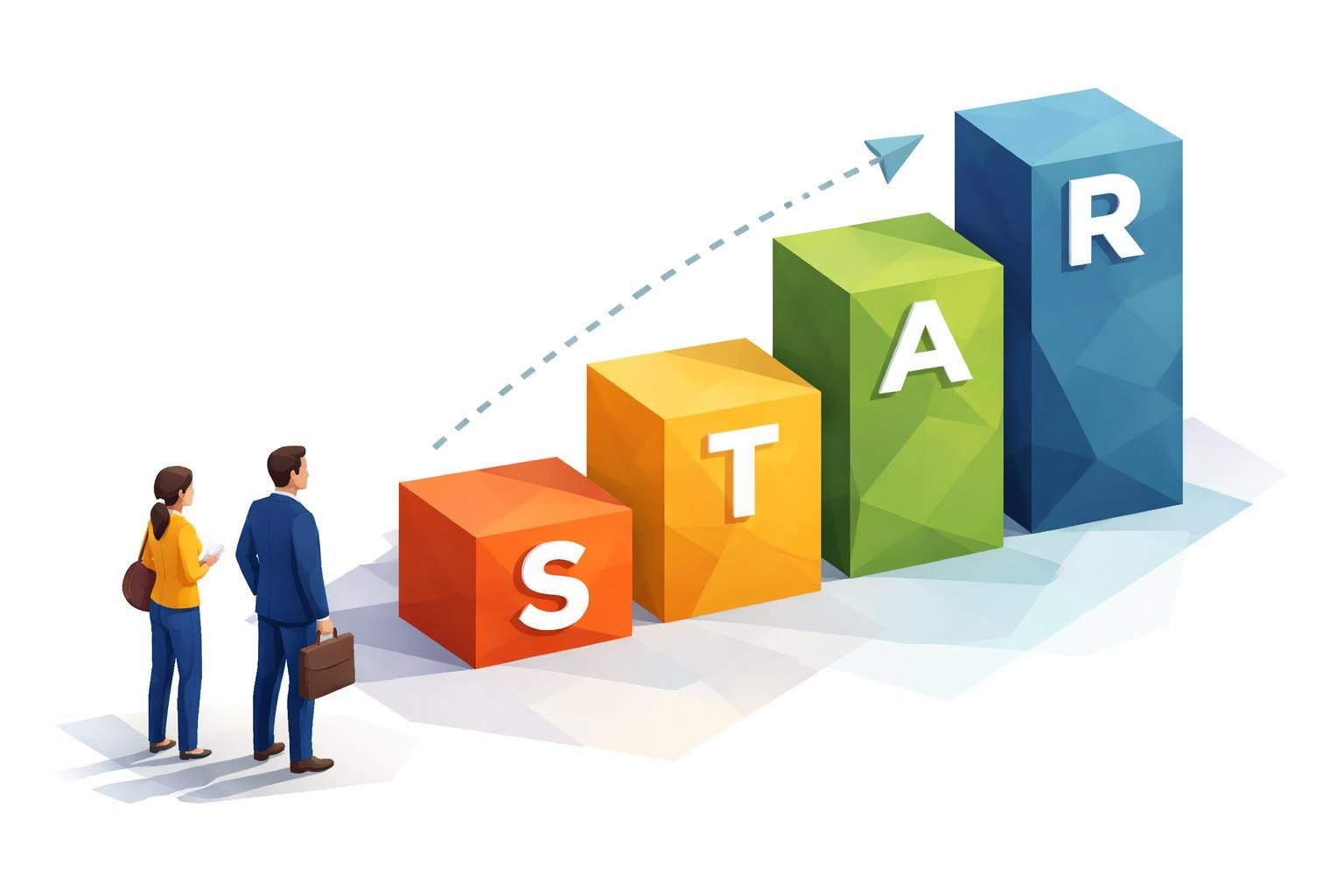
The STAR method provides a proven framework for structuring responses to teamwork interview questions. This approach ensures your answers remain focused, relevant, and memorable.
Breaking Down the STAR Components
Situation: Set the context briefly. Where did this take place? What was the team's composition? What were the broader circumstances?
Task: Explain the challenge or objective. What needed to be accomplished? What made it difficult or significant?
Action: Describe your specific contributions. What did you do? How did you collaborate with others? What skills did you employ?
Result: Share measurable outcomes. What happened? How did the team succeed? What feedback did you receive?
Sample STAR Response Example
Question: "Tell me about a time when you had to work with a difficult team member."
Situation: "In my previous role as a marketing coordinator, I worked on a product launch campaign with a cross-functional team of eight people. One team member from the sales department consistently missed deadlines and didn't respond to emails."
Task: "Our launch timeline was tight, and we needed everyone's input to create cohesive messaging across all channels. The sales perspective was crucial for understanding customer pain points."
Action: "Rather than complaining to management, I scheduled a one-on-one coffee meeting with this colleague. I asked about his workload and discovered he was managing three major projects simultaneously. We discussed priorities together, and I offered to help restructure some deliverables into smaller, more manageable pieces. I also suggested we move to brief weekly check-ins instead of relying solely on email."
Result: "This approach transformed our working relationship. He started meeting deadlines consistently, and his contributions significantly improved our campaign messaging. The product launch exceeded sales targets by 34% in the first quarter, and my manager specifically mentioned our team's collaboration as a success factor during my performance review."
Industry-Specific Teamwork Considerations
Different industries emphasize particular aspects of teamwork based on their operational requirements. Tailoring your responses to industry expectations demonstrates research and cultural fit.
| Industry | Teamwork Priority | Question Focus |
|---|---|---|
| Technology | Agile collaboration, cross-functional projects | Sprint planning, pair programming, remote teamwork |
| Healthcare | Patient safety, interdisciplinary coordination | Handoffs, emergency response, care team communication |
| Finance | Regulatory compliance, risk management | Accuracy under pressure, audit cooperation, ethical standards |
| Retail | Customer service, shift coordination | Peak season teamwork, inventory management, problem resolution |
| Education | Curriculum development, student support | Lesson planning collaboration, parent communication, committee work |
If you're preparing for a specific role, research common teamwork dynamics in that field. For instance, software developers should prepare examples involving agile methodologies and collaborative coding, while healthcare professionals should emphasize patient-centered care coordination.
Advanced Strategies for Standing Out
Beyond solid STAR responses, implement these advanced techniques to differentiate yourself during teamwork discussions.
Demonstrate Self-Awareness About Your Team Role
Strong candidates understand their natural teamwork tendencies and can articulate both strengths and growth areas. Discuss whether you naturally gravitate toward leadership, facilitation, execution, or creative roles within teams.
For example: "I've noticed I tend to take on coordinator roles in teams because I enjoy creating systems that help everyone stay aligned. However, I'm working on stepping back more often to give others opportunities to develop those organizational skills."
Connect Teamwork to Business Outcomes
Move beyond describing team harmony to explaining how effective collaboration drove measurable business results. Quantify your examples whenever possible.
Rather than: "We worked well together and completed the project."
Say instead: "Our collaborative approach reduced project completion time by three weeks and saved the company approximately $45,000 in contractor costs."
Address Remote and Hybrid Teamwork Realities
In 2026, most organizations operate with some combination of remote, hybrid, and in-office team members. Huntr's extensive collection of teamwork questions highlights the importance of addressing virtual collaboration capabilities.
Prepare examples demonstrating your proficiency with digital collaboration tools, asynchronous communication, and building relationships across time zones. Discuss how you maintain team cohesion when face-to-face interaction is limited.

Questions to Ask Interviewers About Teamwork
Interviews should be bidirectional conversations. Asking thoughtful questions about team dynamics shows genuine interest and helps you assess cultural fit.
Strategic questions to consider:
- "How would you describe the team I'd be joining in terms of collaboration style?"
- "What does effective teamwork look like in this department?"
- "Can you share an example of a recent team challenge and how the group addressed it?"
- "How does the organization support professional development around collaboration skills?"
- "What communication tools and processes does the team use to stay aligned?"
These questions demonstrate that you're evaluating whether the organization's teamwork culture aligns with your values and working preferences. They also provide valuable insights into what you might experience if hired.
Avoiding Common Pitfalls When Answering Teamwork Questions
Even experienced professionals make predictable mistakes when responding to teamwork interview questions. Awareness helps you avoid these traps.
Taking Too Much or Too Little Credit
Balance is essential. Claiming sole responsibility for team achievements appears arrogant and dishonest. Conversely, downplaying your contributions makes you forgettable.
Use language that acknowledges both personal accountability and collective effort: "I led the data analysis portion while my colleagues handled user research and design. Together, we created a comprehensive recommendation that executive leadership approved."
Providing Vague, Generic Responses
Answers lacking specificity fail to convince interviewers of authentic experience. Avoid responses like "I'm a great team player who always gets along with everyone."
Instead, offer concrete examples with names (if appropriate), timeframes, challenges, and outcomes. Details create credibility.
Speaking Negatively About Former Teammates
Even when describing conflict situations, maintain professional respect. Criticizing former colleagues reflects poorly on your character and raises concerns about how you might discuss future coworkers.
Frame conflicts as learning opportunities. Focus on the situation and resolution rather than personal criticisms: "We had different perspectives on project priorities" instead of "My coworker was difficult and unreasonable."
Failing to Prepare Multiple Examples
Don't rely on a single team story. Prepare three to five different examples covering various teamwork scenarios (success, conflict, leadership, support role, innovation). This preparation ensures you can answer follow-up questions without repetition.
Preparing for Teamwork Questions with AI-Powered Tools
Modern job seekers leverage technology to optimize interview preparation. CareerConcierge.io's interview preparation features help candidates practice responses, receive feedback, and build confidence before important conversations.
AI-powered platforms can simulate interview scenarios, suggest improvements to your STAR stories, and identify gaps in your preparation. These tools complement traditional practice methods like mock interviews with friends or career counselors.
Additionally, reviewing behavioral interview questions and structured answer frameworks helps you understand patterns across different question types and develop versatile response strategies.
Cultural Fit and Values-Based Teamwork Questions
Organizations increasingly assess cultural alignment during interviews. Teamwork questions often probe whether your collaboration values match company culture.
Understanding Organizational Collaboration Styles
Different companies embrace distinct teamwork philosophies. Startups might prioritize fast-moving, autonomous teams with minimal structure. Established corporations might emphasize process-oriented collaboration with clear hierarchies.
Research the company's stated values, read employee reviews, and analyze job descriptions for clues about preferred teamwork styles. According to CJPI's comprehensive guide, aligning your examples with organizational culture significantly improves interview outcomes.
Demonstrating Inclusive Collaboration
Modern workplaces value diversity, equity, and inclusion. Strong answers to teamwork interview questions acknowledge and appreciate diverse perspectives, backgrounds, and working styles.
Prepare examples showing how you've:
- Actively sought input from quieter team members
- Adapted communication styles for different audiences
- Advocated for inclusive decision-making processes
- Learned from colleagues with different experiences
- Contributed to psychologically safe team environments
Technical vs. Soft Skills in Team Settings
While teamwork interview questions primarily assess soft skills, don't neglect the technical collaboration aspects relevant to your field.
Technical collaboration skills might include:
- Version control systems (Git, SVN) for software teams
- Project management platforms (Asana, Jira, Monday.com)
- Communication tools (Slack, Teams, Zoom)
- Document collaboration (Google Workspace, Microsoft 365)
- Industry-specific software with collaborative features
Mentioning specific tools in your examples demonstrates practical experience beyond theoretical collaboration knowledge. For instance, product managers might discuss how they use roadmapping tools to align cross-functional stakeholders, as explored in product manager interview preparation resources.
Following Up After Teamwork Discussions
Your teamwork narrative shouldn't end when the interview concludes. Strategic follow-up reinforces your collaborative strengths and keeps you memorable.
In your thank-you note, reference specific teamwork discussions from the interview. If you thought of a better example or additional detail afterward, briefly mention it: "I've been reflecting on your question about remote team management, and I remembered another relevant project..."
This approach shows continued engagement and provides another opportunity to demonstrate your teamwork credentials.
Mastering teamwork interview questions requires authentic self-reflection, strategic preparation, and genuine commitment to collaborative success. By preparing specific examples, understanding what employers truly seek, and articulating your value as a team contributor, you position yourself as a compelling candidate in any competitive hiring process. CareerConcierge.io offers comprehensive interview preparation tools, including AI-powered practice sessions and personalized feedback, helping you develop confident, compelling responses that showcase your collaborative strengths and land your dream role.