Hiring Manager Interview Questions: A Complete Guide
Master hiring manager interview questions with expert strategies, sample questions, and actionable tips to help you prepare and succeed in 2026.

Navigating the interview process requires understanding what hiring managers truly seek when evaluating candidates. Whether you're preparing for an upcoming interview or refining your approach as an interviewer, mastering hiring manager interview questions is essential for success in 2026's competitive job market. These questions serve as critical tools for assessing skills, cultural fit, and potential contributions to an organization. This comprehensive guide explores the most effective questions, strategic approaches, and preparation techniques that will help you excel on either side of the interview table.
Understanding the Role of Hiring Manager Interview Questions
Hiring manager interview questions differ significantly from standard HR screening questions. While recruiters focus on basic qualifications and culture fit, hiring managers dive deeper into technical competencies, problem-solving abilities, and team dynamics. These questions are designed to evaluate how candidates will perform in real-world scenarios specific to the role.
The primary objectives include:
- Assessing technical expertise and industry knowledge
- Evaluating problem-solving methodologies
- Understanding communication and collaboration styles
- Gauging alignment with team goals and company values
- Identifying potential for growth and leadership
Research from PeopleGoal's comprehensive interview guide emphasizes that structured questions lead to more consistent and fair evaluations. When hiring managers ask targeted questions, they create a level playing field where all candidates are measured against the same criteria.
Essential Categories of Interview Questions
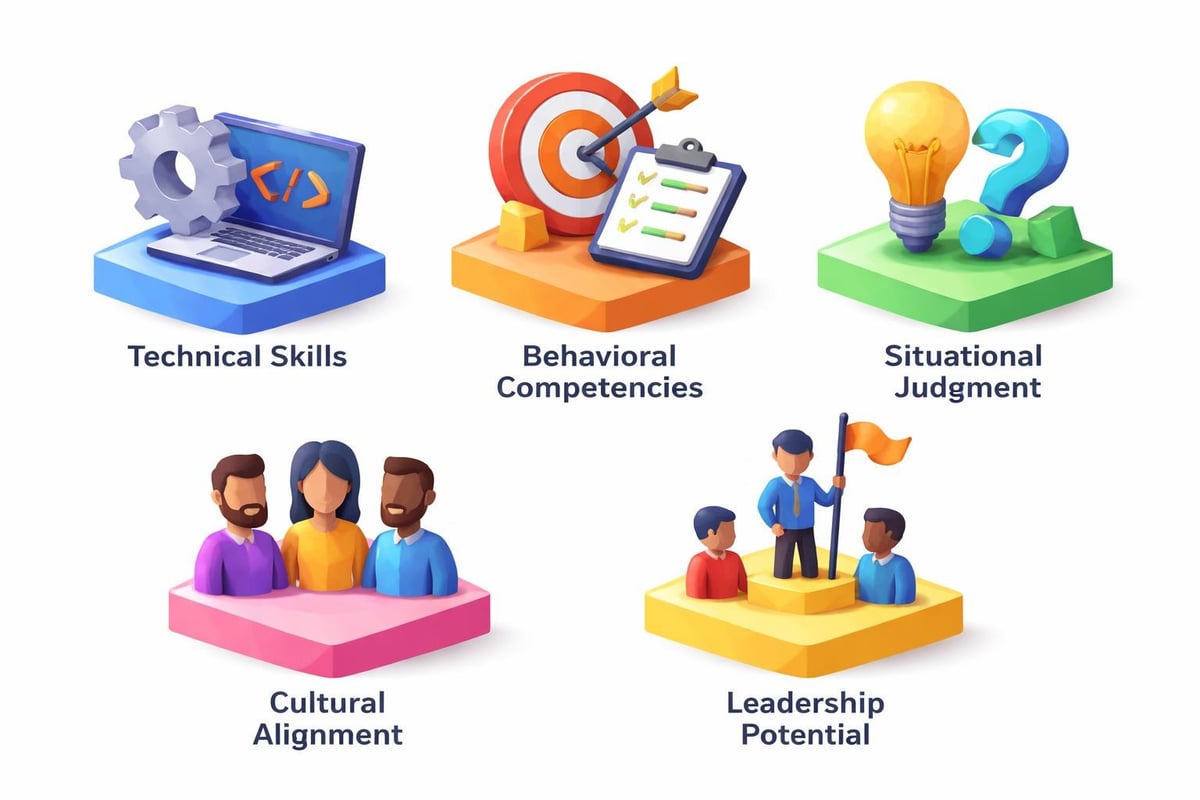
Technical and Role-Specific Questions
Technical questions form the foundation of most hiring manager interviews. These assess whether candidates possess the required skills and knowledge for immediate contribution.
Common technical question formats include:
- Direct skill assessment: "Walk me through your experience with [specific tool or technology]."
- Problem-solving scenarios: "How would you approach [specific technical challenge]?"
- Past project evaluation: "Describe a complex project you managed and the technical decisions you made."
- Knowledge verification: "Explain your understanding of [industry concept or methodology]."
These questions require preparation and specific examples. Candidates should review the job description thoroughly and prepare concrete examples that demonstrate their expertise. CareerConcierge.io's interview preparation tools can help you practice articulating technical competencies effectively.
Behavioral Interview Questions
Behavioral questions reveal how candidates have handled situations in the past, which predicts future performance. The STAR method (Situation, Task, Action, Result) provides an effective framework for both asking and answering these questions.
| Question Type | Purpose | Example |
|---|---|---|
| Conflict Resolution | Assess interpersonal skills | "Tell me about a time you disagreed with a colleague" |
| Leadership | Evaluate management potential | "Describe when you motivated an underperforming team member" |
| Adaptability | Measure flexibility | "Share an example of adapting to significant change" |
| Initiative | Gauge proactivity | "Tell me about a project you started independently" |
According to Betterteam's interview question guide, behavioral questions consistently predict job performance better than hypothetical scenarios. The key lies in listening for specific details rather than generic responses.
Situational Judgment Questions
Situational questions present hypothetical scenarios to assess decision-making processes. Unlike behavioral questions that focus on past experiences, these evaluate how candidates think through new challenges.
Effective situational questions include:
- "If you discovered a major error in a project one day before launch, how would you handle it?"
- "Suppose two team members have conflicting approaches to solving a problem. What would you do?"
- "If given an impossible deadline, how would you prioritize and communicate with stakeholders?"
These questions reveal problem-solving frameworks, prioritization skills, and communication strategies. Strong candidates demonstrate structured thinking and consider multiple perspectives before reaching conclusions.
Crafting Questions for Specific Hiring Scenarios
Entry-Level Position Questions
When interviewing recent graduates or career changers, hiring manager interview questions should focus on potential rather than extensive experience.
Recommended approaches:
- Emphasize learning agility and adaptability
- Explore academic projects or volunteer experiences
- Assess foundational knowledge and enthusiasm
- Evaluate cultural fit and team collaboration potential
Questions might include: "What attracted you to this field?" or "Describe a time you learned a new skill quickly." The goal is identifying candidates with strong fundamentals and growth mindsets.
Mid-Level Professional Questions
Mid-career candidates require questions that assess both technical depth and emerging leadership capabilities.
- Technical depth: "How have you stayed current with industry developments?"
- Mentorship: "Describe your experience training junior team members."
- Strategic thinking: "How do you balance competing priorities?"
- Cross-functional collaboration: "Give an example of working with other departments."
These questions gauge whether candidates can contribute immediately while growing into larger responsibilities. Behavioral interview preparation helps candidates structure compelling responses that demonstrate progressive development.
Senior and Executive-Level Questions
Leadership positions demand questions that explore vision, strategic thinking, and organizational impact.
Critical areas to address:
- Vision and strategy: "How would you define success in this role within the first year?"
- Change management: "Describe a time you led organizational transformation."
- Stakeholder management: "How do you navigate competing executive priorities?"
- Team development: "What's your philosophy on building high-performing teams?"
- Results orientation: "Share a quantifiable business impact you've achieved."
Senior hiring manager interview questions should allow candidates to demonstrate strategic thinking while providing specific examples of measurable results. The U.S. Office of Personnel Management's structured interview guide offers excellent frameworks for developing fair and effective senior-level questions.
Strategic Question Sequencing and Interview Structure
Building Rapport and Opening Questions
The first few minutes set the tone for the entire interview. Start with conversational questions that help candidates relax while gathering valuable information.
Effective opening questions:
- "Tell me about your career journey and what led you here."
- "What interests you most about this opportunity?"
- "How did you first hear about our company?"
These questions ease candidates into the conversation while revealing motivations and research depth. Strong candidates demonstrate genuine interest and knowledge about the organization.
Progressive Question Depth
Structure questions to move from general to specific, allowing natural conversation flow while gathering comprehensive information.
The progression typically follows this pattern:
- Background and experience overview
- Role-specific technical questions
- Behavioral and situational scenarios
- Cultural fit and values alignment
- Candidate questions and next steps
This sequence builds comfort while systematically evaluating all critical competencies. Greenhouse's manager interview guidance emphasizes the importance of consistent structure across all candidates.
Closing Questions and Candidate Inquiries
Reserve time for candidates to ask questions. Their inquiries reveal priorities, research depth, and genuine interest. Quality candidates ask thoughtful questions about team dynamics, success metrics, and growth opportunities.
According to Coursera's guide on questions to ask hiring managers, candidates who ask strategic questions demonstrate engagement and critical thinking. Common candidate questions include: "What does success look like in this role?" and "How would you describe the team culture?"
Evaluating Responses Effectively
Listening for Quality Indicators
Beyond surface-level answers, hiring managers should listen for specific quality indicators that separate exceptional candidates from adequate ones.
Key elements to evaluate:
- Specificity and concrete examples rather than vague generalizations
- Ownership and accountability versus blaming others
- Results orientation with quantifiable outcomes
- Self-awareness and learning from mistakes
- Structured thinking and clear communication
Candidates who provide detailed STAR-format responses with measurable results typically perform better than those offering theoretical answers. CareerConcierge.io's comprehensive preparation features help candidates develop these structured response techniques.
Red Flags and Warning Signs
Certain response patterns indicate potential concerns that warrant deeper exploration or disqualification.
| Red Flag | What It Reveals | Follow-up Action |
|---|---|---|
| Consistently negative about previous employers | Poor cultural fit or accountability issues | Probe for specific examples and context |
| Vague or evasive answers | Lack of experience or dishonesty | Ask for concrete details and verification |
| Inability to provide examples | Limited actual experience | Test knowledge with scenario questions |
| Taking sole credit for team achievements | Poor collaboration skills | Ask about team dynamics specifically |
| Lack of questions for interviewer | Minimal interest or preparation | Assess overall engagement level |
Recognizing these patterns early allows hiring managers to adjust their question strategy or conclude that a candidate lacks necessary qualifications.

Industry-Specific Question Adaptations
Technology and Engineering Roles
Technical hiring manager interview questions should balance coding skills with system design thinking and collaboration abilities.
Sample questions include:
- "Explain your approach to debugging complex production issues."
- "How do you stay updated with emerging technologies?"
- "Describe your code review process and philosophy."
- "Walk through a system design for [specific technical challenge]."
For specialized roles, consider reviewing examples like backend developer interview questions to understand technical depth requirements.
Healthcare and Clinical Positions
Healthcare roles require questions addressing patient care, regulatory compliance, and high-pressure decision-making.
Relevant questions might include: "Describe your approach to patient advocacy" or "How do you handle ethical dilemmas in clinical settings?" Resources like nursing interview preparation provide industry-specific question frameworks.
Sales and Business Development
Sales hiring manager interview questions should assess relationship-building, negotiation skills, and results achievement.
Focus areas:
- Pipeline management and forecasting accuracy
- Objection handling and closing techniques
- Client relationship development
- Team collaboration and knowledge sharing
Questions such as "Walk me through your most challenging sale" or "How do you recover from losing a major deal?" reveal resilience and strategic thinking. The sales executive interview guide offers additional targeted questions.
Management and Leadership Roles
Leadership positions require questions exploring people development, strategic vision, and organizational influence.
- Team building: "How do you identify and develop high-potential employees?"
- Performance management: "Describe your approach to addressing underperformance."
- Strategic planning: "How do you translate company objectives into team goals?"
- Change leadership: "Share an example of leading through organizational change."
The engineering manager interview preparation resource demonstrates leadership-focused question development.
Legal and Ethical Considerations
Prohibited Questions and Topics
Hiring managers must avoid questions that could lead to discrimination claims or violate employment laws.
Never ask about:
- Age, race, ethnicity, or national origin
- Marital status, family planning, or childcare arrangements
- Religious beliefs or practices
- Disabilities or health conditions (unless directly related to essential job functions)
- Financial status or credit history (in most states)
Focus exclusively on job-related qualifications and competencies. When assessing availability, ask "Can you work the required schedule?" rather than "Do you have childcare arrangements?"
Maintaining Interview Consistency
Structured interviews using standardized hiring manager interview questions ensure fairness and legal defensibility. Ask all candidates the same core questions while allowing flexibility for follow-up probes based on individual responses.
This approach provides:
- Objective comparison criteria across candidates
- Reduced unconscious bias in evaluation
- Legal protection against discrimination claims
- Higher quality hiring decisions through systematic assessment
Document responses consistently and establish clear evaluation rubrics before beginning interviews. The Muse's comprehensive interview guide provides frameworks for developing fair and consistent interview processes.
Preparing as a Candidate
Research and Preparation Strategies
Successful candidates invest significant time preparing for hiring manager interview questions before the actual conversation.
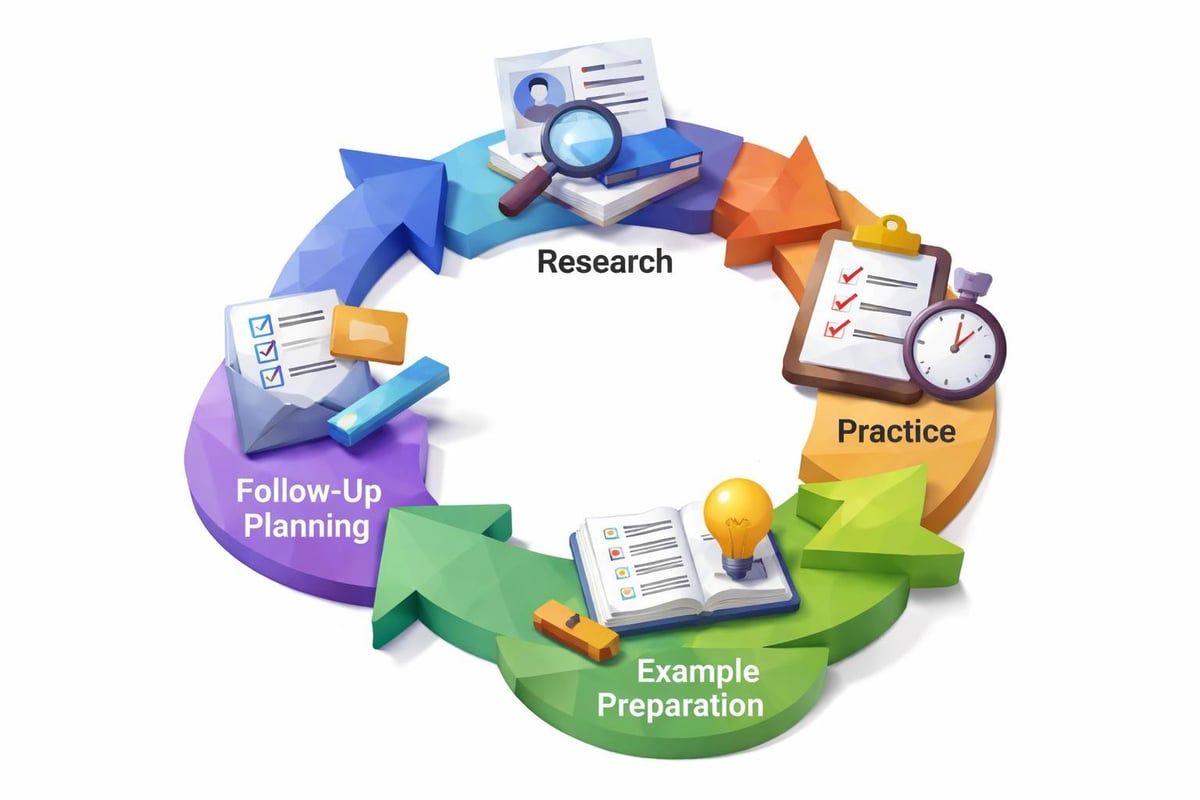
Essential preparation steps:
- Research the company's mission, values, and recent developments
- Study the job description and identify key competencies
- Prepare STAR-format examples for common question categories
- Practice articulating technical knowledge clearly
- Develop thoughtful questions for the interviewer
Using tools like CareerConcierge.io's ATS checker ensures your resume aligns with the position requirements, providing a strong foundation for interview discussions.
Mock Interview Practice
Practice transforms theoretical preparation into confident performance. Conduct mock interviews with mentors, friends, or professional services to refine your responses.
Focus on:
- Clear, concise communication without rambling
- Natural delivery rather than memorized scripts
- Specific examples with measurable outcomes
- Appropriate pacing and active listening
- Professional body language and engagement
Consider recording practice sessions to identify improvement areas. The interview warm-up tools at CareerConcierge.io provide structured practice environments.
Follow-Up and Continuous Improvement
After each interview, document the questions asked and reflect on your responses. This creates a growing knowledge base that improves future performance.
Post-interview actions:
- Send thoughtful thank-you notes within 24 hours
- Identify questions that challenged you and develop better responses
- Research any topics where you lacked depth
- Update your example library with new experiences
- Adjust your preparation strategy based on lessons learned
This iterative approach ensures continuous improvement across multiple interview experiences. Professional resources like product manager interview preparation demonstrate comprehensive preparation frameworks.
Modern Trends in Interview Questions
Remote Work and Virtual Collaboration
The shift toward remote work has introduced new dimensions to hiring manager interview questions. Companies now assess virtual collaboration skills, self-motivation, and remote communication effectiveness.
Contemporary questions include:
- "How do you maintain productivity in a remote environment?"
- "Describe your experience with virtual team collaboration tools."
- "How do you build relationships with colleagues you've never met in person?"
- "What's your approach to managing time zones and asynchronous communication?"
These questions reflect the evolving workplace reality where remote competencies have become essential rather than optional.
Diversity, Equity, and Inclusion
Modern hiring manager interview questions increasingly explore candidates' commitment to diversity and inclusive practices.
Appropriate questions might include: "Describe a time you worked with someone from a different background" or "How do you ensure all team members feel heard and valued?" These questions assess cultural competency without veering into prohibited territory.
Adaptability and Continuous Learning
The rapid pace of technological and business change makes learning agility a critical competency across all roles.
Questions assessing adaptability:
- "Tell me about a skill you've recently learned and why."
- "How do you approach situations where you lack expertise?"
- "Describe adapting your work style to collaborate with different personality types."
Strong candidates demonstrate curiosity, resilience, and systematic approaches to acquiring new knowledge. This aligns with long-term success in dynamic business environments.
Interview Question Frameworks and Models
The ASPIRE Model
Harvard Medical School's comprehensive interview guide introduces the ASPIRE framework for developing effective questions:
- Abilities and skills required for the role
- Situational questions exploring judgment
- Past performance and achievements
- Interest and motivation for the position
- Role-specific technical competencies
- Ethical decision-making and values alignment
This structured approach ensures comprehensive evaluation across all critical dimensions.
Competency-Based Interview Design
Competency-based hiring manager interview questions link directly to specific skills required for success.
The development process includes:
- Identify 5-7 core competencies from job analysis
- Develop 2-3 questions per competency
- Create evaluation rubrics with specific performance indicators
- Train interviewers on consistent assessment methods
- Calibrate ratings across interview panel members
This systematic approach dramatically improves hiring quality and reduces turnover by ensuring role alignment from the start.
Mastering hiring manager interview questions creates competitive advantages whether you're conducting interviews or preparing as a candidate. Success requires strategic preparation, structured approaches, and continuous learning from each interaction. CareerConcierge.io provides comprehensive tools for interview preparation, resume optimization, and application enhancement that help you stand out in competitive hiring processes. Start optimizing your job search strategy today with AI-powered resources designed to help you land your dream role.